
You notice the stain after a night of heavy rain. It isn't a dramatic ceiling leak, just a faint brown mark near the attic access and a few gritty granules in the gutter. From the driveway, the shingles still look serviceable, so you wonder whether a patch will solve the problem or whether the roof is nearing the end of its useful life.
That question, when does a roof need to be replaced, can't be answered by one curled shingle or one isolated leak. Roof age, material, storm history, flashing, drainage, attic conditions, and previous repairs all matter. A roof is a system, and the right decision comes from examining how those parts work together.
Roof Lifespans and Replacement Timing: What Age Really Tells You
A small chimney leak does not automatically call for a new roof. On a relatively young roof with isolated damage, replacing a few shingles and correcting the flashing may solve the problem. On an older covering that has become brittle and lost protective granules, the same patch can offer only temporary relief.
Age is a planning signal, not a verdict. One repair addresses one failure point, while an aging roof may have weaknesses across the field shingles, flashing, drainage, and underlayment that have not yet reached the living space. In the Midwest, wind and hail exposure can shorten that timeline, especially after repeated storms.
Material sets the starting point
Industry guidance commonly places asphalt-shingle roofs at about 15 to 30 years. Three-tab shingles often last 15 to 20 years, while architectural shingles may reach 25 to 30 years, according to this roof lifespan guidance from Angi. Metal roofs often reach 40 to 70 years, and slate or tile can exceed 100 years. The material must be identified before anyone recommends replacement.
Those ranges describe potential service life, not a promise. Installation quality, attic ventilation, moisture, sun exposure, maintenance, and Midwest hail or wind all affect performance. A standard asphalt roof nearing its material range deserves a planned evaluation even when the ceiling is dry.
Shingle design also affects maintenance expectations and replacement planning. Homeowners can review this guide to the lifespan of a shingle roof for a closer comparison.
Leaks are a late warning
Water visible indoors is often the point of discovery, not the starting point of failure. Moisture can travel along decking, rafters, insulation, or wall cavities before staining appears. Delaying replacement may turn a controllable roofing project into added carpentry, insulation, or interior repair.
Practical rule: Treat age as a planning signal. Treat age combined with widespread wear, recurring leaks, or deteriorated flashing as a replacement discussion.
A 2026 housing-stock analysis found a median roof-replacement interval of 14 years across 309,255 observed intervals of three years or longer, with the middle 50% between 7 and 20 years, as reported in this roof replacement statistics analysis. That interval does not set a replacement date for every home. It shows why a theoretical maximum lifespan cannot serve as a schedule. Storm damage, deferred maintenance, and declining performance may bring replacement earlier, while sound installation and regular care may extend service.
Executing a Multi-Zone Roof Inspection
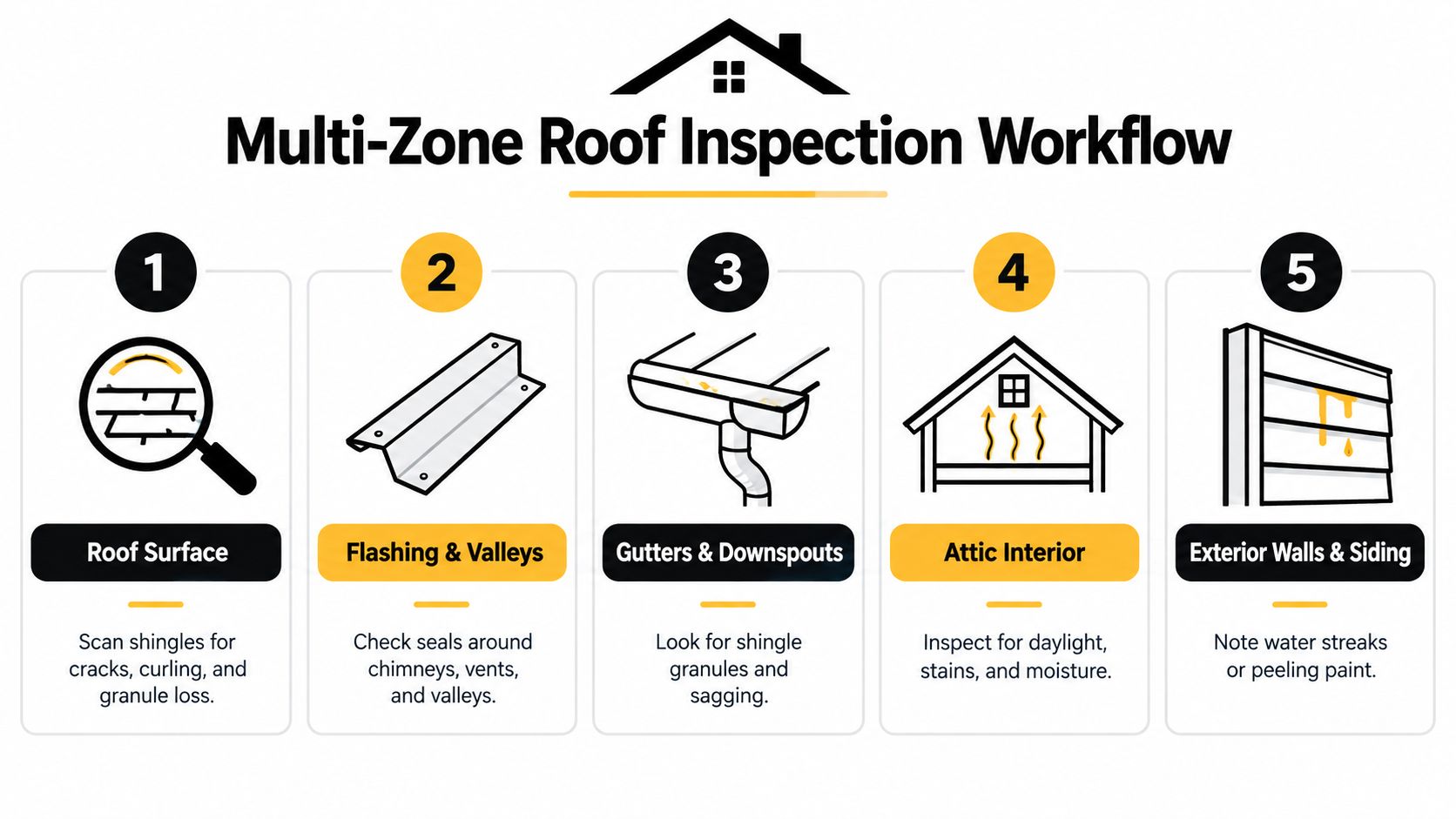
A driveway check can reveal missing shingles, but it cannot show whether flashing has pulled loose, decking has softened, or attic moisture is affecting the roof system. Midwest wind and hail can damage separate areas at the same time, so the inspection should follow the roof's full water path, from the covering to the attic. For a step-by-step walkthrough of what a professional evaluates, see this residential roof inspection guide.
Start with the roof covering
From the ground, check for uneven slopes, missing sections, dark bald spots, patchy areas, and storm debris. A qualified inspector can then assess exposed areas safely and document damage that may not be visible from the driveway. The goal is to map damage by roof slope, not just identify one defective shingle. This roof inspection workflow provides a useful outline of what inspectors examine.
Do not climb a steep, wet, or visibly damaged roof. Loose granules can make the surface slippery, and hail-weakened shingles may break underfoot. Take ground-level photos from each side of the house, include the roof slope in the frame, and note the date and weather conditions. Those images give a contractor a clearer starting point and help separate old wear from recent storm damage.
Check the points where materials meet
Flashing protects the transitions where leaks often begin. Inspectors examine metal, sealant, and surrounding materials at:
- Walls and chimneys: Look for lifted edges, failed counterflashing, and open joints.
- Valleys: Check for damaged covering, exposed underlayment, or debris blocking runoff.
- Vents and penetrations: Examine boots, collars, and seals around plumbing vents, skylights, and other openings.
- Roof edges: Review drip edges and perimeter materials for wind exposure or separation.
Photograph each transition as a separate detail, then take a wider image showing its location. That record helps a contractor connect a visible opening with the roof plane, wall, chimney, or drainage route involved.
Follow the water path
Gutters and downspouts show how the roof handles runoff. Granules in the gutters may indicate covering wear, while sagging or damaged gutters can hold water against the fascia. Check roofline alignment as well. A visible dip may point to decking, framing, or prolonged moisture concerns.
Exterior walls also matter. Water streaks, peeling paint, or staining below roof intersections can indicate overflow or flashing trouble that is hidden from the roof surface.
Finish in the attic
The attic can reveal conditions that exterior photos miss. Look for water stains, damp insulation, daylight through the roof deck, musty areas, and blocked or ineffective ventilation. A moisture meter adds useful evidence when insulation or wood feels questionable, helping identify excess moisture before a stain becomes obvious. Do not press on soft decking or enter an unsafe attic.
Record each finding by zone, with a wide photo and a close-up. A roof covering may look acceptable while a flashing transition, drainage route, or attic moisture problem requires prompt attention.
Weighing Targeted Repairs Against Full System Replacement
The cheapest estimate isn't always the least expensive decision. A targeted repair can preserve a younger roof when the defect is isolated and the surrounding materials remain flexible and intact. On an aging roof, repeated patches may create a cycle of service calls without restoring the roof's overall waterproofing.
Material benchmarks help frame the discussion. According to this roof age assessment guide, 3-tab asphalt shingles typically last 15 to 20 years, architectural asphalt 25 to 30 years, EPDM or TPO low-slope membranes 20 to 30 years, standing-seam metal 40 to 70 years, clay or concrete tile 40 to 50-plus years, and slate 75 to 150 years.
Use the condition, not the sales pitch
Widespread granule loss, bald areas, curling, and repeated leaks across multiple slopes are more meaningful than one isolated defect. A roof can reach end-of-life before its nominal age limit when several of those conditions appear together.
A repair makes sense when the damaged area is limited, the roof still has useful service life, and the inspection finds sound flashing, drainage, decking, and attic conditions. Replacement becomes more practical when the roof has widespread deterioration or when each new repair exposes another weak area.
Repair vs. Replacement Decision Matrix
| Condition Indicator | Recommended Action | Why It Matters |
|---|---|---|
| Isolated missing or damaged shingles on an otherwise sound roof | Targeted repair | The failure is localized, and surrounding materials can still support a durable repair. |
| One leaking flashing point with healthy roof covering | Repair flashing and affected materials | The leak source is specific, so replacing the entire roof may add cost without solving a broader problem. |
| Granule loss and bald spots across several slopes | Plan for replacement | Protective surface loss is widespread, leaving more of the asphalt exposed to weather. |
| Repeated leaks in different roof areas | Favor replacement | Multiple leak locations often indicate system-wide wear rather than one defective detail. |
| Sagging roofline or soft decking | Obtain a professional structural evaluation | The concern may extend below the shingles and require more than a surface patch. |
| Old roof with brittle shingles and deteriorated flashing | Replace or schedule replacement promptly | New repairs may not bond or integrate reliably with failing surrounding materials. |
A repair should restore the system, not merely hide today's symptom.
Ask the contractor to separate the immediate repair from the condition of the remaining roof. A clear estimate should identify the affected slopes, flashing, underlayment, decking if applicable, ventilation, cleanup, and warranty terms. If the recommendation is replacement, compare the scope of work rather than choosing solely by the lowest total.
How Severe Storms and Hail Accelerate Roof Failure
Kansas City roofs face more than ordinary aging. Hail can bruise the shingle mat, remove granules, and weaken the surface even when damage isn't obvious from the street. High winds can lift edges, break seals, and expose underlayment. Repeated weather events can turn a roof that still looks acceptable into one with reduced resistance to the next storm.
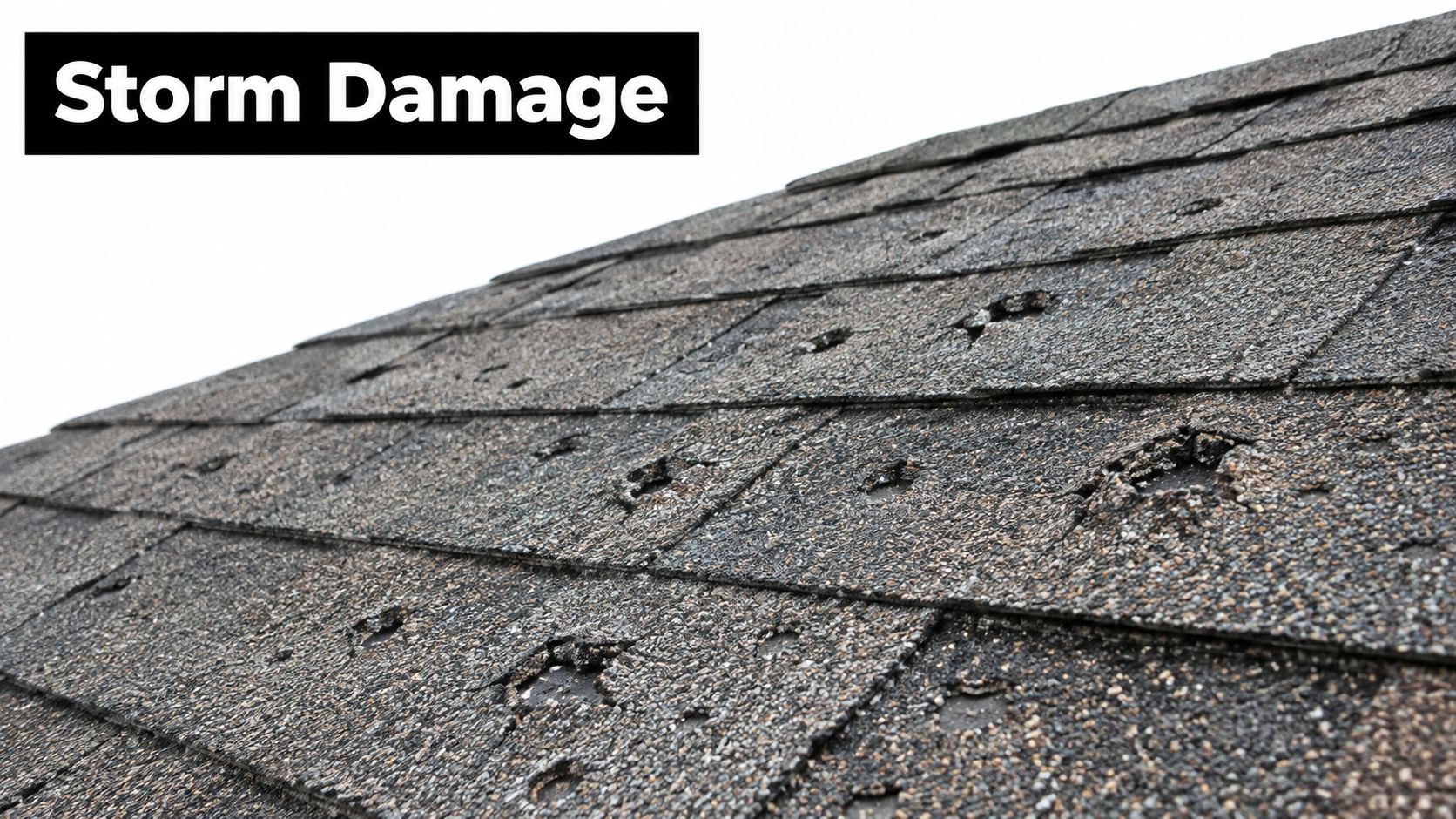
The important distinction is between cosmetic marks and functional damage. A discoloration may not compromise the roof. A soft bruise, fractured mat, displaced granules, torn shingle, or damaged flashing can reduce the roof's ability to shed water and resist wind.
Inspect after the weather clears
After hail or a severe wind event, check the ground for shingle pieces, inspect gutters for fresh granules, and look for missing or shifted materials from a safe position. Photograph the date, affected elevations, fallen branches, damaged screens, vents, siding, and other exterior components. Avoid making permanent repairs before documenting the condition unless water is actively entering and emergency protection is necessary.
Recent Verisk data reported that severe hail affected 20% or more of roofs in 16 U.S. states in 2025, compared with 12 states in 2024. The same source reported roof replacement cost value of $23 billion in 2025 and an average U.S. residential roof replacement of about $17,631, which was 33% higher than the prior four-year average, as shown in this Verisk report on the state of America's roofs.
Those figures don't determine whether your roof needs replacement. They do explain why storm documentation and prompt evaluation matter. Materials and labor can become more expensive while a homeowner is still deciding whether damage is cosmetic.
A roof with one repairable storm mark isn't automatically a replacement candidate. A roof with damage across multiple slopes, previous storm patches, active leaks, and aging shingles deserves a broader review. Repeated repairs can also leave mismatched materials and multiple vulnerable transitions.
This video can help homeowners understand what storm-related roof damage may look like before requesting an inspection:
Insurance decisions should follow the policy and the documented damage, not a contractor's promise that every storm requires a full replacement. A qualified inspector should distinguish wear from sudden damage and explain which components need repair, replacement, or continued monitoring.
Navigating Insurance Claims and Contractor Estimates
A storm claim is easier to support when the homeowner starts documenting before the inspection. Photograph the roof and exterior from the ground, record the storm date, save temporary repair invoices, and note when interior staining or leaks first appeared. Do not climb onto the roof after severe weather. A fall can create a larger problem than the original damage.
Build a clean claim file
Keep these records together:
- Event details: Record the date, approximate weather conditions, and areas that appear affected.
- Visual evidence: Photograph roof damage from the ground, plus interior stains, wet insulation, damaged ceilings, gutters, siding, and screens.
- Maintenance history: Gather invoices, inspection reports, and repair records. They help distinguish long-term wear from damage caused by a recent event.
- Policy information: Review the deductible, exclusions, roof payment terms, and notice requirements before filing.
A contractor's inspection should identify the roofing material, affected slopes, storm indicators, flashing condition, ventilation, drainage, and possible decking damage. The estimate should identify each repair or replacement task clearly enough to compare with the carrier's scope.
Compare scopes, not promises
Two estimates can describe the same roof differently. One may list shingles only, while another includes underlayment, ice and water protection where appropriate, flashing, ventilation, pipe boots, drip edge, disposal, permits, and cleanup. Compare each line item with the observed condition. Ask whether it addresses storm damage, an installation requirement, or normal aging.
Adjuster and contractor scopes may also differ because they serve different purposes. The adjuster's scope records covered damage under the policy. The contractor's scope may include the labor, accessories, code-related work, and sequencing required to install the roof correctly. Ask the contractor to identify these differences in writing rather than treating a larger scope as proof that every item will be covered.
Insurance carriers make coverage decisions. A contractor can document damage, prepare a scope, and provide project information, but cannot guarantee approval or justify exaggerating conditions. Be cautious with vague estimates, pressure to sign immediately, and requests for payment before the work and payment terms are clear.
Two States Exteriors LLC handles Kansas City storm claims from free on-site inspection through a detailed project plan and a No Money Upfront policy. Homeowners should still compare other licensed, bonded, and insured contractors before signing, using this roof insurance claims process guide to understand the workflow.
Your Action Plan for a Secure and Durable Home
A roof replacement decision becomes easier when you stop treating the roof as a row of shingles and start tracking the whole assembly. The covering, flashing, drainage, roofline, attic ventilation, and decking all influence whether a repair will hold or whether replacement is the responsible next step.
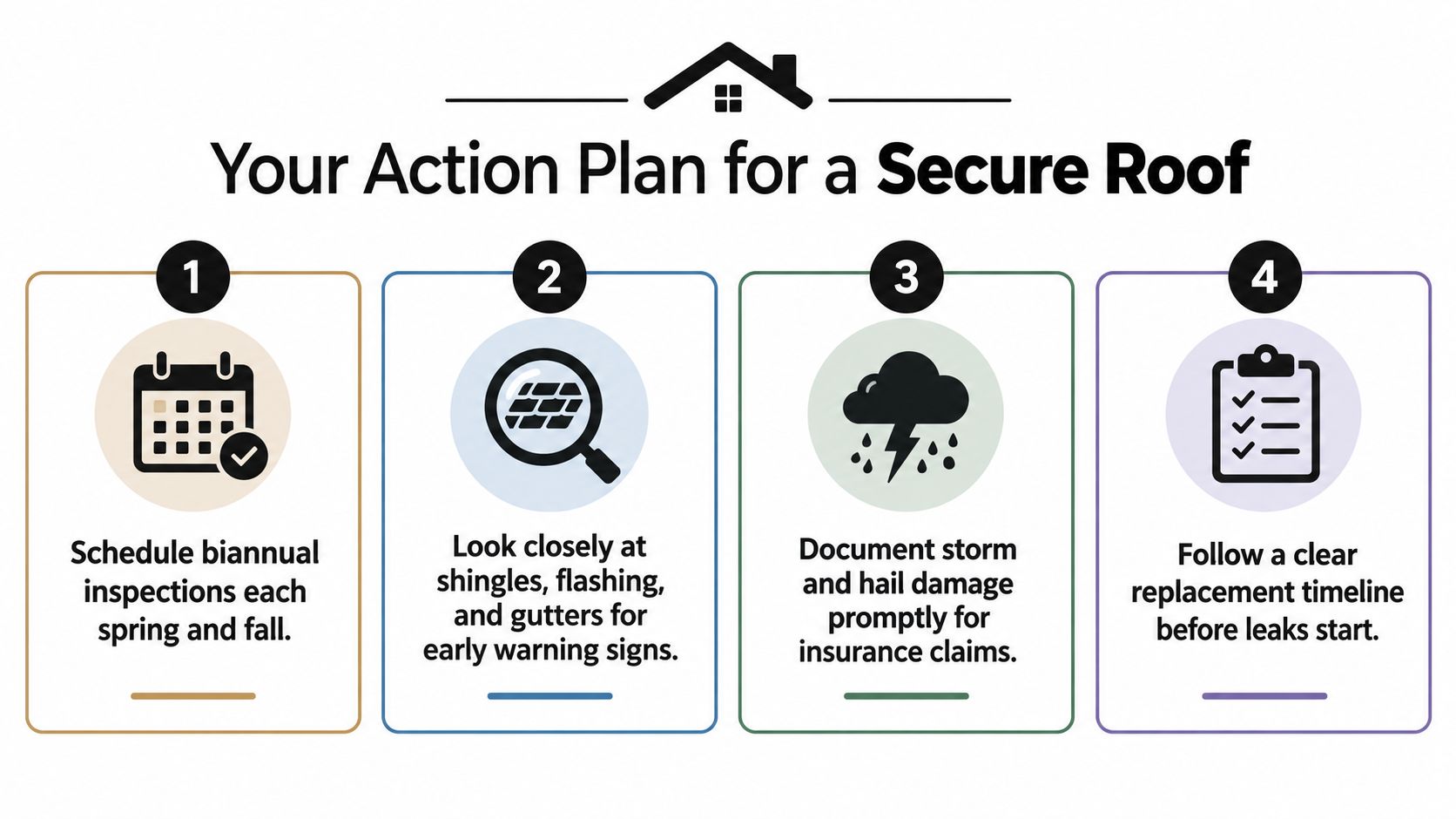
Neutral industry guidance says most new roofs are designed for about 20 years, asphalt shingles commonly last 15 to 30 years, and biannual inspections can reveal warped shingles, deteriorated flashing, or granules in gutters before leaks appear, according to this roof damage guidance from Nationwide.
Put the inspection on a calendar
Schedule roof checks in spring and fall, and arrange an additional evaluation after significant hail or wind. Look from the ground between professional visits, but don't interpret an undamaged view as proof that the system is sound. Attic stains, musty conditions, granules in gutters, and recurring repairs deserve attention even when the shingles still have color.
Make the replacement decision deliberately
Use this short checklist:
- Confirm the age and material: Find installation records or ask a contractor to identify the roof type.
- Map the warning signs: Note surface wear, flashing defects, drainage problems, sagging, and attic evidence.
- Review repair history: Multiple patches across different slopes change the financial and practical calculation.
- Document storm events: Photograph conditions promptly and keep claim-related records together.
- Get a written scope: Require clear materials, affected areas, ventilation work, disposal, cleanup, and warranty information.
- Plan before failure: If the roof is near its expected service life and shows widespread deterioration, schedule replacement before a leak forces an emergency response.
Proper attic ventilation matters because trapped heat and moisture can contribute to premature material deterioration and hidden moisture problems. A contractor should assess intake and exhaust paths as part of the roof system, not treat ventilation as an afterthought added only when the shingles are replaced.
If your roof is showing several warning signs, request a professional inspection now rather than waiting for the next storm to make the decision for you.
Two States Exteriors LLC provides roof inspections, roof repair, roof replacement, and storm-damage claim support for Kansas City Metro homeowners and property owners. Visit Two States Exteriors LLC to request a free on-site inspection and receive a detailed plan for repairing or replacing your roof.