A hailstorm has just moved through Kansas City. You're checking the roof from the driveway, wondering whether the marks you can see are cosmetic or a sign that the next storm will cause a leak. If you like the texture of cedar but don't want a roof that needs regular wood treatment, synthetic cedar shakes may be worth considering, provided you compare the tested performance and the full installation plan, not just the sample board.
These molded roofing products are designed to bring a cedar look to homes exposed to Midwest weather. Their ratings can help you compare impact and fire performance, but they don't guarantee that every roof will perform the same way. The assembly, installation, and what happens to the material at the end of its service life all matter.
What Are Synthetic Cedar Shakes
After a hailstorm, a Kansas City homeowner might compare a damaged cedar roof with a synthetic option that resembles it but is made from molded polymer or composite materials. Synthetic cedar shakes are manufactured roof coverings shaped to reproduce the uneven texture and appearance of split cedar. Unlike natural wood, they're factory-made from plastic compounds or composite formulations rather than cut from a tree.
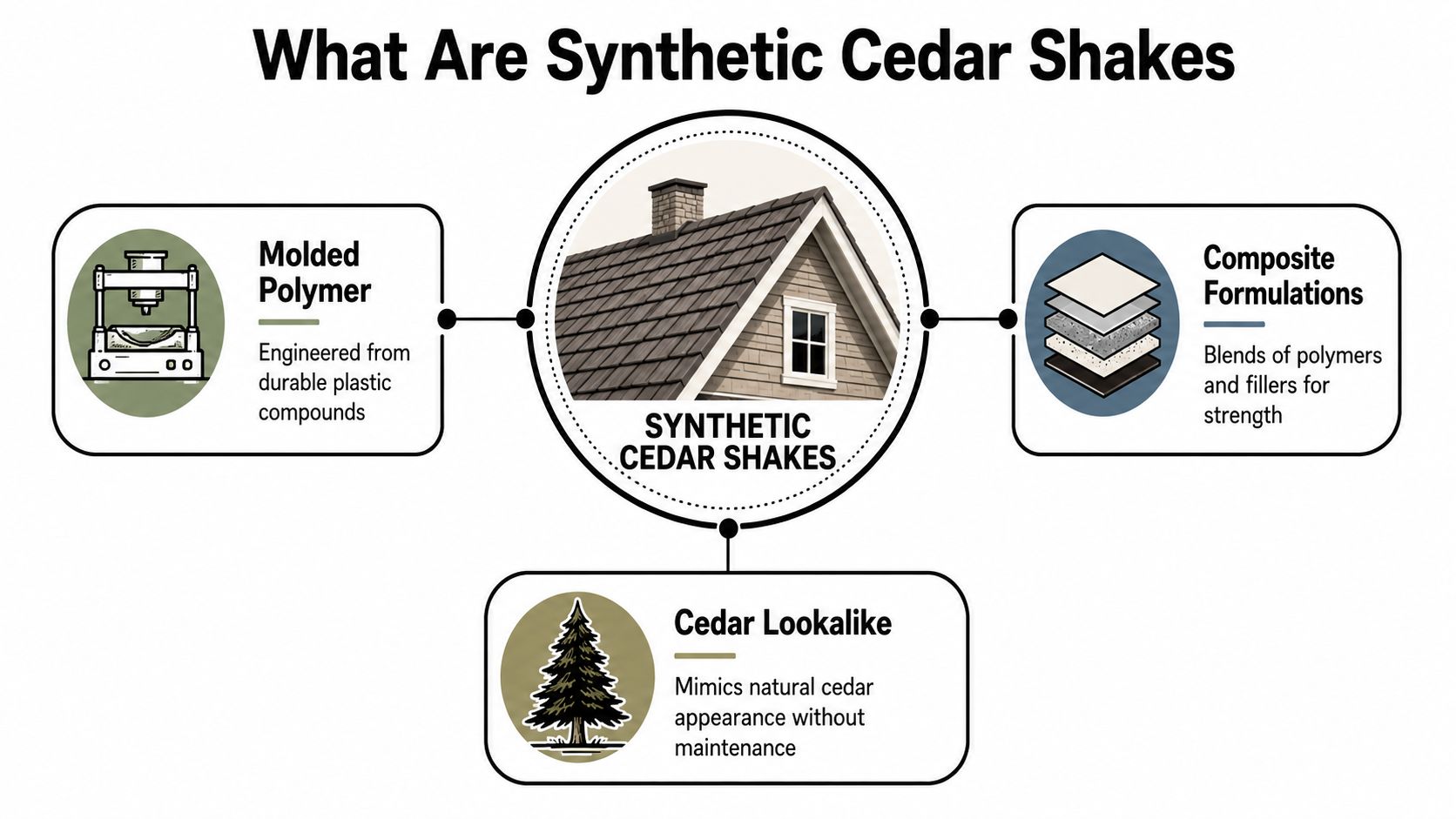
The word “synthetic” describes a family of products, not one universal recipe. Some shakes use molded polymer, while others combine polymers with fillers or other materials. The formulation, profile, and manufacturing process vary by product, so check the specification sheet for the particular shake being considered rather than assuming all synthetic roofs have identical properties.
Two standards are especially useful when you're comparing performance. UL 2218 is a standardized impact-resistance test that classifies roofing products from Class 1 through Class 4. In the test for Class 4, a steel ball about two inches in diameter and weighing approximately 1.2 pounds is dropped from about 20 feet onto designated locations; products must withstand the impacts without cracking, splitting, or rupturing. A published synthetic-shake specification describes the UL 2218 test and its Class 4 criteria.
Fire performance is commonly evaluated under ASTM E108 and UL 790, where Class A is the highest roof-covering fire classification. A rating is useful information, but it isn't a promise that an entire roof will behave identically under every condition. The roof deck, underlayment, installation, and local code requirements are part of the job too.
Synthetic Cedar Shakes vs Real Cedar
Natural cedar offers an authentic wood surface and variation that a molded product is designed to imitate. It also requires homeowners to accept the upkeep and weathering that come with a wood roof. Synthetic shakes trade some of that natural character for manufactured consistency and product ratings that can be checked against published specifications.
| Factor | Synthetic Cedar | Real Cedar |
|---|---|---|
| Appearance | Molded to imitate split cedar, with product-specific textures and color blends | Natural wood grain and variation |
| Maintenance | Doesn't require the same wood-specific staining or sealing routine, but still needs roof inspections and repairs | Requires ongoing attention to wood condition and weather exposure |
| Impact and fire performance | Some products publish Class 4 impact and Class A fire classifications; verify the exact product and assembly | Performance depends on the wood roof and any applicable treatment or assembly |
| Weather considerations | Product performance depends on installation, exposure, underlayment, and deck condition | Wood responds to moisture and weather, so upkeep matters |
| Cost decision | Compare the installed proposal, warranty terms, and likely maintenance needs | Compare material, installation, and continuing maintenance requirements |
The distinction between product rating and whole-roof performance is important. A specification may identify Class 4 impact resistance and Class A fire performance, but the rating belongs to the product and test conditions described in that specification. It doesn't remove the need for correct fastening, flashing, and assembly details.
There's no reliable cost conclusion without a roof-specific proposal. Roof shape, tear-off work, details around chimneys and valleys, and the chosen product all affect the scope. Ask for itemized bids that describe the material and the installation, then compare those with the work and upkeep a cedar roof would require.
If you're weighing wood against a wood-look alternative, this comparison of cedar shakes and cedar shingles can help clarify the terminology. The practical choice comes down to how much you value natural material, how much maintenance you're prepared to take on, and whether the synthetic product's documented performance fits your roof and local requirements.
Material Types and Manufacturing Process
Synthetic cedar shakes aren't all made the same way. A product may be primarily molded polymer, or it may use a composite formulation that blends polymers with fillers. The manufacturer's specification should identify the product and its tested properties. If the materials are unclear, ask for the technical documentation before using a color sample or showroom display to make a decision.
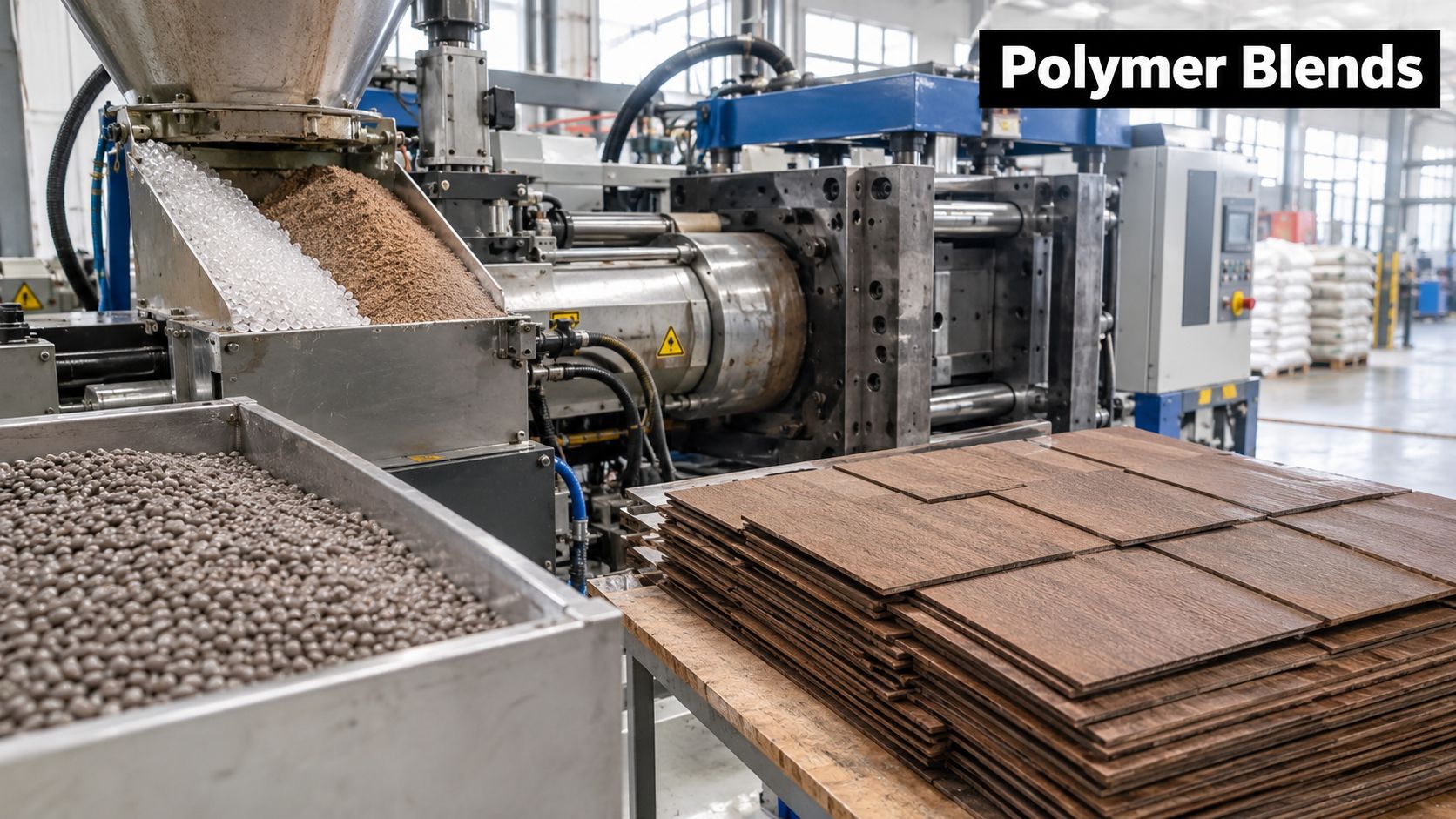
Factory molding allows manufacturers to reproduce a shake profile, surface texture, and color pattern across multiple pieces. It can also support product-specific engineering and testing. That doesn't mean every molded shake has the same impact or fire rating. Ratings apply to the specified product and must be confirmed in its own documentation.
Natural cedar varies because it's wood. A molded shake instead gets its character from the manufacturer's chosen profile and finish. Look closely at a full-size sample, not just a small swatch. Check how the texture reads in daylight and how the product's color blends across multiple pieces, since the roof will be viewed as a field rather than as a single shake.
Ask for the exact product specification. A general description such as “composite” doesn't tell you the polymer type, fire classification, impact rating, or installation requirements.
Homeowners comparing product families can also review what composite roofing means. Then match the specification to the proposal: the named product, underlayment, fastening details, and tested assembly should be clear. If a contractor can't say which product is being installed, it's difficult to confirm that its ratings apply to the work.
Advantages and Disadvantages to Consider
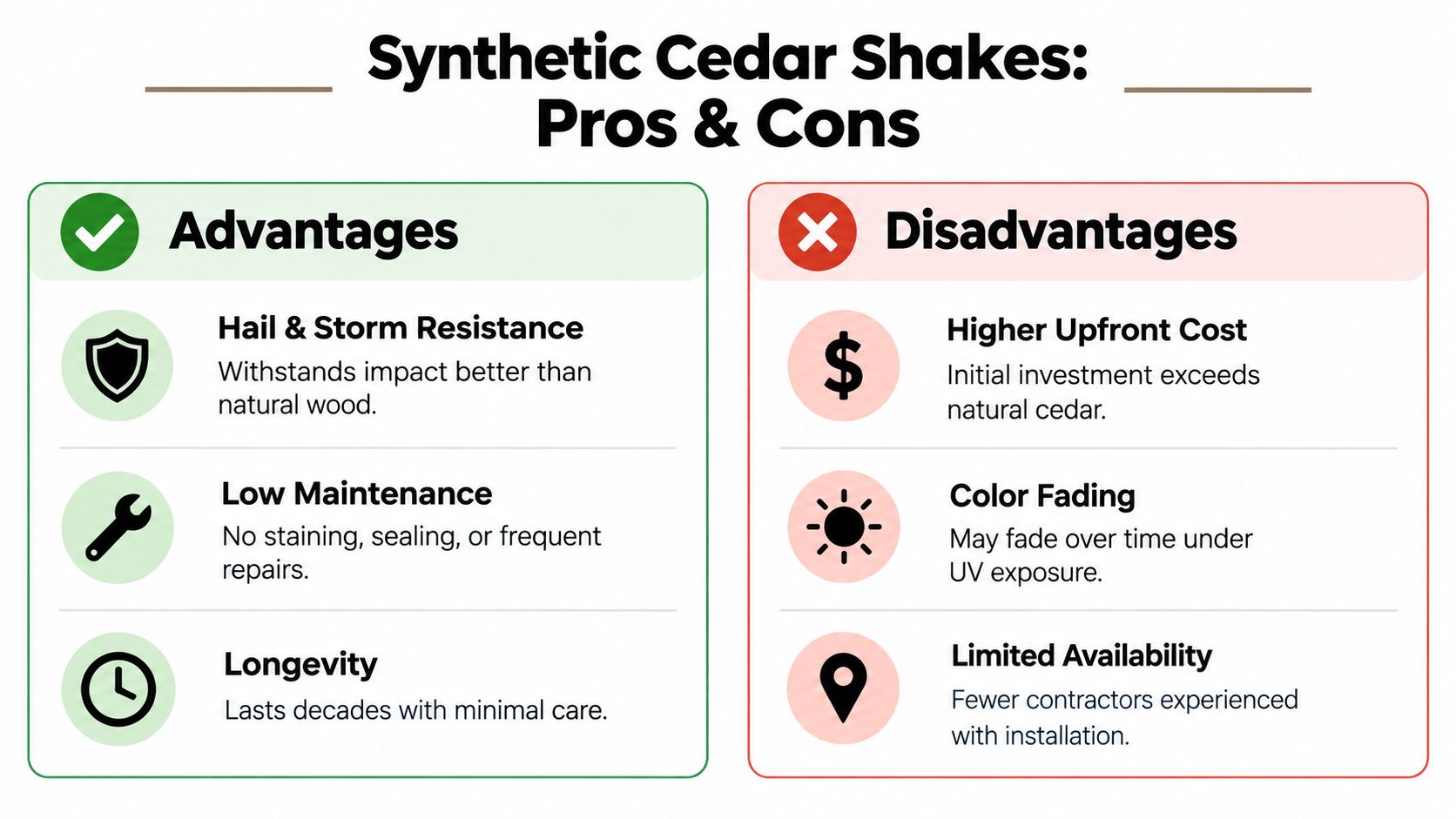
The strongest case for synthetic cedar shakes is that they pair a cedar-inspired appearance with published performance criteria. A specification for one product, for example, lists Class 4 impact resistance and Class A fire performance, while also giving wind-resistance conditions tied to a stated exposure. Those details are more useful than broad claims that a roof is “storm-proof,” but they don't eliminate the need to examine the complete installation.
Where the product can make sense
- A cedar-like profile: Molded textures offer an alternative for homeowners who want a shake appearance without choosing natural wood.
- Documented ratings: Product-specific impact and fire classifications give you concrete criteria to check against project needs and local code.
- Less wood-specific upkeep: Synthetic material doesn't require the same maintenance approach as natural cedar, though no roof should be treated as maintenance-free.
- A product built for roof use: Factory production makes it possible to evaluate a defined material and profile rather than relying on appearance alone.
Where buyers should be cautious
- Upfront price: Don't assume the synthetic option will cost less than cedar or another roof. Compare complete proposals, including tear-off, flashing, underlayment, and labor.
- Installation sensitivity: A product's test rating doesn't certify a poorly installed roof. Fasteners, exposure, deck condition, and details matter.
- Color and availability: Ask what finishes and profiles are available, and whether the supplied sample represents the final blend.
- End-of-life uncertainty: Recycled input or a long warranty doesn't, on its own, establish that the shakes can be recycled after removal.
Some disadvantages are manageable through planning. Others, especially uncertainty about disposal, need a direct answer from the manufacturer or installer before you commit. Use the product's documentation to test the claims, and treat marketing language as a starting point rather than a substitute for the specification.
Installation Considerations for Homeowners
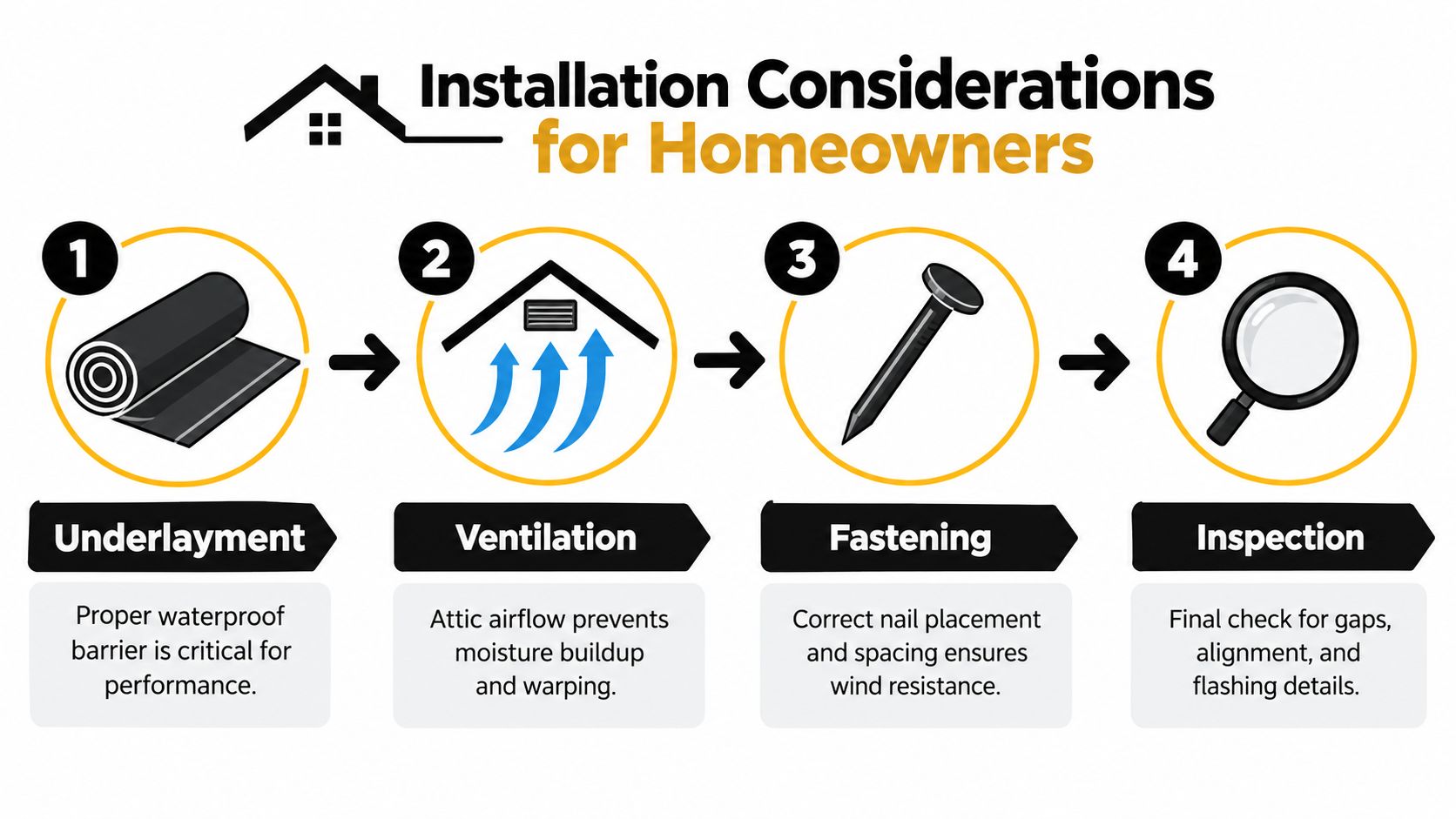
A synthetic shake can only perform as intended when the roof assembly and installation match the product requirements. Before work begins, ask the contractor to explain how the existing deck will be checked, which underlayment will be used, and how the product's exposure and fastening pattern will be set. These are not minor details: the product rating doesn't replace correct installation.
Confirm the assembly before installation
Underlayment and deck: The proposal should identify the underlayment and describe how the crew will handle damaged or uneven decking. If the deck needs repairs, clarify how those will be documented and approved before the new roof covers it.
Exposure and fastening: Ask what exposure the installer plans to use and how fasteners will be positioned. Follow the manufacturer's written instructions, since an incorrect layout can affect how the shakes shed water and resist wind.
Ventilation and flashing: Have the contractor review attic ventilation and explain how the crew will detail valleys, eaves, chimneys, sidewalls, and other penetrations. Roof leaks often begin at transitions, not in the middle of a clean roof slope.
A good proposal identifies the product and describes how the crew will install it. “Install synthetic shakes” alone isn't enough detail to evaluate the work.
Check the closeout plan
Before signing, confirm how the contractor will verify the finished roof, address debris, and document the installed product. Ask how local building requirements affect the chosen material and assembly. If storm damage is part of the project, keep inspection records and the contractor's written scope with your other project documents.
The goal isn't to turn a homeowner into an installer. It's to make sure the contractor can explain the system in plain language and connect the product's documentation to the actual work planned for your home.
Aesthetic Options and Design Choices
Synthetic cedar shakes are designed to evoke wood, but the resemblance depends on the profile, surface texture, and color blend. Some products lean toward a rough, split-cedar appearance. Others look more regular and uniform. Compare full-size samples outdoors and view them from the street, because color and texture can read differently on a small sample than across a roof.
The roof should suit the home's architecture as well as the homeowner's taste. A heavily textured profile may complement a home with rustic materials, while a more controlled pattern may fit a cleaner exterior. Check any neighborhood or association requirements before selecting a product, and confirm that the manufacturer offers the profile and finish shown in the sample.
Synthetic shakes may also be combined visually with other exterior materials, but transitions need practical attention. Discuss how the roof meets walls, dormers, porches, and other roof surfaces. A good design choice doesn't make flashing less important.
Choose the color and profile from the actual product line, then ask how the finished roof will look across the full slope. A roof is a large surface, and the overall blend matters more than an isolated sample.
Appearance is part of the decision, not the whole decision. Narrow the options to products that meet the project's performance and code requirements, then choose among the finishes that work with the house. That order reduces the chance of falling for a look that isn't suitable for the roof.
Are Synthetic Cedar Shakes Right for Kansas and Missouri
An April hailstorm moves through the Kansas City metro, drops hail for twenty minutes, and by morning there are roofing signs on every lawn in the subdivision. That is the climate a synthetic cedar shake has to survive here: spring hail, straight-line winds, and wind-driven rain, repeated year after year.
In this hail corridor, Class 4 impact resistance matters most. Ask your contractor for the specific product's UL 2218 report rather than accepting the class label at face value. For wind, ask which test the published rating comes from. ASTM D3161 is the standard fan-induced wind test used for shingles and shakes, and its result applies to the wind speeds and installation conditions the manufacturer documents. Confirm that your roof's slope, deck, fastener pattern, and exposure match what the rating assumes.
Storm damage in this region usually shows up at the roof's details first. Ask how the proposed assembly handles wind-driven rain at the eaves, valleys, and wall transitions, because that is where leaks tend to start after a hard storm, whatever the field material is rated to take.
Temperature swings and sun exposure also work on a roof over time. Don't rely on a general claim that a material is "built for the Midwest." Ask the manufacturer what its documentation says about the specific product, and read the warranty for its scope, exclusions, and maintenance requirements before signing anything.
Synthetic cedar can be a reasonable candidate when you want a wood look and the product's tested performance fits the project. Compare the full assembly, the contractor's experience with that product, and the complete scope of work before deciding.
The Sustainability Question Homeowners Should Ask
A roof that lasts longer or contains recycled material may sound like a straightforward environmental choice. But recycled content and end-of-life recyclability are different questions. Recycled material in a product tells you something about what went into it. It doesn't tell you whether the removed shakes can be collected, separated, and turned into roofing material again.
One manufacturer specification reports up to 80% post-industrial recycled material and presents a 40-to-60-year service life as an environmental advantage over wood. Those are product-related claims, not proof of low lifecycle impact or a closed recycling loop. A discussion of composite roofing highlights the gap between recycled inputs, long service claims, and end-of-life information.
Ask what happens after removal
When you compare roofing materials, ask the manufacturer or installer for specific answers:
- Polymer type: What material is the shake made from, and can the manufacturer identify it clearly?
- Recycled-content basis: Is the stated recycled content post-industrial, post-consumer, or a combination?
- Take-back options: Does the manufacturer accept removed material, and if so, under what conditions?
- End-of-life route: Can the product be recycled after removal, or is disposal the expected outcome?
- Local disposal: What facilities or disposal options are available in your area?
- Storm damage: What happens to broken or hail-damaged shakes, especially if they're mixed with underlayment, nails, and other roofing debris?
These questions matter because a roof doesn't come off as clean, sorted pieces. A tear-off can include multiple materials, and storm damage may create mixed debris that is harder to separate. Ask the contractor how the project waste will be handled instead of assuming a recycling option exists.
Durability still belongs in the environmental discussion. A roof that resists moisture, insects, UV exposure, or fire-related hazards may reduce the need for replacement, but those benefits have to be weighed against manufacturing impacts and disposal. A long warranty tells you about a manufacturer's stated coverage terms; it doesn't establish a complete lifecycle assessment.
For homeowners comparing synthetic shakes with cedar, metal, or asphalt, the best approach is to ask for the same kind of clarity from each option. What material is being installed? How is it maintained? What happens when the roof is removed? If the answers are vague, treat the environmental case as incomplete rather than filling in the gaps with assumptions. This guide to eco-friendly roofing can help frame the conversation, but product-specific disclosures are still necessary.
A practical decision should balance performance, appearance, installation quality, cost, and end-of-life planning. Start with a roof inspection and a written scope that identifies the exact product, its documented ratings, the installation details, and the plan for removal and disposal. Two States Exteriors LLC offers roof inspections, repair and replacement planning, and storm-damage support for homeowners and property owners in the Kansas City area.
If you're considering synthetic cedar shakes, ask Two States Exteriors LLC for an on-site inspection and a detailed project plan that accounts for your roof's condition, product requirements, and local storm exposure. Visit Two States Exteriors LLC to discuss your roofing options and request a quote.