
A minor, localized roof leak in Kansas City generally costs about $300 to $1,000 to repair, but that price can double or triple before the crew finishes if the leak has damaged decking, insulation, or interior surfaces. The stain you see may be small, while the failed roof assembly behind it is not.
At 2 a.m., a bucket under the kitchen ceiling gives you one clear fact: water is getting in. It doesn't tell you whether the cause is a lifted shingle, failed flashing, cracked pipe boot, or wet roof decking. Water can travel along framing before it appears indoors, so the ceiling stain often sits several feet from the actual entry point.
That difference explains why a quote that starts as a simple patch can become a more involved repair. A useful starting point is the guidance on water damage from a roof leak, especially when the ceiling, insulation, or attic framing already shows moisture.
The Hidden Cost of a Small Roof Leak
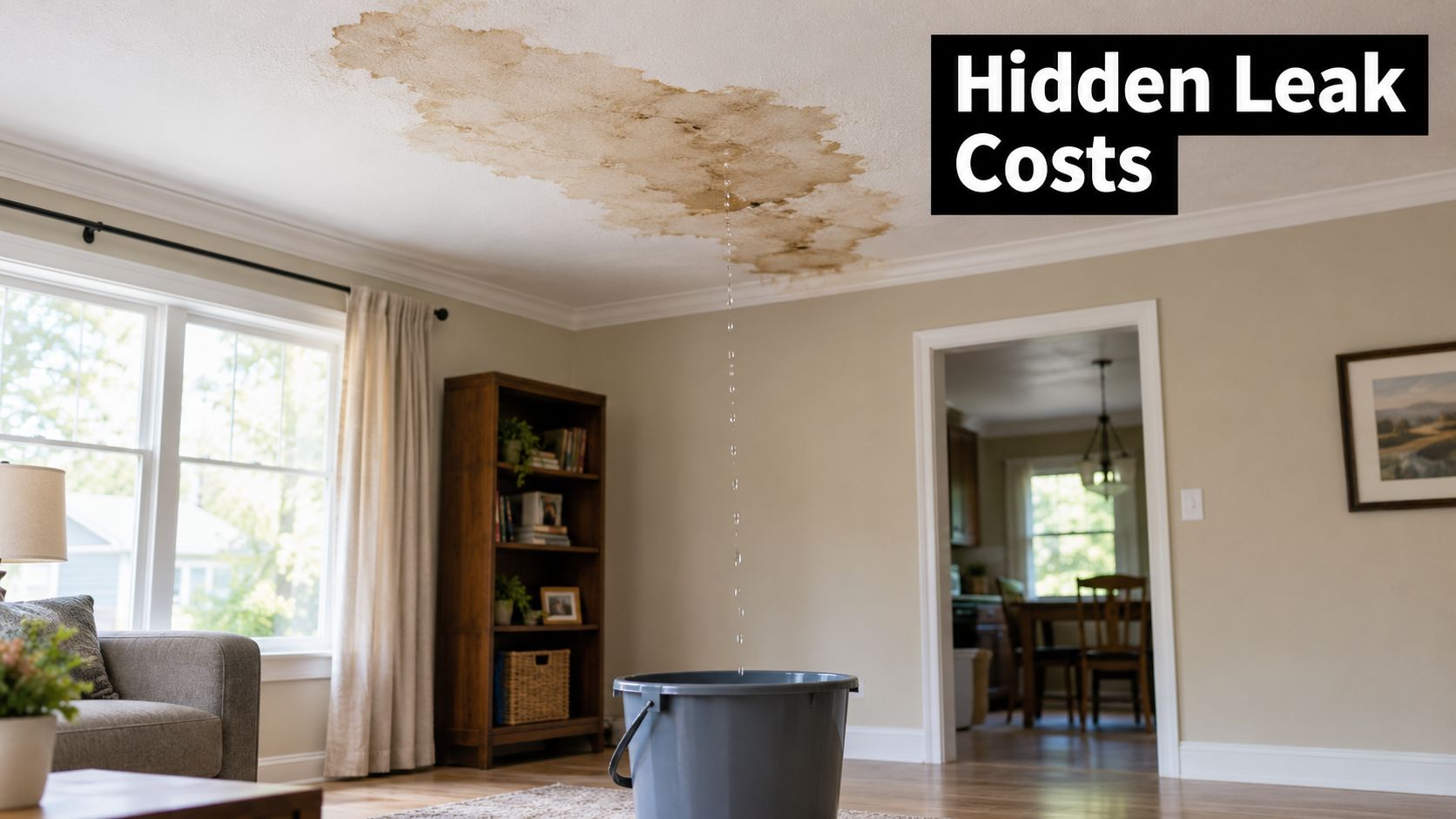
At 2 a.m., the bucket under the ceiling tells you one thing. Water has made it past the roof system. Where it shows up indoors is often several feet from where it got in, and the failure may be a pipe boot, valley, wall flashing, or another transition that takes time to trace.
National consumer cost data places minor leaks or small holes around $100 to $1,000, while stopping a roof leak more broadly falls around $150 to $2,000, depending on the source and accessibility, according to Verisk's roofing cost report. A narrower analysis places an ordinary leak patch, including leak tracing, around $300 to $800, with pipe boot or vent-flashing work commonly around $150 to $450.
The expensive part is often hidden under the first low quote. This is the $300-to-$1,000 trap homeowners run into all the time. A contractor prices a small patch, then the shingles come off and the crew finds soft decking, wet underlayment, or insulation that has been holding moisture longer than anyone realized. What looked like a quick service call turns into removal, replacement, drying, and rebuilding the water-shedding detail.
A separate national benchmark puts a small residential leak around $350 to $1,550, with labor representing about 60% of the invoice, as described by HomeAnvil's roof repair cost analysis. That labor share makes sense in the field. Diagnosis, ladder setup, fall protection, careful tear-off, and reinstallation usually take more time than the actual materials cost.
Practical rule: A cheap repair is only a bargain if the roofer has identified the entry point and checked what sits beneath it.
For Kansas City budgeting, $300 to $1,000 is still a fair starting range for a localized professional repair. It is only a starting range. If the attic, insulation, ceiling, or framing already shows moisture, review the signs of water damage from a roof leak before you compare estimates. Ask whether the quote includes tracing, photos, decking inspection, cleanup, and any interior damage tied to the leak.
Understanding Your Roof Repair Estimate
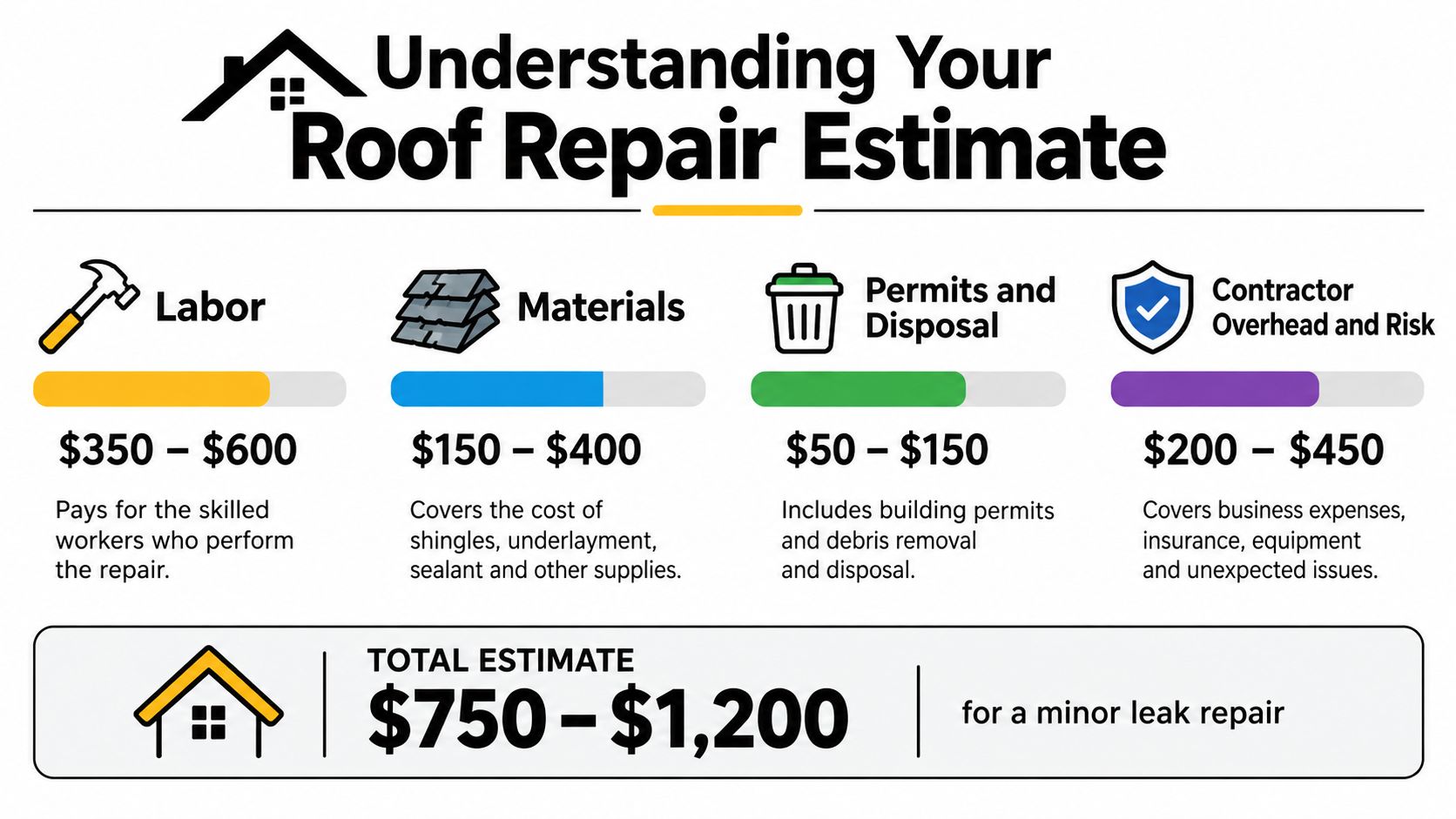
A roof estimate isn't just a price for shingles and sealant. It combines several distinct tasks, each carrying its own time, equipment, and risk.
Diagnosis comes before the patch
The first line item should account for finding the source, not merely observing the stain. A contractor may inspect roof penetrations, flashing transitions, valleys, nearby coverings, attic framing, and the underside of the roof deck. If water has traveled, the diagnostic work can take longer than the physical repair.
A vague “repair leak” description makes it difficult to know what you're buying. Look for a stated source, affected area, proposed repair, and photographs.
Labor includes more than installation
Labor covers setup, ladder placement, fall protection, removal of failed materials, installation, sealing, cleanup, and site protection. Steep slopes and two-story access increase the time and safety requirements, even when the damaged area is small.
Materials depend on the failed assembly
The material list may include replacement shingles, underlayment, flashing, fasteners, sealant, pipe boot components, or decking. The correct repair should restore the roof's water-shedding detail, not merely cover the visible opening with roofing cement.
Access and risk affect the invoice
A walkable, easily reached roof is a different job from a steep roof above an addition or a two-story wall. Contractors may need additional safety equipment, slower positioning, or specialized access arrangements. Those costs aren't padding when they directly support safe work.
Use a detailed roofing estimate example to compare the scope, not just the total. A useful estimate separates diagnosis and access, tear-out, replacement materials, labor, disposal, and warranty terms.
A video can also help you understand why a roof repair estimate includes more than the replacement part.
Before approving work, request photos of the leak source, any damaged decking, the measured repair area, material specifications, and the workmanship-warranty term. A clear scope protects you from both unnecessary replacement and an artificially cheap patch that leaves the original failure in place.
Material Costs by Roof Type
A small leak on one roof can be a simple service call. On another, it turns into the expensive middle ground that catches homeowners off guard. That is the $300 to $1,000 trap, where a cheap-looking patch hides wet wood, failed flashing, or a repair that does not match the roof system.
Roof type drives that risk because each system comes apart differently, uses different accessories, and demands a different level of labor. Asphalt shingles are common around Kansas City, and repairs are usually the most straightforward. Metal, slate, and low-slope membranes often cost more to open up and put back correctly, even when the visible leak looks minor.
Material-specific averages show the spread: about $400 for flat, foam, or single-ply roofing, about $975 for asphalt shingles, about $1,700 for metal, and about $1,800 for slate.
| Roof Type | Average Repair Cost |
|---|---|
| Flat, foam, or single-ply | About $400 |
| Asphalt shingles | About $975 |
| Metal | About $1,700 |
| Slate | About $1,800 |
Those numbers are a starting point, not a quote. If the leak is easy to reach and the surrounding roof is still sound, a localized shingle repair may stay near the lower end. If the crew runs into discontinued materials, custom flashing, brittle components, or damaged substrate, the bill climbs fast.
The patch versus the assembly
Actual cost comes from what failed. A cracked pipe boot on an asphalt roof may call for a focused repair with matching shingles and new flashing details. Wet decking is a different job. The crew has to remove enough roofing to expose solid wood, replace the damaged section, and rebuild the weather-shedding layers in the right order.
That is why ceiling stains can be misleading. I have seen a small interior mark lead to a more technical metal-roof repair, while a larger stain on a walkable shingle roof traced back to one simple failure. A practical roofing material comparison helps clarify those trade-offs before you judge a bid.
Do not approve a substitute material until the contractor explains appearance, compatibility, and warranty impact. The correct repair should restore the roof's water-shedding detail rather than just smearing roofing cement over the visible opening.
Insurance Claims vs Paying Out of Pocket
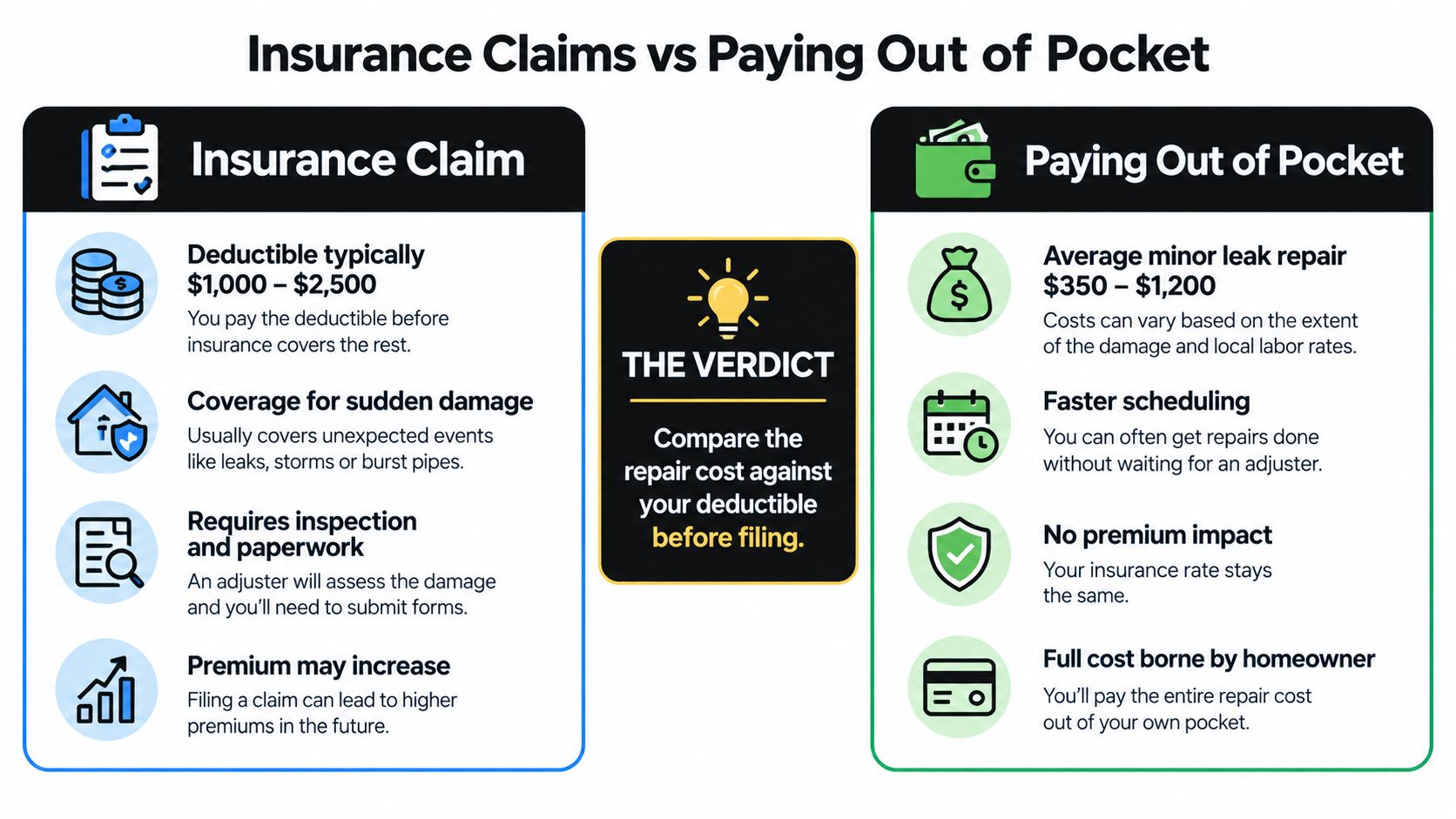
The insurance decision should start with arithmetic, not hope. Current consumer guidance places typical roof-leak repairs around $360 to $1,550, while many homeowners carry deductibles between $500 and $2,000, according to PolicyPorch's roof insurance guidance.
If the written repair estimate is $600 and your deductible is $1,000, filing a claim won't produce a payment for the roof repair itself. You would still owe the full repair cost, and the claim could create paperwork or affect future underwriting. Paying directly is usually the more rational choice for that isolated, non-storm repair.
Use this decision sequence
Document the condition. Photograph the ceiling, attic, roof surface, displaced coverings, and any visible water path. Record when you noticed the issue and whether a recent storm could have caused it.
Get a written estimate. The scope should identify the suspected cause, access work, materials, decking inspection, cleanup, and interior damage. A verbal “small patch” price isn't enough for an insurance decision.
Compare the total loss with the deductible. Include covered ceiling, insulation, flooring, or personal-property damage if a sudden event affected those items. The roof repair alone may not represent the full claim value.
Ask the insurer specific questions. Confirm whether the policy has actual-cash-value limits, wind or hail exclusions, or a separate storm deductible. Coverage depends on the cause, not merely on the fact that water entered the house.
Separate sudden damage from deterioration. Wind, hail, falling trees, or impact damage is generally more likely to be covered. Age, neglect, and normal wear are commonly excluded.
The strict math isn't the only consideration. If a covered storm damaged both the roof and interior, the documented loss may exceed the visible roof repair. Conversely, “insurance may cover it” doesn't make a claim sensible when the repair falls below the deductible.
Don't let a contractor promise coverage before reviewing your policy. A roofer can document physical damage and provide a scope, but your insurer determines coverage under the policy terms.
When a Small Leak Demands a Big Repair
A small leak becomes a big repair when moisture has moved beyond the roof covering. Water can weaken decking, saturate insulation, stain ceilings, and create conditions that require drying or interior restoration. At that point, the job isn't a simple seal around one component.
National cost data separates minor leaks without water damage at roughly $150 to $1,000 from larger leaks involving some water damage at about $1,000 to $3,000. Structural or extensive interior damage can reach $3,000 to $6,000 or more, according to RepairAdvisorPro's roof repair cost analysis.
Read the roof's age and pattern
Roof service life varies widely with design, exposure, construction, materials, and maintenance. Neutral building-maintenance guidance describes service lives ranging from roughly 10 to more than 30 years, while Canadian roof-management research describes effective service lives of about 10 to 25 years for many systems, as documented by the National Research Council Canada publication.
One isolated failure on a well-maintained roof may justify a targeted repair. Recurring leaks near several penetrations, valleys, or flashing transitions suggest a broader condition problem. Replacing one visible component won't solve widespread membrane, underlayment, or substrate deterioration.
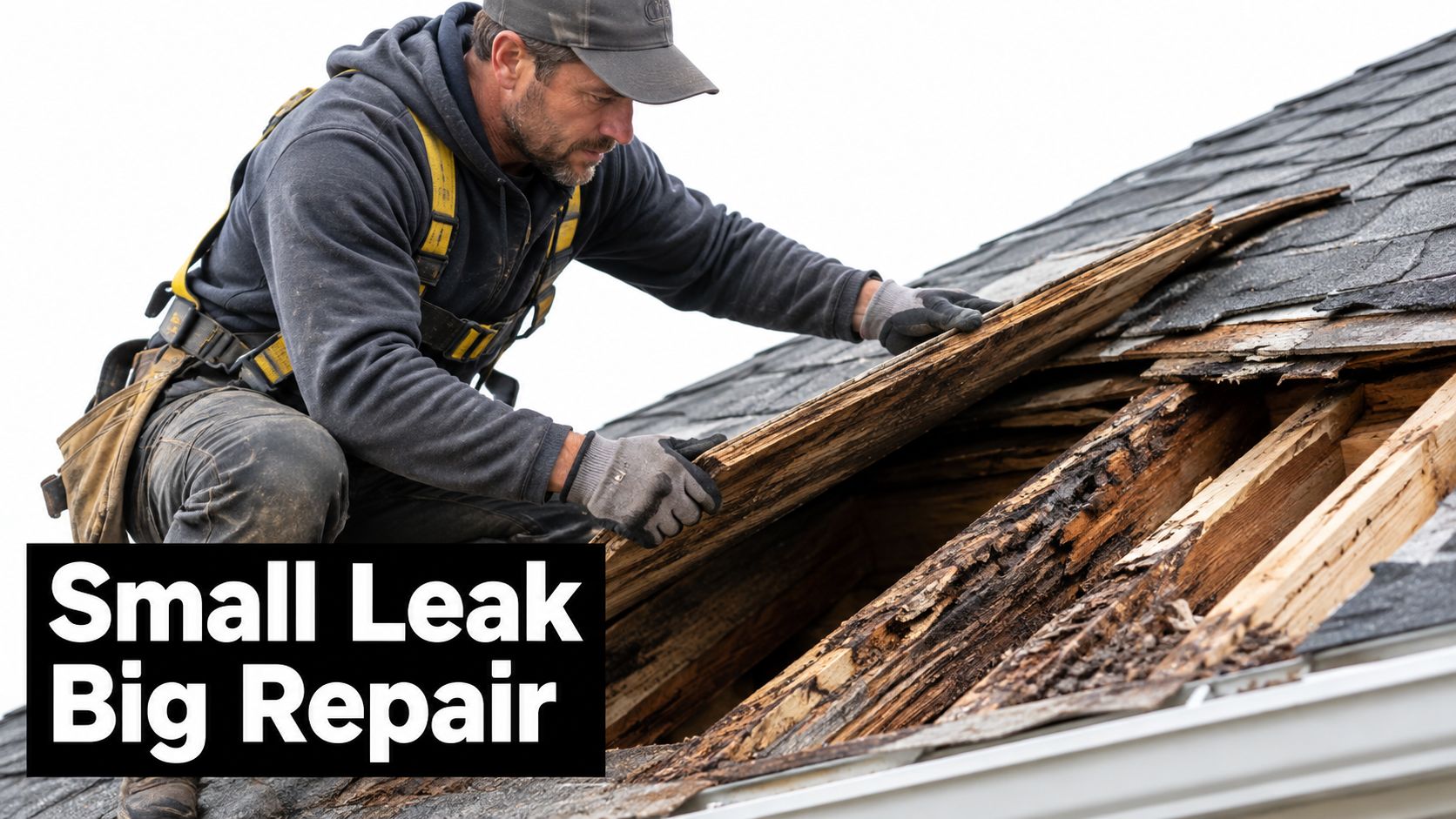
Ask the contractor whether the proposed work restores the original water-shedding detail or merely seals the symptom. Also ask for a condition assessment if the roof is approaching the end of its expected service life. Repeated spot repairs can cost more over time while wet insulation and decking continue to deteriorate.
DIY Fixes vs Professional Repairs
Roofing videos make caulk, roofing cement, and repair tape look like complete solutions. They can sometimes slow active water temporarily, but they don't prove that you've found the entry point. Water may be entering higher on the slope and traveling beneath the covering before it reaches the ceiling.
A cautious homeowner can protect the interior by placing a container under the drip, moving furniture, documenting damage, and using temporary measures from a safe location. Climbing onto a wet or steep roof to spread sealant creates fall risk and may damage shingles or flashing.
What a DIY patch can't verify
A surface patch doesn't tell you whether the decking still holds fasteners. It doesn't reveal wet insulation, hidden rot, failed counterflashing, or a second entry point. It also may complicate an insurance inspection if the original storm damage is covered before the condition is documented.
Professional assessment is financially sensible when the leak involves:
- Structural wood: Soft or deteriorated decking needs inspection before anyone fastens new roofing.
- Interior moisture: Wet insulation, ceiling damage, or persistent staining indicates that the problem extends beyond the surface.
- Complex details: Valleys, chimneys, wall intersections, and multiple penetrations require accurate tracing and compatible repair materials.
- Aging or recurring roofs: Repeated leaks call for a condition assessment, not another blind application of sealant.
- Insurance documentation: Photos, measurements, and a written scope make the coverage conversation more useful.
The cheapest material isn't always the cheapest repair. A failed patch can send water into a different path, hide the original defect, and leave you paying for the same diagnosis again. A qualified contractor should explain the source, scope, access requirements, materials, and warranty rather than asking you to approve a vague “leak repair.”
Two States Exteriors LLC provides leak repairs, detailed estimates, on-site inspections, and storm-damage support for Kansas City homeowners. If you need the source documented before deciding between a repair and an insurance claim, visit Two States Exteriors LLC to request an assessment.