
A full siding replacement in the United States most often falls between $5,561 and $17,718. For a Kansas City Metro home, that national range is only a planning benchmark, and you'll need an on-site inspection to account for the actual wall area, storm damage, trim, insulation, and concealed repairs.
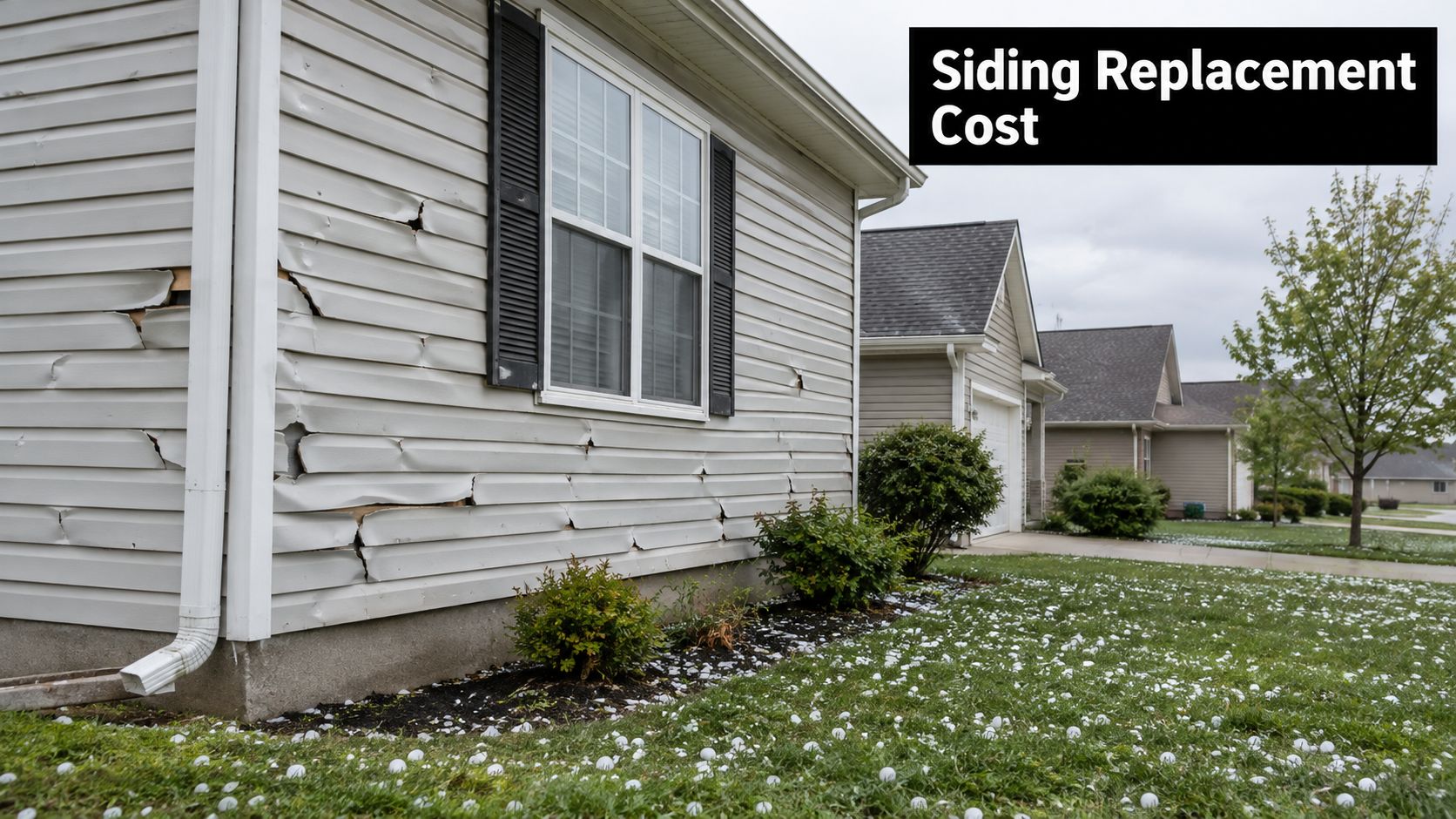
A hailstorm can make the decision feel urgent. You may see chipped or cracked vinyl, loose panels near a gable, or dents that only become obvious when the afternoon light hits the wall. Then an insurance adjuster, contractor, or real estate deadline asks for a siding replacement cost before anyone has opened the exterior.
That's where online averages become less useful. A siding project isn't just a shipment of panels and a crew with ladders. It can include demolition, disposal, weather-resistant barriers, flashing, trim, sheathing repairs, insulation, and the labor required to work around windows, dormers, corners, and multiple stories.
Understanding Your Siding Replacement Cost
The national average for a full siding replacement is approximately $11,582, with most projects between $5,561 and $17,718, according to the compiled HomeAdvisor siding cost data. Those figures help a homeowner decide whether a project belongs in a modest repair budget or a major exterior renovation plan, but they can't produce a reliable Kansas City Metro bid by themselves.
Consider a common storm-damage situation. A homeowner notices hail marks on the west-facing wall and expects the contractor to replace the visibly damaged panels. During removal, the crew may find that the old siding has been installed over a worn weather-resistant barrier, damaged trim, or soft sheathing around a window. The new cladding can't perform as intended if the layers behind it aren't sound.
What a typical quote may include
A siding replacement quotation generally combines several scopes of work rather than one material price. Depending on the property, it may include:
- Removal: Detaching the existing siding and preparing the wall for new work.
- Disposal: Loading and disposing of the removed cladding and related debris.
- Moisture control: Installing or replacing a weather-resistant barrier and correcting flashing details.
- Trim work: Replacing trim around windows, doors, corners, gables, and other transitions.
- Installation: Supplying the selected siding and installing it according to the product requirements.
- Labor and access: Accounting for story height, tight lot conditions, architectural details, and cleanup.
The scope changes with the home, not just its finished living area. Two houses with similar floor plans can have very different siding replacement costs if one has a simple rectangular exterior and the other has dormers, porches, numerous openings, tall walls, and complicated rooflines.
Practical rule: Treat an online range as a conversation starter. Treat the site inspection and written scope as the budget.
For Kansas City homeowners, the inspection should identify storm impact, measure the actual net wall area, and look for conditions hidden behind the existing siding. The contractor should also explain which items are included in the base price and which are allowances for concealed damage. That distinction matters when the project involves an insurance claim, because the documentation needs to show what was damaged, what must be removed, and what work is necessary to restore the wall correctly.
A low initial number may still be reasonable if the home is one story, the walls are accessible, the substrate is dry, and the existing trim can remain. It may be incomplete if the quote assumes that every layer beneath the siding is ready for installation.
Comparing Siding Materials and Their Average Costs
Material selection changes both the initial budget and the value a homeowner may retain at resale. The 2024 Cost vs. Value comparison, published in the Journal of Light Construction's Cost vs. Value archive, reports national averages for midrange fiber-cement and vinyl siding replacements. These are comparison benchmarks, not guaranteed outcomes for a Kansas City property.
| Material | Avg. Cost | Resale Value | Recoup % |
|---|---|---|---|
| Midrange fiber cement | $20,619 | $18,230 | 88% |
| Midrange vinyl | $17,410 | $13,957 | 80% |
The reported fiber-cement project cost was $3,209 higher than the reported vinyl average, while its estimated resale value was $4,273 higher and its recoupment rate was approximately 8 percentage points better. Those differences show why the cheapest material isn't automatically the strongest financial choice, especially when the homeowner expects to sell or wants a more substantial exterior renovation.
Vinyl makes sense when the scope is straightforward
Vinyl usually occupies the lower-cost portion of the siding market. It can be a practical fit for a homeowner who wants a clean appearance, low routine maintenance, and a controlled initial investment. It also works well when the wall assembly is already in good condition and the project doesn't require extensive trim replacement or substrate repair.
The trade-off is that the panel itself doesn't solve moisture problems, poor flashing, or inadequate insulation. A low material price won't protect a wall if the installer leaves damaged sheathing or fails to manage water around openings.
Fiber cement carries a larger initial commitment
Fiber cement generally costs more because the material is heavier and installation requires careful handling, fastening, cutting, and finishing. It can support a more substantial architectural appearance, which may suit older Kansas City homes or properties where the exterior design is part of the resale appeal.
The fiber-cement siding pros and cons guide is useful when comparing the installation demands, maintenance considerations, and design trade-offs against vinyl. The right choice depends on the wall condition, the intended appearance, the ownership horizon, and how much of the budget should go toward cladding versus envelope repairs.
Wood belongs in a different maintenance conversation
Wood siding appears in the national material-specific cost range as a higher-cost option, but the installation price isn't the whole decision. Natural wood can deliver a distinctive appearance, yet it also demands disciplined maintenance and careful moisture management. For many homeowners, that makes wood a design-driven choice rather than the default value option.
The resale figures in the table don't promise a dollar-for-dollar return. Actual results depend on market conditions, installation quality, design compatibility, maintenance, and timing. They do show that a material decision should be evaluated as part of the home's long-term condition, not just as a way to reduce the first invoice.
The Importance of the Wall Envelope Approach
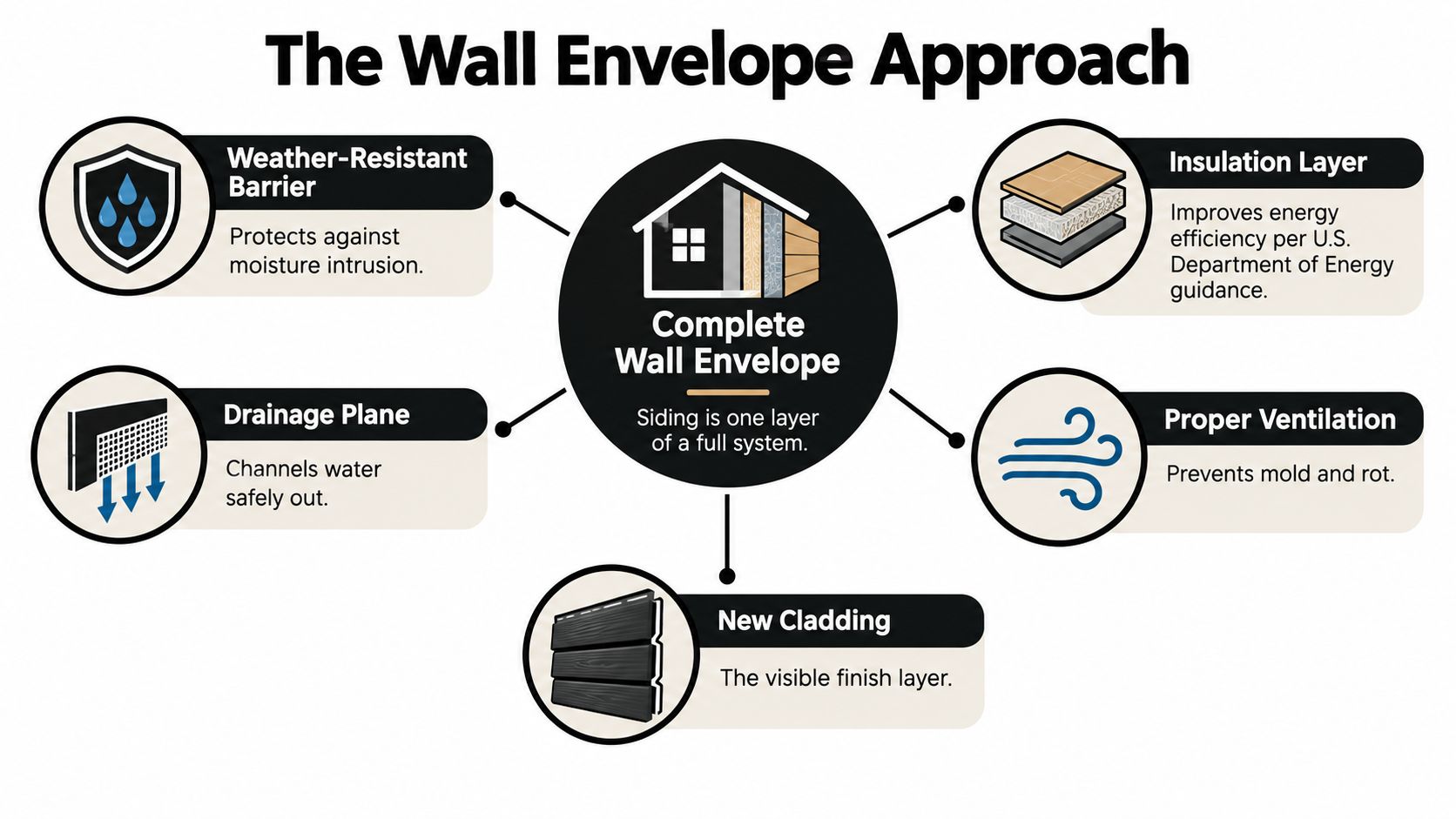
Siding is the visible finish, but it's only one layer of the exterior wall. A durable replacement addresses the wall envelope, the connected system that manages rain, drainage, air movement, insulation, and the cladding that protects the outside.
The U.S. Department of Energy identifies re-siding as an opportunity to correct under-insulated wall cavities and install continuous foam sheathing beneath the new siding. Its guidance states that filling wall cavities and adding a 3/8-inch insulating board beneath new vinyl siding can reduce combined heating and cooling costs by approximately 20%, as explained in the Department of Energy homeowner guide.
Look behind the panels before choosing the finish
A wall-envelope inspection should answer practical questions:
- Is the sheathing sound? Soft or deteriorated sheathing needs attention before new siding covers it.
- Does the wall have adequate insulation? Under-insulated cavities may justify adding insulation while the exterior is open.
- Is the moisture barrier continuous? Gaps, tears, and poorly integrated seams can undermine the exterior assembly.
- Can water drain safely? Flashing and drainage details should direct water away from windows, doors, and wall penetrations.
- Are the transitions complete? Siding must meet soffits, fascia, trim, roofs, and masonry without creating vulnerable gaps.
This approach can change the budget, but it also changes what the budget is buying. A homeowner who pays for attractive new panels while leaving damaged substrate or failed water-management details in place hasn't completed a durable exterior project.
The Department of Energy's guidance is especially relevant to older Midwestern housing, where wall insulation and exterior details may not match current expectations. Adding insulation during a planned replacement can be more practical than waiting and reopening finished walls later. The contractor should separate this work from the base siding installation so the homeowner can see the cost and purpose of each layer.
A complete exterior assessment should also include soffit and fascia inspection because those components connect the siding system to the roof edge and attic ventilation. They aren't interchangeable with the wall cladding, but damage or poor transitions there can affect the finished exterior.
Watch the following video for a visual explanation of siding installation and wall-envelope considerations:
The practical lesson is simple. Don't ask only, “Which siding should I buy?” Ask, “What condition is the complete wall system in, and which layers should be corrected while the exterior is open?”
Hidden Costs and True Project Budgets
The lowest material estimate can be the least useful number on the page. A quote may look attractive because it includes only the new siding and basic installation, while another contractor has included removal, trim, flashing, disposal, and a defined allowance for damage discovered under the old cladding.
National estimates span roughly $2 to $34 per square foot, while material-specific ranges include approximately $6,380 to $18,250 for vinyl, $6,630 to $23,100 for fiber cement, and $7,000 to $23,000 for wood, according to Angi's exterior remodeling cost information. These broad ranges show why a per-square-foot figure needs a clear description of what it includes.
The wall often tells the real story
Once siding comes off, the crew can see conditions that weren't visible during a driveway estimate. Common budget variables include:
- Rotten sheathing: Moisture around windows, doors, roof-to-wall intersections, or penetrations can weaken the substrate.
- Weather-resistant barrier: The existing layer may be missing, damaged, or improperly integrated with flashing.
- Trim and openings: Windows and doors require careful detailing, and replacement trim can add material and labor.
- Flashing and drainage: Water-management work protects the wall and shouldn't be treated as a decorative upgrade.
- Soffits and related edges: Damaged roof-edge components may need separate repair or replacement.
- Insulation: Under-insulated cavities may be addressed during re-siding rather than left inaccessible.
- Permits and disposal: Local requirements, debris handling, and mobilization affect the complete project budget.
A credible proposal doesn't hide every unknown inside one unexplained contingency. It identifies the base scope, lists likely allowances, and explains what triggers additional work. For example, the contract might state how substrate repairs are handled if the crew finds soft sheathing after removal.
The cheapest quote may simply have the narrowest scope.
That doesn't mean the highest bid is automatically correct. It means homeowners should compare line items, materials, preparation, warranties, and repair procedures instead of comparing only the final total. A bid that includes proper flashing and sheathing repair may cost more at the beginning but reduce the chance of covering an active moisture problem with new siding.
Separate necessities from appearance upgrades
Some choices improve appearance, such as a different profile, color, or trim design. Other work protects the wall from water and should be evaluated as part of the building envelope. Your contractor should explain that difference in plain language.
For storm-related work, keep photographs, inspection notes, material descriptions, and repair allowances together. Insurance coverage depends on the policy and the documented cause of loss, so no contractor can promise that every requested item will be approved. Clear records still make the conversation with the adjuster more organized and help distinguish storm damage from pre-existing deterioration.
The true siding replacement cost is the amount required to leave the exterior weather-tight, properly detailed, and complete. A panel-only price answers a smaller question.
Breaking Down the Siding Replacement Estimate
A reliable siding estimate starts with measurement, not a guess based on the home's floor area. Contractors need the net wall area, then they must account for openings, corners, gables, starter strips, flashing, trim, soffits, access, demolition, disposal, and substrate repairs.
RSMeans describes its construction cost data as incorporating current material, labor, and equipment costs, with quarterly cost-index updates, as detailed in its 2025 RSMeans cost index information. The practical implication is that a defensible estimate should apply local construction-cost conditions rather than copy a national online average.
What the bid should show
A homeowner should be able to trace the estimate from the wall to the finished project. Look for separate quantities or unit pricing for:
- Siding material: Identify the product, profile, finish, color, and measured quantity.
- Demolition and removal: State whether existing siding, trim, housewrap, or other layers are being removed.
- Disposal: Explain how debris handling is priced rather than burying it in a generic labor charge.
- Weather-resistant barrier: List the material and installation scope, including how it connects to openings.
- Flashing and trim: Identify window, door, corner, gable, and roof-edge work.
- Insulation: Separate cavity insulation or continuous sheathing from the cladding price.
- Repairs: Define the unit price or allowance for damaged sheathing and other concealed conditions.
- Labor and access: Account for story height, complex geometry, scaffolding, and restricted access.
- Cleanup and completion: State what the crew will remove, clean, and leave finished.
The estimate should use actual wall measurements, not the home's finished living area. A large single-story house with simple walls may be easier to side than a smaller multistory home with dormers, gables, tight access, and many openings.
Questions that expose vague pricing
Ask the contractor how the crew will handle each unknown before signing. “What happens if you find rot?” should produce a written process, not a verbal reassurance. “Is trim included?” should identify the locations, material, finish, and installation method.
Also ask whether the crew will perform the work directly or use subcontractors, who obtains any required permits, and how change orders are approved. The answer should match the written contract.
Bid check: If you can't tell what gets removed, what protects the wall, and how concealed damage is priced, you can't make a meaningful comparison.
For insurance or property-management projects, request photographs and quantity documentation as work progresses. Like-kind replacement and code-required upgrades may be treated differently, so the estimate should distinguish restoration work from elective improvements. That documentation protects the homeowner, property manager, contractor, and insurer from arguing over an unexplained lump sum after the walls are open.
A transparent bid won't eliminate every surprise. It will show where surprises could occur and give everyone a process for dealing with them.
Maximizing Your Investment in Kansas City
A sound siding decision balances four questions. What condition is the wall in? Which material fits the home and budget? Which repairs are necessary for water management? And how will the finished project support the property's value and future maintenance?
Material choice should follow the wall assessment, not lead it. Vinyl may fit a straightforward replacement with sound substrate and a preference for lower initial cost. Fiber cement may suit a homeowner who wants a different architectural character and accepts a larger investment. Wood may be appropriate when appearance and maintenance are part of a deliberate design decision.
The resale comparison discussed earlier can help frame that decision, but it shouldn't be treated as a promise. A well-installed exterior that matches the neighborhood and protects the structure generally gives a homeowner more usable value than an inexpensive installation that leaves moisture problems unresolved. For more context, review whether new siding can increase home value in relation to the project's condition, design, and resale timing.
Build the project around documentation
Kansas City storm work benefits from an orderly process. Keep the inspection photos, damage descriptions, product selections, allowances, and approved changes in one project file. If an insurer is involved, make sure the contractor and adjuster are discussing the same areas and scope.
A local exterior contractor should also be able to explain how the work responds to the property's actual conditions. That includes wall geometry, access, trim transitions, concealed damage, and the relationship between siding, soffits, fascia, roofing, and gutters. A national average can start the conversation, but it can't replace field measurements.
Two States Exteriors LLC is one Kansas City Metro option for homeowners who need exterior work, offering siding installation, storm-damage inspections, insurance-claim support, and free on-site project planning as a GAF Certified, licensed, bonded, and insured contractor. The important comparison is not only the company name. Review the written scope, repair allowances, material specifications, workmanship coverage, cleanup responsibilities, and payment terms before choosing any contractor.
Your best protection is a complete scope that treats siding as a wall-envelope project. When the bid accounts for the visible cladding and the layers behind it, you can make a more informed decision about what to repair now, what to upgrade, and what the final siding replacement cost actually represents.
Schedule a free on-site inspection with Two States Exteriors LLC to evaluate your siding, trim, moisture barriers, and concealed storm damage. Their Kansas City Metro team can prepare a detailed project plan, help organize insurance-claim documentation, and explain the costs before replacement work begins.