
You look up at your roof after a stretch of rain, summer humidity, or a windy storm in Kansas City and notice dark streaks creeping down the shingles. From the driveway, it looks like mildew. Maybe even mold. The roof might still seem solid, so the question gets tricky fast: is this just ugly, or is it a sign something underneath is going wrong?
That uncertainty is what catches most homeowners. A roof can have black or greenish staining and still be structurally fine. Another roof can show similar-looking discoloration while also dealing with trapped moisture, poor attic airflow, or shingle wear. The stain itself doesn't tell the whole story.
A simple way to think about it is a sponge left outside in the shade. If it stays damp, it starts growing things on the surface. Your roof works the same way. When parts of it stay moist longer than they should, surface growth gets a foothold.
Kansas City homes see this more often than many owners expect. We get humid stretches, heavy storms, tree-shaded neighborhoods, and roof slopes that don't always dry evenly. Add insurance questions after hail or wind, and a few dark streaks can suddenly feel expensive.
Introduction to Mildew on Shingles and Why It Matters
A lot of people use the phrase mildew on shingles for any dark, patchy roof stain. That's understandable. From the ground, most microbial growth looks similar. But lumping everything together leads to bad decisions, especially when someone rushes into harsh cleaning or unnecessary replacement.
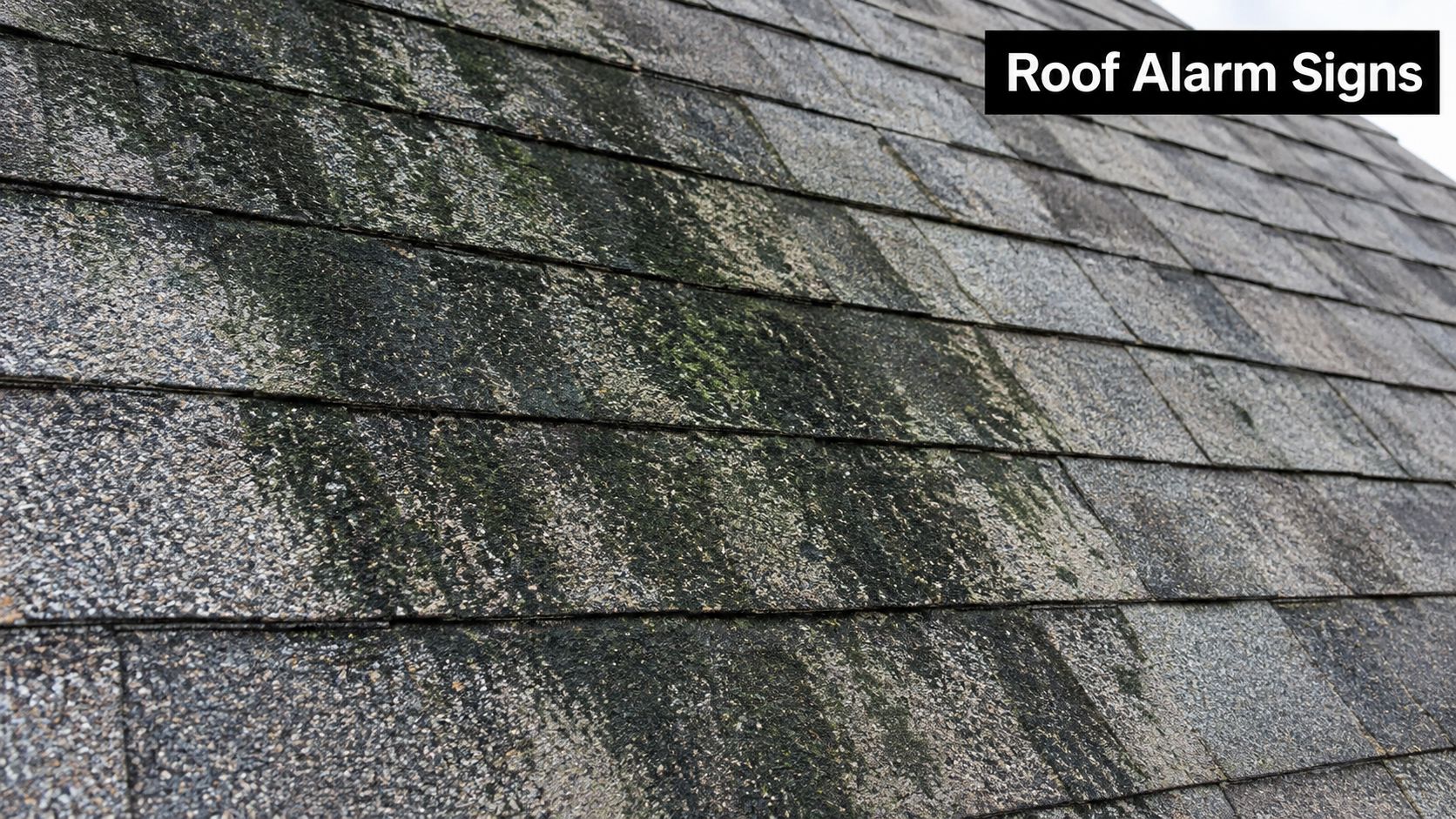
What homeowners usually notice first
Most Kansas City homeowners spot one of these patterns:
- Dark streaks running downward that seem heavier on one roof slope than the other
- Blotchy gray, black, or green areas near shaded sections
- A roof that looks older than it is because the discoloration makes the shingles look dirty
- Staining after a wet season when leaves, shade, and humidity kept parts of the roof damp
What makes this frustrating is that curb appeal and roof performance aren't the same thing. A stained roof can still be shedding water properly. A cleaner-looking roof can still hide ventilation trouble.
Why the distinction matters
Homeowners usually need answers to four practical questions:
- What is it, really?
- Can I leave it alone?
- If I clean it, will I damage the shingles?
- When does this become an insurance, repair, or replacement issue?
Those are the right questions. They keep you from overreacting, but they also keep you from ignoring the clues that matter.
A roof stain is a surface symptom. Sometimes it's mostly cosmetic. Sometimes it's the first visible sign that moisture is lingering where it shouldn't.
In Kansas City, that distinction matters even more after storms. If staining is paired with lifted tabs, granule loss, leaks, or musty attic conditions, the conversation changes. Then it isn't just about appearance. It's about whether the roof system is drying, venting, and protecting the home the way it should.
What Mildew on Shingles Really Is and Why It Appears
Most of what homeowners call mildew on shingles is not true mildew. On asphalt roofs, the dark streaking is usually linked to Gloeocapsa magma, a blue-green algae that forms a biofilm on the shingle surface, especially where moisture, shade, and nutrients are available, as explained by InspectAPedia's roof stain guide.
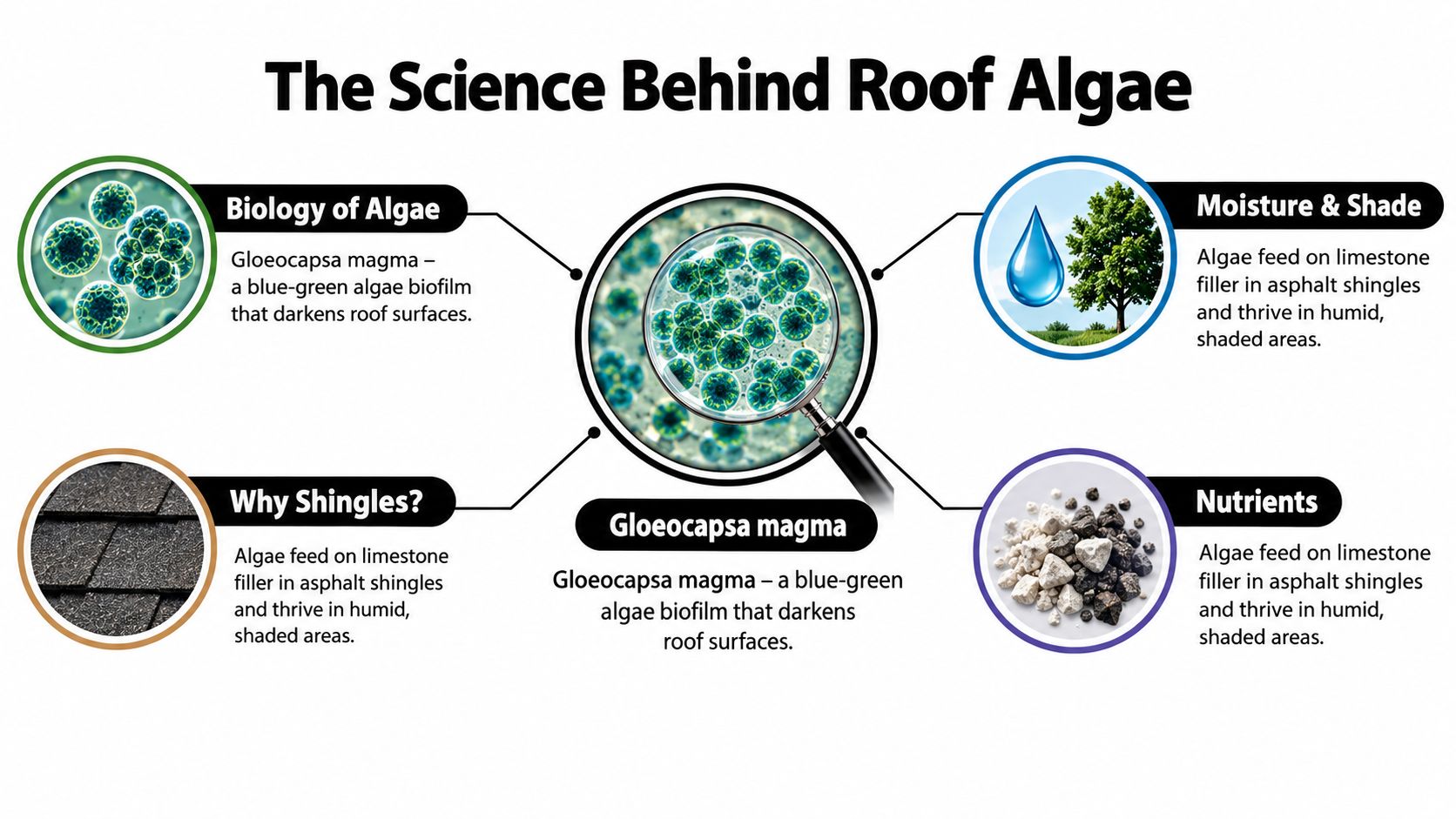
Why roofs grow this dark film
Algae doesn't need a dramatic roof failure to appear. It needs the same things many surface organisms need: moisture, time, and a place to hang on.
On shingles, persistent dampness is the key condition. Humid air, dew, shaded slopes, and poor dry-out conditions help algae persist. Roofing education from InterNACHI also notes that limestone filler in asphalt shingles can supply carbonate ions and other mineral nutrients that support colonization, and that roof moisture, especially dew, affects how algae inhibitors spread and how staining develops over time, according to InterNACHI's asphalt shingle material explanation.
A north-facing slope in a tree-heavy Kansas City neighborhood is a classic example. It may get less direct sun, hold morning dew longer, and stay damp after storms while the sunnier side dries faster.
Why modern shingles changed the story
This problem didn't appear out of nowhere. Roofing literature explains that modern asphalt shingles changed materially after the late 1970s, when fiberglass mats with limestone filler became the standard. One roofing-industry article says that change increased the availability of carbonate nutrients the organism can use. The same article states that the issue became a major homeowner problem in the southeastern United States in the 1990s, while algae-resistant shingle patents trace back to the 1960s, showing manufacturers had been addressing it long before many homeowners recognized it widely, according to Professional Roofing's review of shingle microorganisms.
That history helps explain why dark roof streaks now show up well beyond a few humid coastal areas. Once the materials, climate conditions, and spread patterns lined up, staining became common across large U.S. housing markets, including the Midwest.
Before the video, here's the simple version many homeowners need:
Biofilm means a thin living layer on the shingle surface. It isn't the same as the roof deck rotting or the whole roof failing.
This short explainer helps make that surface-growth idea easier to visualize.
Is It Cosmetic Staining or Real Roof Damage
This is the question that matters most: does the staining mean the roof is damaged? Often, no. Neutral sources on roof materials note that discoloration is frequently microbial surface growth on warm, damp roofs, and manufacturer guidance highlighted in a USDA research summary says dark staining alone does not automatically mean structural damage, as discussed in the USDA roof-discoloration research summary.
What cosmetic staining usually looks like
Cosmetic staining tends to stay on the shingle surface. The roof may have dark streaks or broad discoloration, but the shingles still lie flat, the attic stays dry, and there are no clear leak symptoms inside the home.
That doesn't mean you should ignore it forever. Surface growth can hold moisture longer and make the roof look older. But appearance alone isn't proof that the roof system is failing.
When staining deserves a closer look
The concern rises when the discoloration comes with other clues. If shingles are curling, losing granules, softening, lifting after storms, or if the attic smells musty, then the stain may be sharing the stage with a moisture problem.
Kansas City homes can also blur the line after hail and wind. A roof may have older algae streaking and newer storm damage at the same time. That's one reason a ground-level guess isn't always enough.
| Observation | Likely Cosmetic | Needs Closer Inspection |
|---|---|---|
| Dark streaks with no leaks or missing shingles | Yes, often | No, unless the pattern is spreading unusually fast |
| Heavier staining on shaded or north-facing slopes | Yes, commonly | Inspect if that area also stays wet for long periods |
| Roof looks discolored but shingles remain flat and intact | Usually | Less urgent |
| Staining plus moss buildup at shingle edges | Sometimes | Yes, because moisture may be lingering |
| Dark areas near vents, flashing, or roof penetrations | Not always | Yes, because leaks or trapped moisture may be involved |
| Staining with attic odor, damp insulation, or ceiling spots | No | Yes, this points beyond cosmetic growth |
| Streaking after storm season with torn, lifted, or granule-worn shingles | No | Yes, inspect for combined storm and moisture issues |
Practical rule: If the only symptom is surface discoloration, think "cleaning or monitoring." If the stain comes with wet attic clues, shingle distortion, or storm damage, think "inspection."
How to Identify Mildew Algae and Related Growth on Your Roof
You don't need to climb onto the roof to get useful answers. In fact, for most homeowners, the safest inspection happens from the ground with binoculars, a phone camera, and a quick look inside the attic.
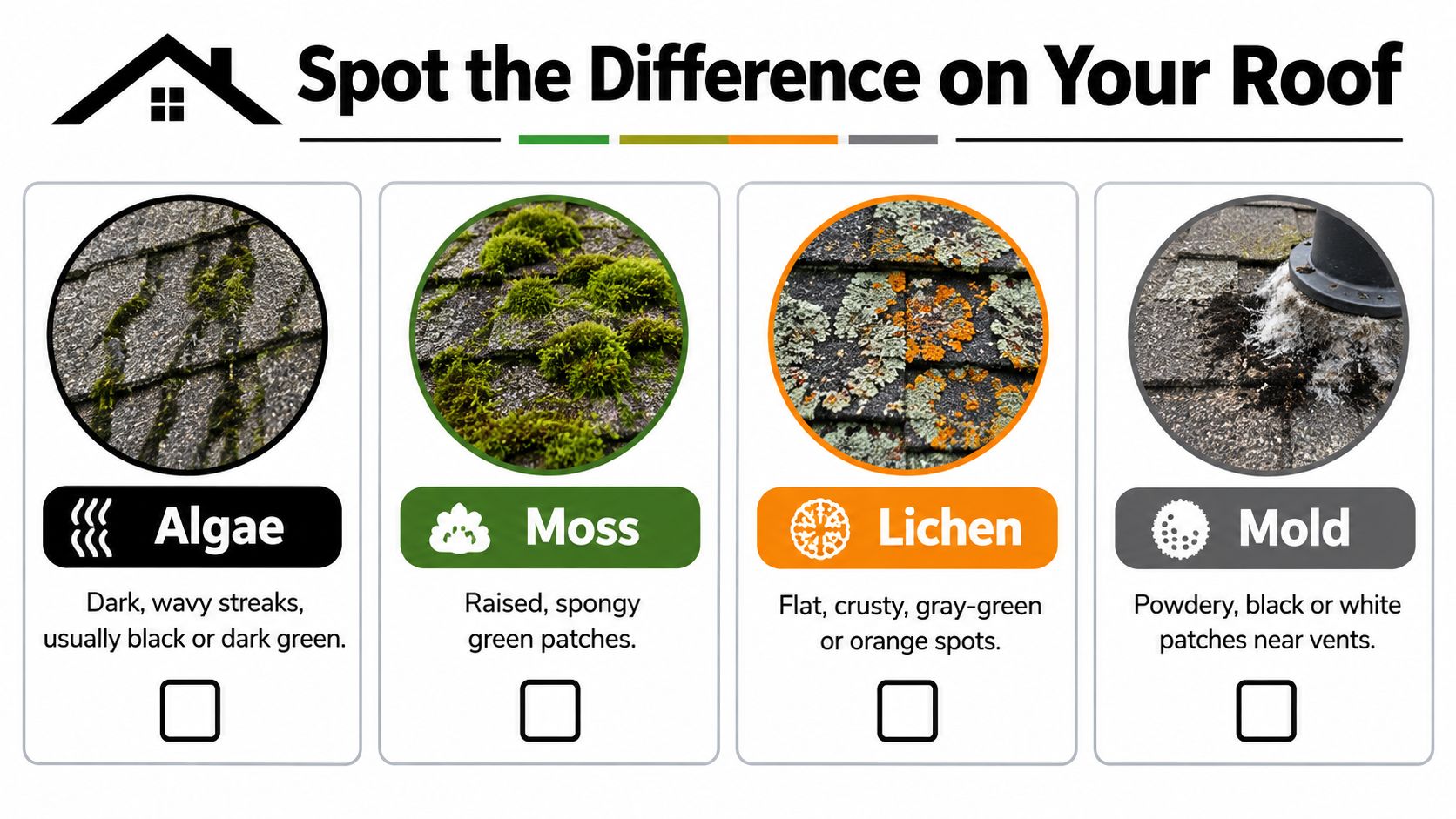
How each type usually appears
Start with pattern and texture.
- Algae-like staining often shows up as dark, wavy streaks that run down the roof. It's usually flatter than moss and looks more like a film than a clump.
- Moss looks thicker and raised. It often gathers near shingle edges, in shaded valleys, or where debris holds moisture.
- Lichen tends to look crusty or plate-like. It can appear as small, stuck-on patches rather than streaks.
- True mold or mildew is harder to confirm from the ground. If it exists on a roof surface, it may appear as a fuzzy or powdery patch, often near persistently damp areas.
If you want a closer look at how dark streaking develops on asphalt roofing, this guide on algae on roofs can help compare common patterns.
Where to look first
Location tells you a lot. The most vulnerable areas are often the ones that dry slowly.
Check these spots first:
- North-facing slopes where sun exposure is weaker
- Tree-shaded sections under heavy canopy
- Valleys and transitions where water and debris can collect
- Areas below overhanging branches that drop leaves and limit airflow
- Zones near bathroom or kitchen vent exits if moisture is venting poorly
A safe inspection checklist
Stand back far enough to see the full slope. Then take close photos with zoom so you can compare areas side by side.
Use this quick checklist:
- Compare roof slopes. Is one side much darker than the other?
- Look for texture. Is the growth flat, fuzzy, clumped, or crusted?
- Check the gutter line. Debris buildup often matches problem areas above.
- Inspect the attic. Look for damp insulation, staining, or musty odor.
- Document roof penetrations. Note any staining around vents, flashing, skylights, or chimneys.
Ground-level photos taken in morning and afternoon light often reveal more than a quick glance. Shadows can hide pattern changes that matter.
If you're documenting for a contractor or possible insurance conversation, keep photos dated and grouped by roof slope. That makes it easier to separate long-term staining from newer storm-related changes.
Safe DIY Removal Methods That Protect Your Shingles
A lot of Kansas City homeowners see dark roof streaks and assume the roof needs a hard wash. In many cases, that is the wrong tool for the problem. If the discoloration is mostly surface algae biofilm and the shingles are still sound, the safer goal is to reduce the growth without scouring off the protective granules that help the roof shed weather.
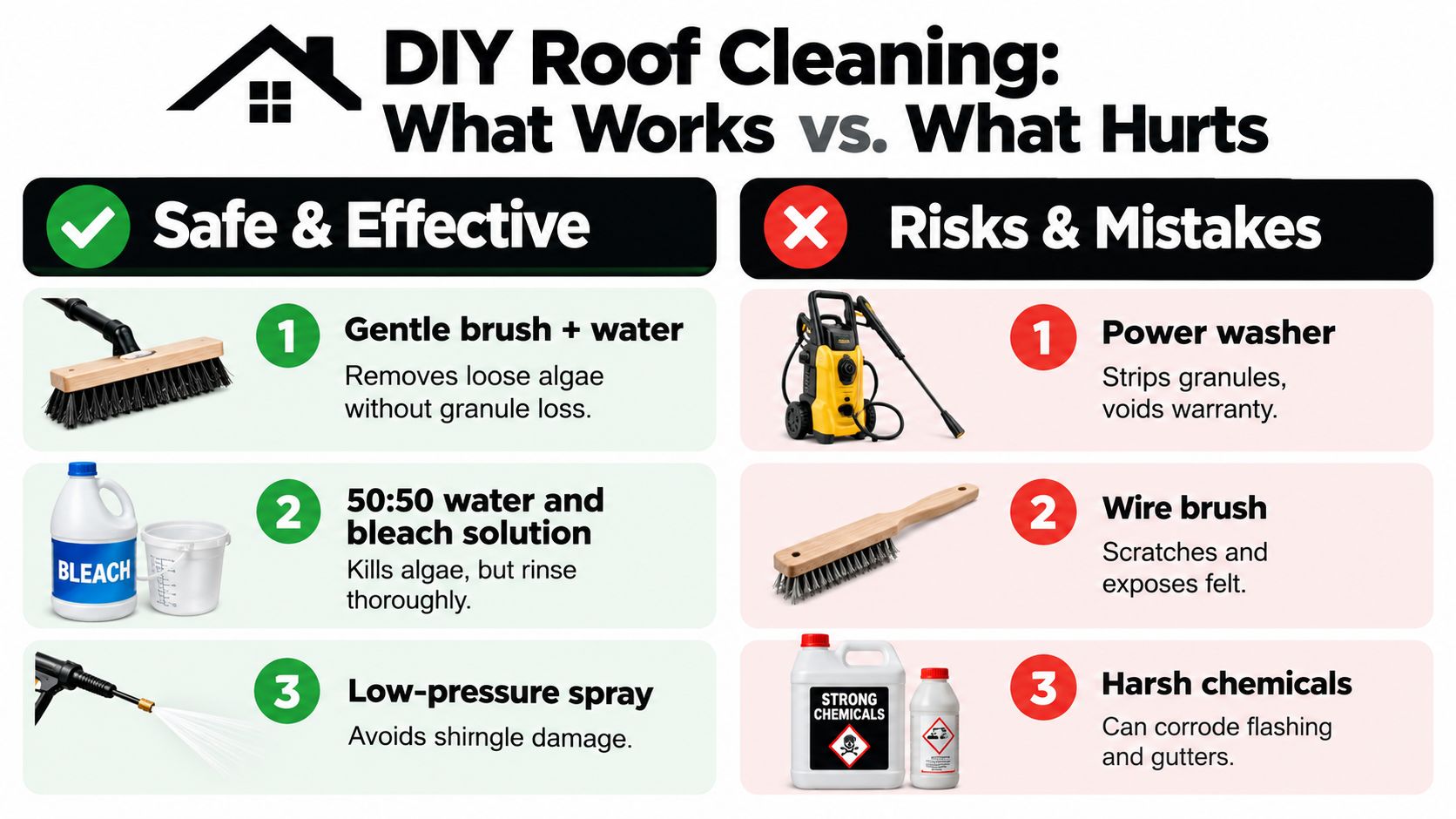
Start by deciding whether DIY cleaning makes sense at all. A roof with lifted tabs, hail bruising, brittle edges, or active leak signs needs evaluation before any cleaning. Cosmetic streaking is one thing. A roof that stays damp because of trapped moisture or poor attic ventilation is a different issue, and washing the surface will not solve it.
Roof cleaning works a lot like washing a painted car. Gentle chemistry usually helps more than force. The shingle surface is a wear layer, so once granules are stripped away, you do not put them back.
Before any cleaning attempt, keep the setup simple and cautious:
- Choose a dry, calm day so footing and runoff stay more predictable.
- Work from a ladder or the ground when possible instead of walking the roof.
- Protect plants and rinse them before and after cleaning so runoff is diluted.
- Skip DIY cleaning on steep, tall, or hard-to-access roofs where a slip risk outweighs the benefit.
If you want a more detailed breakdown of roof-safe asphalt shingle cleaning methods, that guide explains where light treatment fits and where it does not.
What usually works best
For light to moderate staining, the safer approach is low-pressure application with a cleaner specifically labeled for asphalt shingles or roof algae staining, following the product directions closely. The cleaner does the lifting. Time does the rest.
Good practice usually includes:
- Low-pressure spraying or gentle rinsing
- A product labeled for asphalt shingles
- Enough dwell time for the cleaner to work
- Minimal scrubbing, if any
- Controlled runoff around gutters, siding, decks, and planting beds
This matters in Kansas City because shaded slopes often stay damp after humid nights, summer storms, and heavy leaf cover. If the dark marks return quickly after careful cleaning, that points back to the roof's drying conditions. The stain may be cosmetic, but the moisture pattern behind it still deserves attention.
What to avoid
Some cleaning methods shorten roof life faster than the staining ever would.
Avoid these:
- Pressure washing, which can knock off granules and force water where it should not go
- Wire brushes or aggressive scraping, which can scar the shingle surface
- Strong homemade chemical mixes, which may stain metal, harm plants, or affect nearby finishes
- Repeated spot-cleaning of the same area, which can create uneven wear
- Cleaning only the dark streaks while ignoring shade, debris, leaks, or ventilation issues
Two States Exteriors LLC is one local company homeowners may contact when staining seems to overlap with storm wear, aging shingles, or moisture patterns that need a broader roof condition check.
Keep expectations realistic. Cleaning can improve appearance, especially when the streaking is mostly algae film. It will not change the fact that one roof slope may dry slowly because of tree cover, airflow limits, or a ventilation problem inside the attic.
Prevention Strategies for Kansas City Homes
A Kansas City homeowner often notices the pattern first, not the biology. The north-facing slope keeps getting dark again, while the sunnier side looks mostly fine. That usually points to a drying problem, not just a cleaning problem.
On many roofs, what gets called mildew is really algae film settling in where moisture lingers. The stain may stay cosmetic for years. The conditions that feed it, shade, trapped debris, slow attic airflow, or small moisture leaks, are what deserve the closer look.
Start with moisture, inside and out
As noted earlier, moisture control is the main prevention rule. Roof surfaces need to dry after dew, humidity, and storms. Attics also need to stay balanced. If warm, damp indoor air keeps drifting upward and hanging around, parts of the roof system can stay cooler, wetter, and more inviting to biofilm growth.
A roof works like a wet towel on a clothesline. In sun and moving air, it dries fast. Fold that same towel, leave it in shade, and it stays damp much longer. Kansas City roofs deal with that same basic physics, especially during humid summers, heavy tree cover, and long stretches of spring rain.
A Kansas City prevention checklist
Prevention usually comes from several ordinary maintenance habits working together:
- Trim branch cover where practical. More sunlight and airflow help shingles dry sooner.
- Keep gutters and downspouts flowing. Wet debris at the roof edge can keep lower shingle courses damp.
- Clear leaves from valleys and behind chimneys. Those areas trap moisture longer than open field shingles.
- Fix small roof leaks early. A minor flashing gap can create repeated dampness in one concentrated area.
- Check attic ventilation and insulation together. Poor airflow alone is not the whole story. Uneven insulation can also create temperature differences that slow drying.
- Watch the north-facing and heavily shaded slopes more often. In Kansas City, those are often the first places where dark streaks return.
- Choose algae-resistant shingles at replacement time. That upgrade can slow cosmetic streaking on homes with chronic shade or humidity exposure.
- Ask about zinc or copper details during roof work. In some situations, they can help limit future algae growth.
If moss is also showing up, practical ways to prevent moss on a roof overlap with algae prevention because both problems get worse when a roof stays damp and shaded.
Cosmetic control versus moisture warning
Prevention also means knowing what you are trying to prevent.
If the dark streaking is thin, surface-level, and limited mostly to shaded slopes, the issue is often cosmetic algae staining. If staining clusters around soffits, bathroom exhaust areas, valleys, or spots tied to attic mustiness, the roof may be telling you that moisture is getting trapped where it should be escaping.
That distinction matters in Kansas City because insurance usually treats algae staining very differently from hail, wind, or water intrusion. A cleaner-looking roof does not create storm damage coverage. On the other hand, if moisture problems or storm wear are present at the same time, good maintenance records and clear inspection notes can help separate cosmetic staining from conditions that may need repair attention.
Roofs that stay cleaner longer usually do three things well. They shed water, they dry evenly, and they avoid trapping humid air underneath.
When to Call a Professional and How Two States Exteriors Helps
Some situations don't call for more DIY effort. They call for a real inspection.
Good reasons to stop guessing
Call a professional if you notice any of these conditions together with staining:
- Shingles are lifting, curling, or losing noticeable granules
- Dark areas keep returning quickly after cleaning
- The attic smells musty or shows damp insulation
- Ceilings or walls show water staining
- The roof took recent hail or wind impact
- Growth is concentrated near flashing, valleys, or penetrations
That last point matters in Kansas City. Insurance conversations usually focus on storm-related damage, not cosmetic algae alone. If your roof has both old staining and newer hail or wind issues, documentation becomes important. Photos, slope-by-slope notes, and a professional inspection can help separate what is cosmetic from what may be claim-relevant.
What a professional inspection should cover
A useful roof inspection doesn't stop at the streaks. It should also look at:
- shingle condition
- flashing and penetrations
- gutter behavior
- attic moisture clues
- ventilation patterns
- signs of storm impact that overlap with staining
For homeowners who want inspection support along with repair or replacement planning, Two States Exteriors has served the Kansas City metro since 1997 and offers free on-site inspections, detailed project plans, a No Money Upfront policy, emergency response, and end-to-end insurance claim support. Because they're a GAF Certified, licensed, bonded, and insured contractor, they're positioned to evaluate whether the issue is only surface growth or part of a larger roofing problem.
The main advantage of calling sooner isn't urgency for urgency's sake. It's clarity. A short inspection can keep you from paying to replace a roof that only needs cleaning, and it can also keep you from cleaning a roof that is already showing signs of moisture or storm-related failure.
If you're seeing mildew on shingles, dark streaks, or suspicious roof discoloration around your Kansas City home, Two States Exteriors LLC can inspect the roof, document what matters, and help you sort cosmetic staining from repair-worthy issues. They also help homeowners handle storm and hail claim questions when roof staining overlaps with real damage. Visit Two States Exteriors LLC to schedule an assessment and get a practical plan for protecting your roof.