
Minor roof leak repairs often cost around $150, while major structural work can reach $8,000 or more. For a typical repair, the national average is near $1,150, but the actual price depends on what caused the leak and what the water has damaged.
You notice the problem at the worst possible time. A brown ceiling mark spreads after a Kansas City storm, water starts dripping near a light fixture, or a bucket appears in the attic during a night of hard rain. The first search is usually simple: how much to fix a roof leak?
The honest answer has a wide spread. A missing shingle and a failed chimney flashing may both produce a ceiling stain, yet they require different work. A roof that needs a temporary weatherproofing measure is a different financial decision from one with wet decking, damaged insulation, and compromised framing.
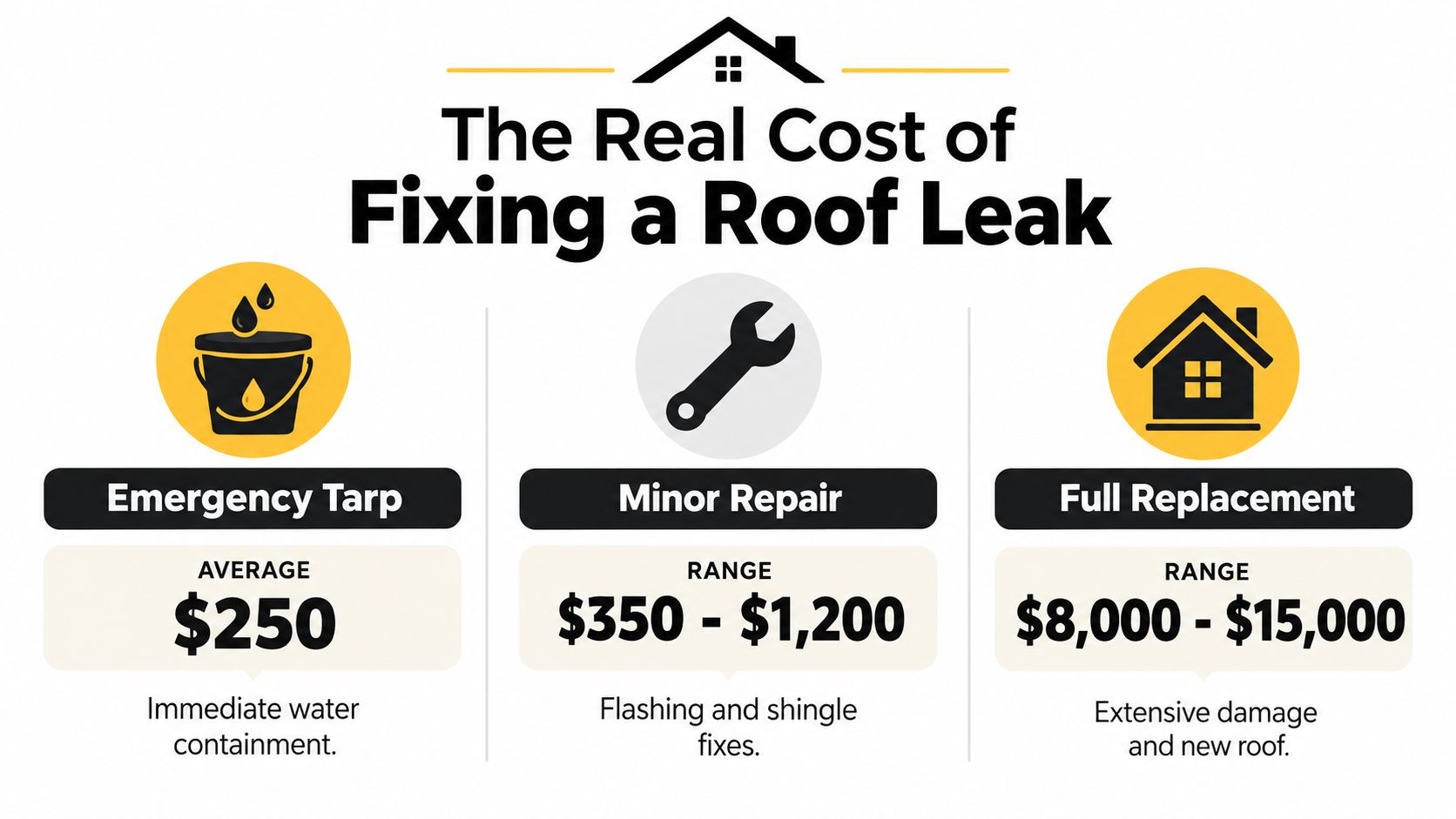
The Real Cost of Fixing a Roof Leak
A homeowner standing under an active drip needs two answers immediately: how to limit the damage and what the repair might cost. A minor, localized repair commonly falls around $150 to $1,000, while more complicated repairs can run from $1,000 to $3,000. If water has damaged structural components or a larger roof area, the bill can climb to $6,000 or more, and consumer pricing guides place major repair costs near a broad ceiling of $8,000. The ConsumerAffairs guide to roof leak repair costs documents those broad ranges and explains why the word “leak” alone doesn't tell you much about the final invoice.
Why the first estimate can feel surprising
Suppose a storm lifts several shingles on a one-story asphalt roof. The roofer may replace the exposed materials, inspect the surrounding area, and seal a vulnerable detail. That job is entirely different from opening the roof around a chimney, replacing failed flashing, removing wet underlayment, and repairing damaged decking.
The visible ceiling mark also doesn't identify the entry point. Water can travel along rafters, roof decking, insulation, and framing before it reaches the room below. A contractor who quotes only from the ground may miss the actual source, leaving you with a cheap repair that fails during the next storm.
Practical rule: A low price is useful only when it covers the actual leak source, the damaged materials, cleanup, and the workmanship terms in writing.
What the average really tells you
Independent market guides place average roof repair near the four-figure mark. One 2026 guide reports a national average of $1,174, another reports $1,150, and a third estimates $1,158 for roof repair overall, as summarized by HomeAdvisor's roof repair cost guide. Published leak-specific ranges also extend from roughly $200 to more than $2,200, depending on scope, roof type, and the source's estimating method.
Those averages are planning tools, not promises. Labor, inspection time, replacement materials, roof access, and emergency service conditions can move your quote well above or below the national figure. The useful question isn't whether your repair matches the average. It's whether the contractor can show exactly which condition puts your roof in a particular part of the range.
What Drives Roof Leak Repair Costs
The location of the leak usually matters more than the size of the stain inside your house. A missing shingle in an open field of asphalt roofing may be straightforward to correct. A leak at a chimney, skylight, roof valley, or plumbing vent often requires detailed flashing work, careful removal, and a watertight rebuild.
Location changes the labor
Roof intersections collect water and demand more precise installation. Chimneys meet the roof at multiple planes, skylights depend on correctly integrated flashing, and valleys carry concentrated runoff. A roofer may need to remove surrounding shingles, inspect the underlayment, rebuild flashing, and replace materials beyond the point where water first appeared.
That extra labor explains why two estimates can differ even when the indoor symptom looks identical. The repair isn't priced by the number of buckets in the room. It's priced by the access, removal, diagnosis, and reconstruction required to stop the water at its source.
Material determines who can do the work
Asphalt shingles are widely available and familiar to most roofing crews. Slate, tile, and metal systems require compatible replacement pieces, specialized fastening methods, and knowledge of how the existing roof sheds water. A contractor who treats a broken slate tile like a loose asphalt shingle can create a second problem around the repair.
Material matching also affects appearance and performance. An old roof may have faded, discontinued, or weathered components. The roofer should explain whether a replacement will blend reasonably, whether surrounding materials are fragile, and whether the proposed fix is a durable repair or only a short-term measure.
Pitch and access affect safety
A steep roof slows production and requires more safety preparation. A multi-story home may need ladders, staging, harness systems, or additional ground protection before the roofer can reach the work area. A roof with limited access, landscaping below, or attached structures can also take longer to protect and clean.
The HomeYou explanation of roof leak repair pricing identifies leak location, roofing material, pitch, and accessibility as central cost drivers. That combination is especially important in the Kansas City area, where a roof may need inspection after wind, hail, freezing temperatures, and heavy rain have affected several components at once.
A fair estimate should identify the location, material, access conditions, and repair method. If it lists only “fix leak” without describing what will be removed and replaced, you still don't know what you're buying.
Common Roof Leak Repairs and Price Ranges
The repair method should match the failure, not just the symptom. A small patch may be appropriate when the roofing system is otherwise sound. It isn't an adequate answer when wind has lifted a broad section, hail has fractured multiple materials, or water has reached the decking.
The ranges below are practical benchmarks drawn from the published roof leak repair cost ranges from ConsumerAffairs, including minor repairs around $150 to $1,000, more complex work around $1,000 to $3,000, and major damage that can reach $6,000 or more.
| Repair Type | Typical Cost Range | Best For |
|---|---|---|
| Localized shingle or small surface repair | $150 to $1,000 | A limited failure with no confirmed underlayment or structural damage |
| Flashing or vent repair | $150 to $1,000, with complexity affecting the final price | Leaks around chimneys, skylights, vents, and roof transitions |
| Underlayment or decking repair | $1,000 to $3,000 | Water intrusion that has reached layers below the outer roofing |
| Larger storm-related roof repair | $1,000 to $3,000 or more | Widespread wind or hail damage requiring multiple repair areas |
| Major structural restoration | $6,000 or more, with some major repair estimates near $8,000 | Extensive water damage, structural work, or large roof sections |
Shingles and exposed fasteners
A few missing asphalt shingles may be repairable without disturbing the whole roof. The roofer still needs to check the nail line, adjoining shingles, seal strips, and the underlayment beneath the damaged area. A tube of roof sealant over an exposed fastener may slow water temporarily, but it doesn't replace damaged materials or correct poor flashing.
Flashing around penetrations
Flashing repairs are common because roof penetrations create seams where water can enter. Chimneys, skylights, vents, and valleys need layered protection that directs water onto the roof surface. If a contractor proposes only caulk around a failing flashing system, ask how long that material is expected to last and whether the underlying flashing will be replaced.
Storm damage in Kansas City
Hail and wind can make a roof look better from the driveway than it is up close. Hail may bruise shingles, while wind can lift edges and loosen fastening points. Water can then reach underlayment or decking even when the interior stain remains small.
That's why storm inspection should include the roof surface, penetrations, edges, attic side, and visible decking. A patch can be sensible when damage is isolated. It can also leave surrounding failures unaddressed when a storm affected a larger area.
A written scope should state the affected roof sections, materials, flashing work, decking allowance if applicable, cleanup, and any workmanship coverage. Compare scopes, not just totals.
Insurance Coverage for Roof Leak Repairs
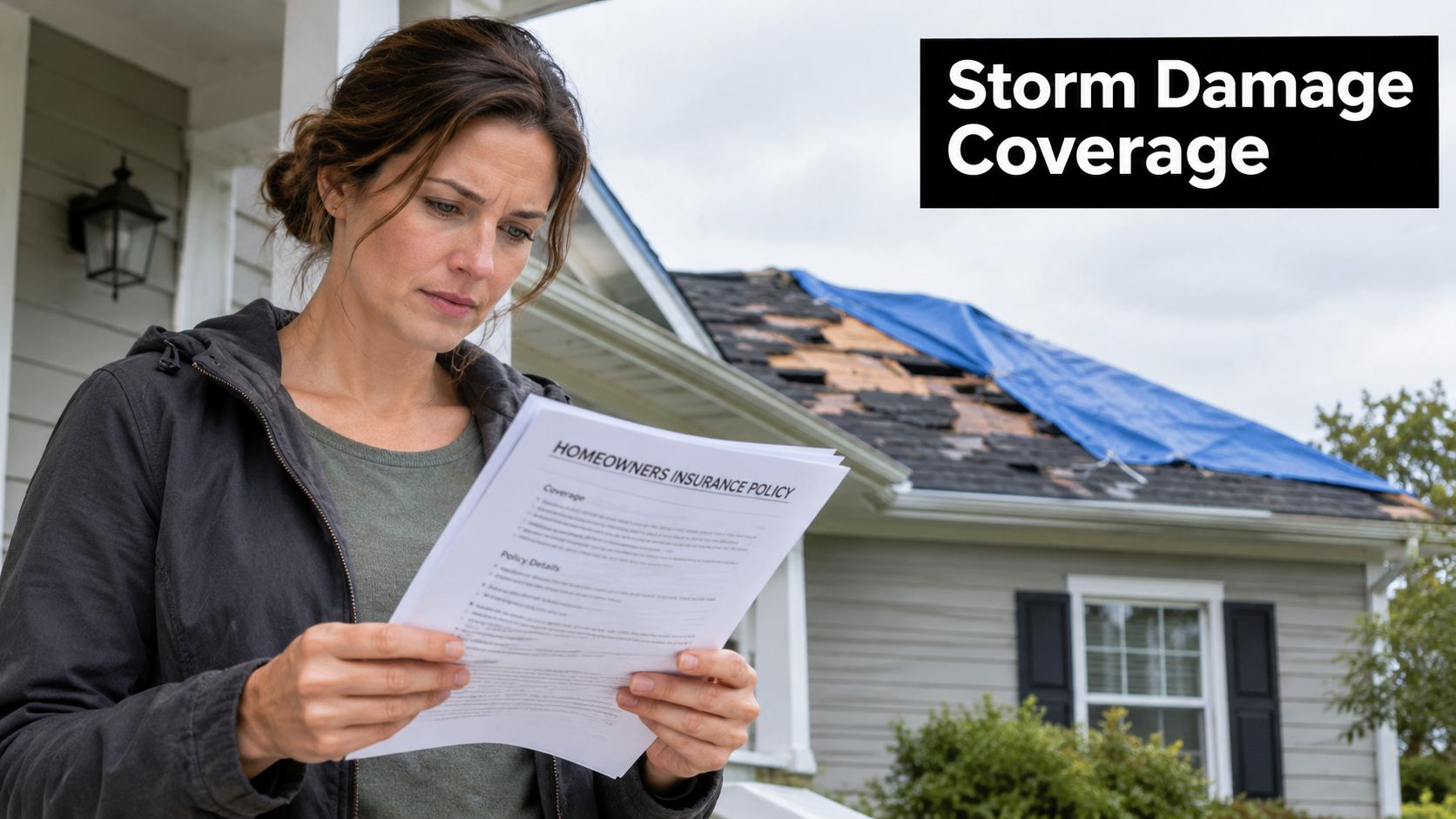
Many homeowners assume a roof leak automatically qualifies for insurance. It doesn't. Home insurance may cover a leak caused by a sudden covered event such as wind or hail, but policies generally don't cover deterioration caused by age, ordinary wear, or deferred maintenance. The Compare.com guide to roof insurance coverage explains that distinction and why the cause of the damage matters.
A recent Midwest hailstorm creates a different claim question from a roof that has gradually worn out. In the first situation, you need to document the storm-related condition and notify the insurer according to the policy. In the second, the owner may be responsible for maintenance and replacement because the leak resulted from aging rather than a covered peril.
Don't erase the evidence
A tarp or emergency patch can protect the interior, but rushing into permanent repairs before documenting the condition can complicate a claim. Take clear photographs and video of the ceiling, attic, exterior elevations, damaged shingles, gutters, downspouts, flashing, and any debris or marks associated with the storm.
Don't climb onto a wet or steep roof to collect evidence. Ground-level photos, attic photos from a safe location, and images of interior damage are still useful. Keep invoices for emergency mitigation and write down when you first noticed the leak.
The safest temporary action protects the home without destroying evidence of what caused the damage.
Claim timing and repair decisions
Insurance timing matters because the condition can change after the storm. Water intrusion may spread, and temporary weather exposure can make the original cause harder to identify. Contact your insurer promptly, review the deductible and loss-reporting requirements, and ask what emergency mitigation you may arrange before an adjuster visits.
A professional roofer can document visible storm damage and distinguish a localized repair from broader concerns. That assessment doesn't guarantee coverage, and the insurer makes the coverage decision. It gives you a clearer record before anyone removes materials or seals over the evidence. For Kansas City homeowners, roof leak insurance claim support from Two States Exteriors is one available route for coordinating inspection and claim-related documentation.
When to Call a Professional Roofer
You don't need a contractor for every minor roof concern, but an active leak deserves a lower threshold for professional help. Water near electrical fixtures, a sagging ceiling, or a spreading wet area can create risks that aren't solved by placing a bucket underneath.
Use this decision test
Contain and observe when the water is limited, the roof is safely accessible from the ground, and you have no sign of structural movement. You can move belongings, place a container, and photograph the damage while arranging an inspection.
Call promptly when dripping continues, the ceiling sags, the attic insulation is wet, or the leak returns after a temporary patch. Repeated leakage usually means the first intervention addressed the symptom rather than the entry point.
Treat it as storm damage when you see missing or lifted shingles, broken tile, dented vents, damaged flashing, or fallen branches after wind or hail. Document the condition before permanent work changes what an adjuster can inspect.
Request a full assessment when a repair estimate approaches the cost of broader roof work, when the roof has several leak areas, or when the contractor finds wet decking. A patch may be cheaper today but poor value if the surrounding system is failing.
What a useful inspection includes
A serious inspection connects the indoor symptom to the exterior source. The roofer should examine the attic when safe, trace water paths, inspect penetrations and flashing, check the surrounding roof field, and explain whether the damage is cosmetic, functional, or structural.
Ask for a written scope before approving work. It should identify materials, locations, removal, replacement, disposal, temporary protection, and workmanship terms. You should also know whether the price is fixed or subject to concealed-condition allowances.
Don't choose a repair contractor solely because the first quote is the lowest. Choose the scope you can understand and verify.
For a small, clearly isolated issue, a qualified roofer may recommend repair rather than replacement. For widespread storm damage or a roof with repeated failures, replacement may provide better protection and fewer recurring service calls. The right decision comes from the roof's condition, not from a sales pitch or a single indoor stain.
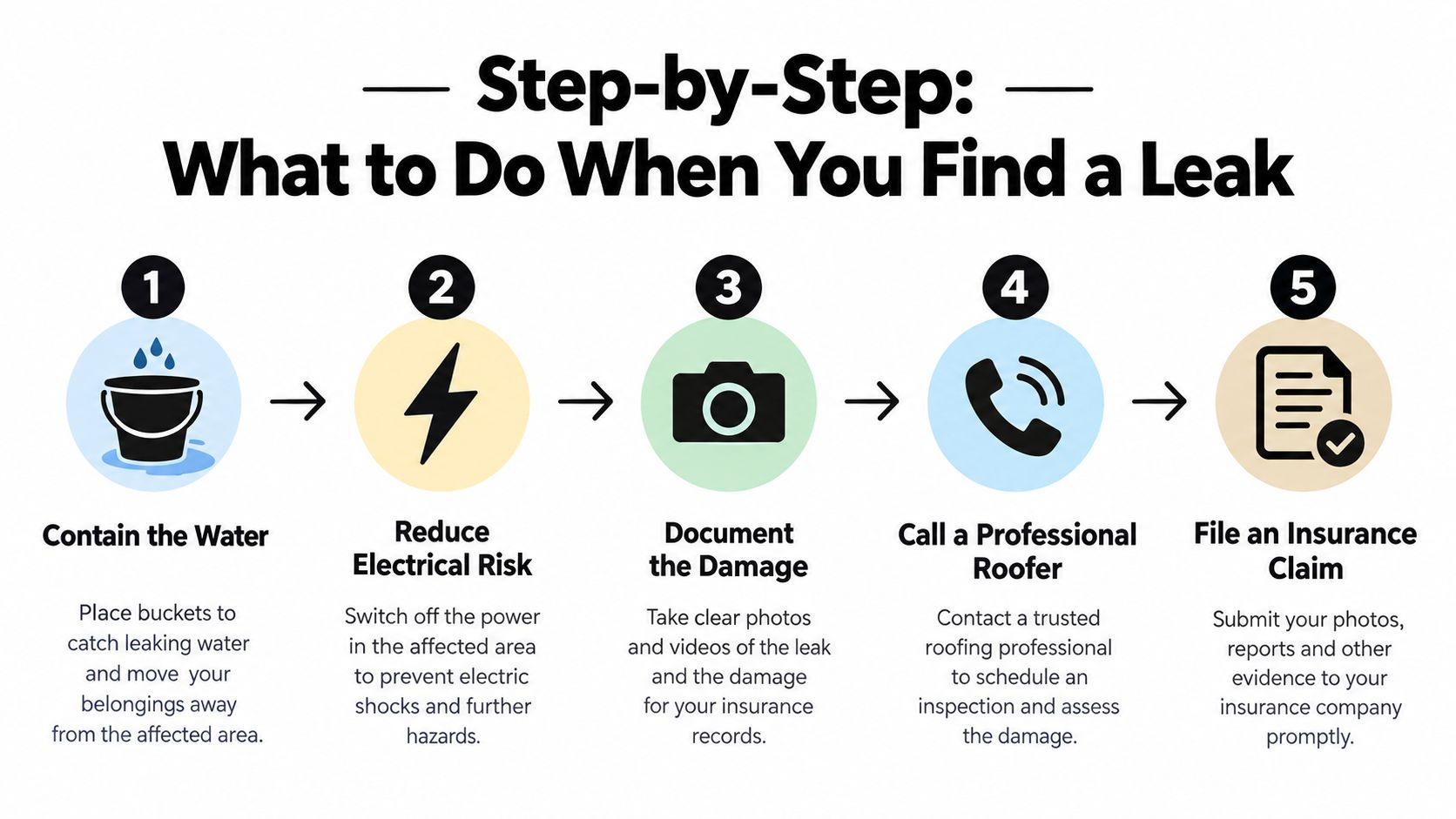
Step-by-Step – What to Do When You Find a Leak
Contain the water. Place buckets under drips, move furniture and electronics, and use towels to limit floor damage. If the ceiling is bulging, don't stand directly beneath it.
Reduce electrical risk. Keep water away from power strips and fixtures. If water is near electrical equipment, leave the area and have a qualified professional address the hazard rather than touching wet switches or wiring.
Document the condition. Photograph interior stains, active water, attic signs, exterior damage visible from the ground, and storm debris. Save receipts for emergency materials and note when you discovered the leak.
Arrange a roof inspection. Don't climb onto a wet, steep, or damaged roof. A professional using safe access and methods such as attic tracing or controlled water testing can investigate the source. You can also review professional roof leak detection services before scheduling an assessment.
Protect the claim and the building. Ask your insurer about emergency mitigation before authorizing permanent repairs, unless immediate action is needed to prevent further damage. Share your photographs and inspection findings, then compare written scopes before signing.
Use temporary protection to keep rain out, not to conceal the original condition. Two States Exteriors offers free on-site inspections for Kansas City homeowners, along with repair and storm-damage assessments that can clarify whether a localized fix or broader work makes sense.
When the immediate risk is under control, a professional inspection is the next practical step.
Two States Exteriors LLC provides emergency roof leak repairs, free on-site inspections, detailed scopes, and storm-damage and insurance-claim support across the Kansas City Metro Area. Visit Two States Exteriors LLC to request an inspection and get a clear plan before signing a repair or replacement work order.