A typical roof replacement takes 1–3 days of active labor, but the full process from initial inspection through final insurance payment averages more than 44 days. Hail damage repair takes longer because claim processing, documentation, permitting, material procurement, and crew scheduling often control the calendar more than the work on the roof.
The popular advice is to ask, “How many days will the repair take?” That question is too narrow, especially in the Kansas City area. A crew may complete the physical installation quickly, yet your project can remain unresolved while an adjuster reviews the scope, a supplement is negotiated, materials are ordered, or a permit and final inspection are arranged.
As a Kansas City roofing contractor, I separate every storm project into two timelines. The first is the active construction window, when workers are removing damaged materials and installing the approved system. The second is the total project lifecycle, which begins with documentation and ends with a completed, funded, inspected repair.
The Two Timelines Every Homeowner Must Understand
A fast crew doesn't automatically mean a fast project. The roof may be finished in a few days, but the homeowner can still be waiting weeks for the insurance decision that makes the repair possible.
A 2025 claims analysis reported that the average property-claim cycle exceeded 44 days from first notice to final payment, the longest period since 2008, according to this property-claim timeline analysis. That figure isn't a promise for every hail claim, but it shows why “one to three days” describes labor, not the complete restoration experience.
The labor window
Once the scope is agreed upon, materials are available, weather cooperates, and the crew is scheduled, a typical replacement can move quickly. Workers usually coordinate tear-off, debris removal, underlayment, flashing, shingles, ventilation details, and cleanup in a tightly managed sequence.
A minor repair may require less labor, but it can still depend on matching the existing product and confirming that the visible damage isn't part of a larger problem. A rushed patch can leave disputed damage, mismatched materials, or concealed moisture outside the approved scope.
The administrative window
The longer timeline includes several separate decisions:
- Damage documentation: The contractor records hail impacts, affected slopes, flashing, ventilation, decking, attic conditions, and interior staining.
- Insurance evaluation: The insurer determines what damage is covered and which work is justified.
- Scope resolution: Hidden damage, code-required upgrades, and supplements may need additional review.
- Permitting and procurement: Local rules and product availability can delay production.
- Final payment and inspection: The project isn't complete until required inspections and claim paperwork are finished.
Practical rule: Ask for two estimates in writing, one for active on-site work and another for the expected time to reach an approved, funded repair.
Homeowners comparing the labor phase with the full process can also review this roof replacement timeline. The useful question isn't whether a contractor can work quickly. It's whether the contractor has identified the steps that must happen before the crew arrives and after it leaves.
Navigating the Diagnostic and Approval Sequence
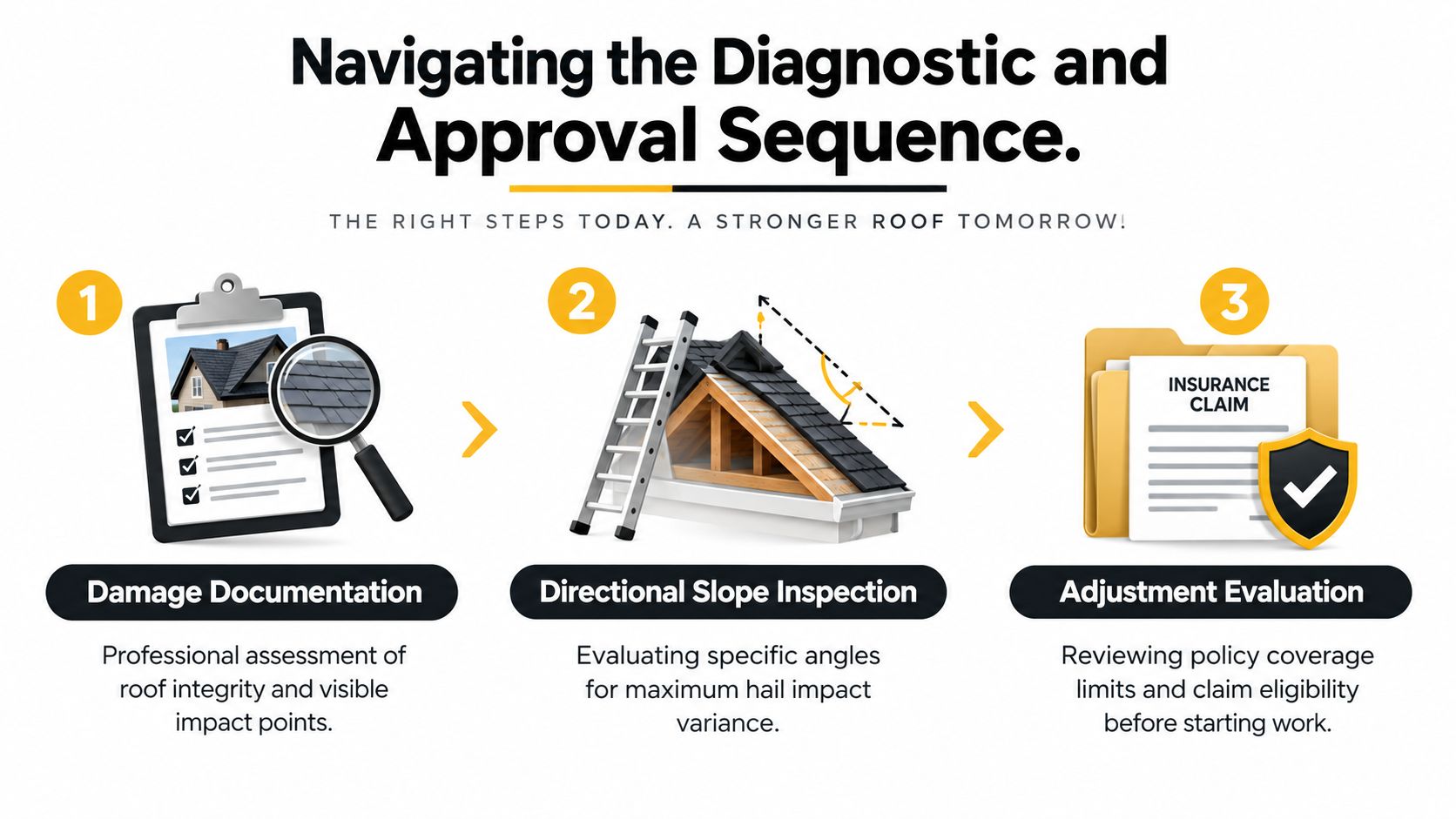
The repair clock starts with evidence. A drive-by glance can identify obvious damage, but it can't reliably establish which roof slopes were struck, whether the underlayment remains sound, or whether water has reached the attic.
What a defensible inspection includes
FEMA notes that a property inspection may take up to 45 minutes, depending on damage severity, as explained in its guidance on property inspections after applying for assistance. That time is justified when the inspector examines each elevation and roof slope rather than relying only on visible marks from the ground.
A thorough assessment should consider:
- Directional slopes: Hail impact can vary between roof faces, so each slope needs its own documentation.
- Roof components: Shingles are only one layer. The inspection should consider underlayment, flashing, ventilation, and decking.
- Representative test areas: A careful inspector uses appropriate test areas to distinguish impact damage from age-related wear.
- Interior evidence: Attic staining, damp insulation, and ceiling marks can reveal damage that isn't obvious outside.
- Temporary protection: Tarps or other protective measures should be photographed before they alter the condition of the property.
The homeowner's role is simple but important. Photograph every elevation, visible impact point, attic staining, damaged siding or gutters, and any temporary protection before repairs or cleanup change the evidence.
Why documentation affects the calendar
Insurance reviewers need a clear connection between the storm and the requested work. When photographs, slope notes, measurements, and a written scope support that connection, the adjuster has fewer unanswered questions. When the file contains only a few roof-level photographs, the reviewer may request more documentation or exclude areas that weren't adequately examined.
A complete scope also protects you from starting work before the repair boundary is understood. If the crew discovers damaged decking after tear-off, for example, the contractor may need a supplement and additional approval before proceeding.
For a closer look at the paperwork and communication involved, review this storm-damage insurance claim process. Good documentation doesn't guarantee an immediate decision, but it reduces avoidable back-and-forth.
Comparing Minor Spot Repairs and Full Replacements
The answer to “how long does hail damage repair take” depends first on what actually needs repair. A few isolated impacts on an otherwise serviceable roof are a different project from replacement across multiple slopes, especially when the tear-off reveals damaged decking or when local permitting applies.
A minor repair can often move promptly after approval. The contractor still needs to inspect the area, document the damage, match the material, and determine whether surrounding components remain secure. Material matching may be the limiting factor on an older roof, even when the physical repair itself is small.
A full replacement follows a broader production sequence. One restoration benchmark estimates 1–3 days of active labor for a typical roof replacement, while the overall project may take 3–6 weeks. The same benchmark identifies permitting and material procurement as a possible 7–30-plus-day phase, as described in this storm-damage restoration timeline.
| Repair Scope | Active Labor Time | Total Elapsed Time | Key Bottlenecks |
|---|---|---|---|
| Localized shingle or flashing repair | Limited, once approved | Prompt to variable | Documentation, material matching, approval |
| Full asphalt-shingle replacement | 1–3 days for typical active work | Roughly 3–6 weeks in the cited benchmark | Insurance coordination, permits, materials, production scheduling |
| Replacement involving decking or structural components | More variable | Potentially longer than a standard replacement | Structural evaluation, permits, inspections, supplements |
The table's active-labor estimate shouldn't be treated as a guaranteed arrival date. It assumes the scope is approved, the crew is available, materials have arrived, and weather allows safe installation.
Where full replacements slow down
Local building rules matter. Emergency tarping or weatherproofing may proceed immediately in many jurisdictions, while work involving decking, rafters, trusses, or other structural elements generally requires permits and inspections. Confirm the requirement with the local authority rather than relying on a contractor's assumption.
Ask for a written scope that identifies damaged layers, material specifications, permit responsibility, supplement handling, and final-inspection arrangements. Those details help distinguish a genuine schedule from a casual labor estimate.
The Kansas City Hail Market and Capacity Constraints
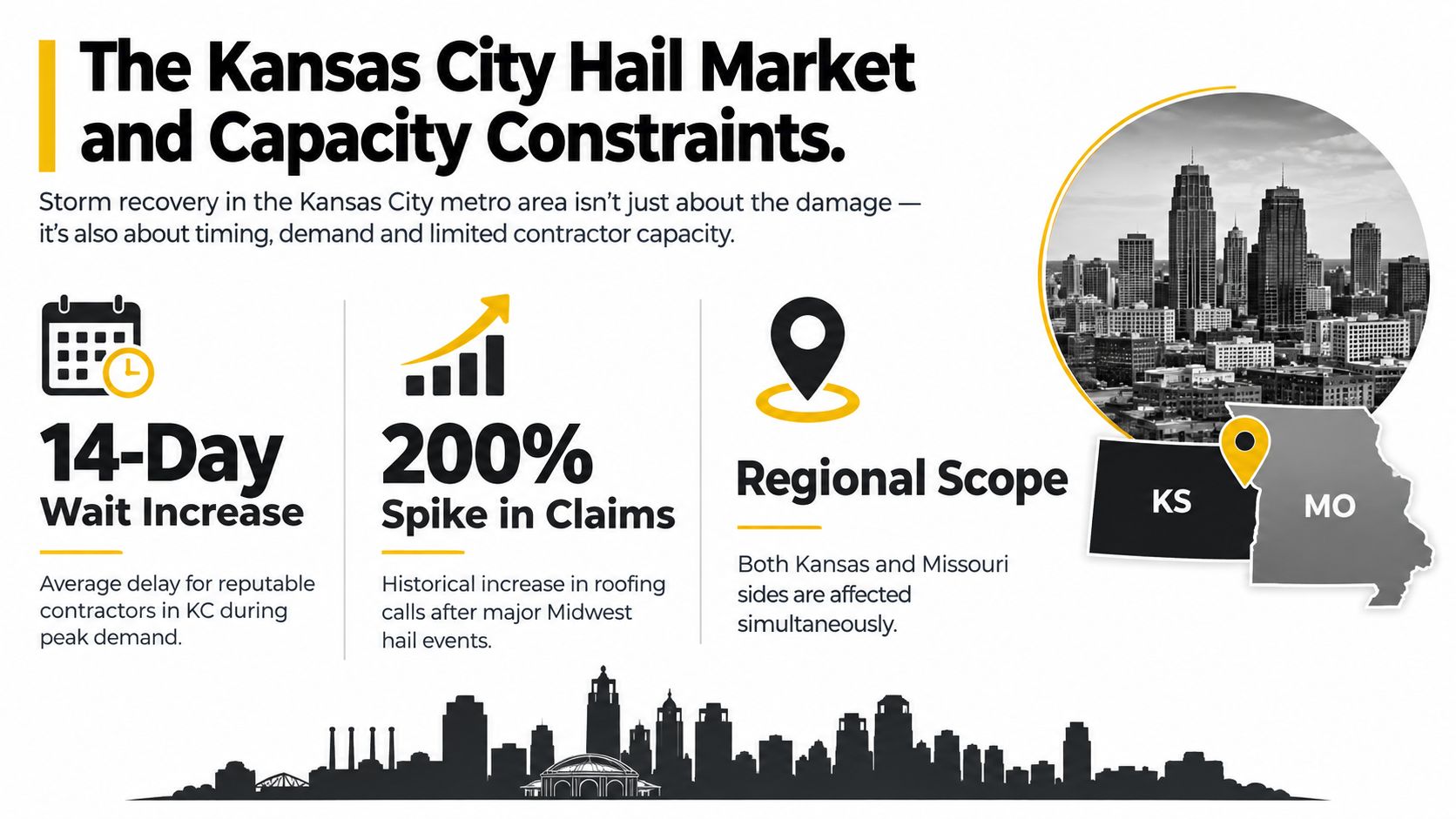
Kansas City homeowners don't plan storm repairs in an empty market. When a large storm crosses both sides of the metro, thousands of property owners may seek inspections, adjuster appointments, temporary protection, materials, and crews at the same time.
Kansas ranked second nationally with 375 major hail events, while Missouri ranked fifth with 253 in 2025, according to the Insurance Information Institute's hail statistics. Those figures don't predict the schedule for one address, but they explain why a Kansas City project can behave differently from a repair in an isolated, lightly affected market.
Why demand changes the calendar
A regional storm creates several queues at once. Inspectors must visit properties, adjusters must review claims, suppliers must move roofing products, and qualified crews must sequence work across neighborhoods. Even a straightforward roof can wait because the people and materials required for it are committed elsewhere.
This is why waiting for the market to calm down can backfire. Delaying inspection leaves damage undocumented, while delaying weatherproofing can expose the home to additional rain. At the same time, hiring the first person who knocks on the door can create different risks, including poor documentation, unclear credentials, rushed workmanship, or an incomplete scope.
A useful response balances urgency with verification. Secure temporary protection for active leaks, document conditions, notify the insurer according to the policy, and reserve a qualified contractor while you confirm licensing, insurance, written scope, and workmanship terms.
The storm market also affects commercial properties and multi-building sites. A property manager may need a phased plan that protects occupied areas first, then coordinates production across roofs, siding, gutters, and other exterior components.
For a visual explanation of how storm activity affects local availability, watch the following overview:
The central point is practical: contractor capacity, not ladder time, often controls the Kansas City storm-repair calendar.
A Staged Strategy for Prompt Storm Recovery
You don't need to choose between waiting passively and hiring recklessly. A staged response protects the property first, preserves evidence, and gives you time to vet the contractor handling the permanent work.
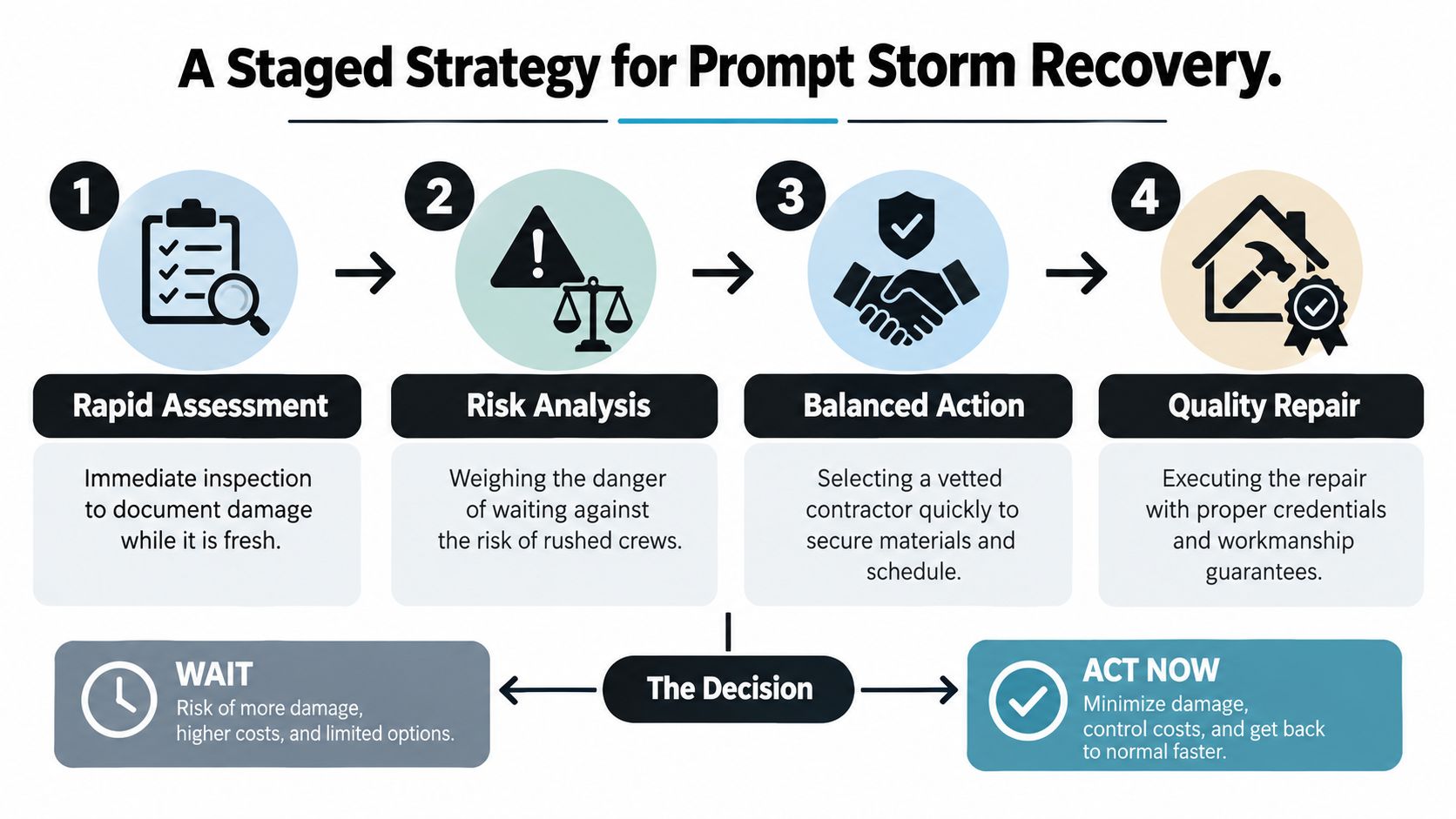
Document the condition promptly. Photograph roof elevations, siding, gutters, windows, attic areas, interior stains, fallen debris, and temporary measures. Don't discard damaged materials before the insurer or contractor has an opportunity to evaluate them.
Stop active water entry. If the roof leaks, arrange temporary weatherproofing and keep records of the work. Permanent repairs should follow a proper inspection, but active leaks shouldn't wait for a complete claim decision.
Notify the insurer within policy requirements. Ask what documentation is required, how the inspection will be scheduled, and whether work may begin before a coverage decision. Keep every estimate, photograph, email, and invoice in one claim file.
Reserve a qualified contractor after checking credentials. Look for licensing where applicable, current insurance, written scopes, clear supplement procedures, and a defined cleanup and inspection process. A contractor such as Two States Exteriors LLC offers free on-site inspections, insurance-claim support, emergency response, and roof and exterior restoration across the Kansas City metro area.
Approve specifications before production. Confirm shingle type, color, ventilation components, flashing details, decking assumptions, permit responsibility, and the expected construction window. Early decisions reduce the chance that material selection becomes a late-stage delay.
Industry analysis recorded 142 damaging-hail days in 2025, above the 20-year average of 122 days, according to the Insurance Information Institute's hail analysis. The practical lesson is to start the evidence and scheduling process early, without sacrificing contractor screening.
What to Expect During the Active Construction Phase
Once the claim scope is settled and the materials are on site, the work becomes easier to understand. A professional crew protects landscaping and exterior surfaces, establishes a debris plan, and keeps the installation sequence organized rather than treating the property like an uncontrolled demolition zone.
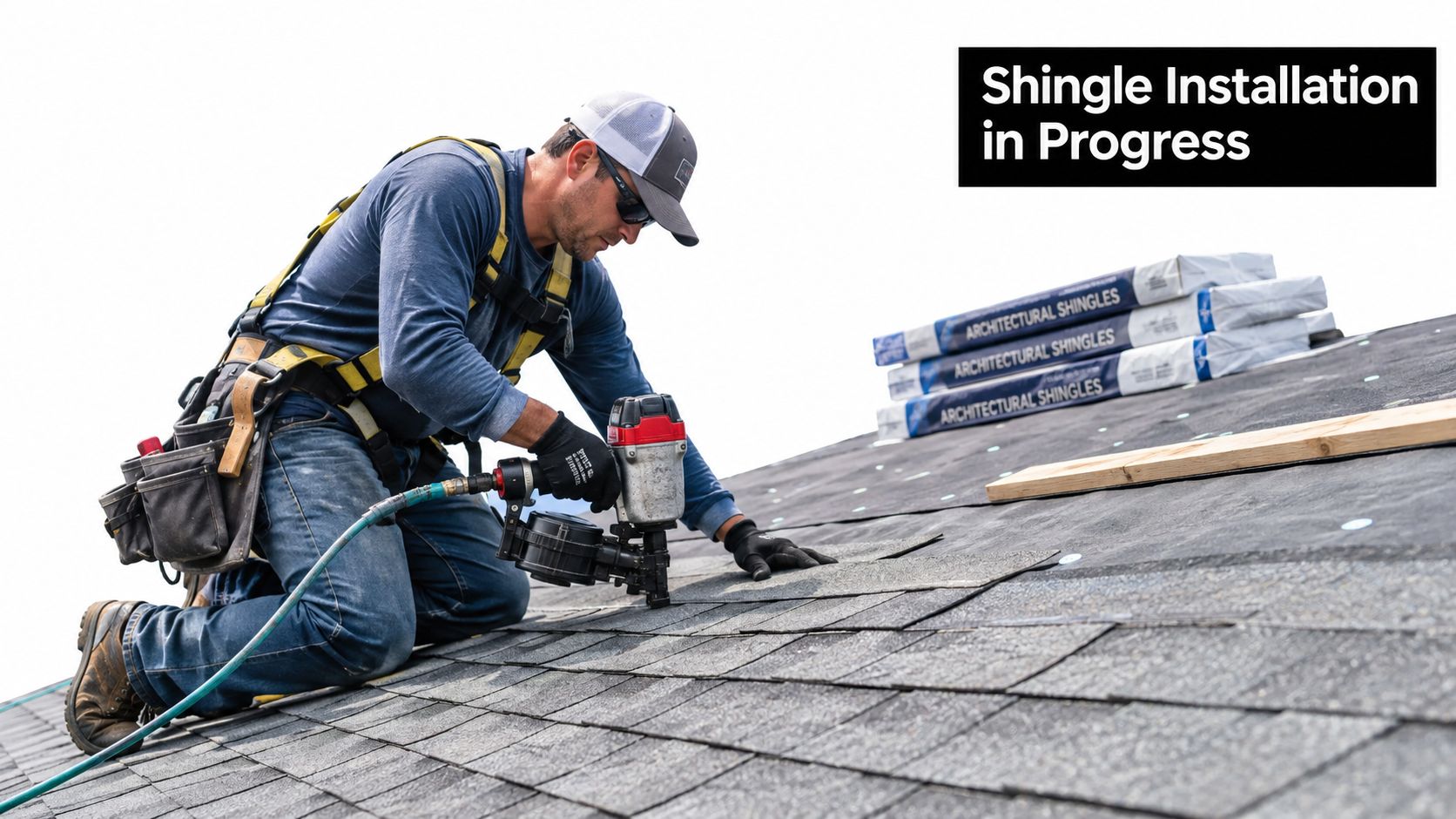
The installation sequence
The crew typically begins with site protection and tear-off. Workers remove the approved damaged layers, separate debris, and inspect the exposed roof deck. If they find conditions outside the agreed scope, the contractor should document them and explain whether a supplement or change in authorization is needed before covering the area.
Installation then proceeds through the roof system, not just the visible shingles. That can include deck repairs where approved, underlayment, valley and flashing work, ventilation components, and shingles installed according to the manufacturer's requirements. The crew should maintain safe access, control loose debris, and protect landscaping throughout the process.
Daily communication matters. You should know whether weather has changed the plan, whether concealed damage was found, and whether the crew expects to complete the work as scheduled.
Cleanup and final review
A proper closeout includes removal of roofing debris, inspection of grounds and exterior surfaces, and a careful magnetic nail sweep. The contractor should review the finished roof with you, explain any approved changes, provide relevant project documents, and coordinate the required final inspection.
The active phase may be short, but quality control shouldn't be compressed into a rushed departure. Confirm that flashing, vents, penetrations, gutters, siding interfaces, and visible cleanup meet the written scope.
For a more detailed explanation of the installation window, see this guide to how long it takes to replace a roof. The right contractor doesn't just finish the roof. They leave you with a documented project, a clean property, and a clear understanding of what was installed.
Two States Exteriors LLC provides Kansas City-area homeowners with storm and hail inspections, insurance-claim support, roof repair and replacement, and related exterior work. Visit Two States Exteriors LLC to request an inspection and discuss a documented repair plan before regional demand makes scheduling harder.