Manufacturer material warranties often span 20 to 50 years, while contractor workmanship warranties that cover installation leaks typically last only 2 to 5 years. That difference is why the biggest number on a roofing brochure rarely tells you how long you're protected when water appears in the ceiling.
The popular advice is simple: choose the roof with the longest warranty. That advice can leave Kansas City homeowners focused on the wrong promise. A long material warranty may address defective shingles or membrane, while the installation mistake that causes the leak falls under a separate contractor warranty with a much shorter term.
Kansas City roofs face hail, wind, ice, temperature swings, and repeated freeze-thaw stress. A warranty doesn't turn those risks into someone else's responsibility. It assigns responsibility according to the cause of the problem, the covered components, the installation requirements, and the maintenance rules written into the contract.
The Myth of the Lifetime Roof Warranty
A “lifetime” roof warranty does not promise a leak-free roof for as long as you own your home. It usually covers the roofing material under a limited contract. The manufacturer defines “lifetime,” identifies qualifying products, reduces the remedy over time, and lists excluded events.
Commercial warranties commonly started at 10-year terms. As single-ply membranes spread during the 1980s, typical coverage expanded to 15 years, and 20 years became a common modern planning reference point, according to industry documentation on commercial roof warranties. Current commercial manufacturer warranties often range from 5 to more than 20 years, with 10-year and 20-year terms frequently offered.
Two promises, two responsible parties
A roofing warranty usually separates responsibility between the product manufacturer and the installing contractor:
- Material coverage: The manufacturer addresses a defect in the roofing product itself.
- Workmanship coverage: The contractor addresses installation problems, including failures that prevent the roof from staying watertight.
These agreements may last for very different periods. The National Roofing Contractors Association's roofing resources explains that a manufacturer warranty generally concerns manufacturing defects, while workmanship coverage is a separate contractor obligation with no industry-standard duration.
Practical rule: When water appears inside, identify the likely cause first. It could be a defective product, an installation error, storm damage, poor maintenance, or another building condition. That cause usually determines which warranty, if any, applies.
A “50-year” label may cover only a narrowly defined product defect. You may still have to pay for labor, leak investigation, tear-off, disposal, or repairs caused by installation. Before signing, read the sections on coverage, exclusions, remedy, workmanship, maintenance, transfer, and claims. The shorter workmanship term often matters more to the homeowner facing a leak.
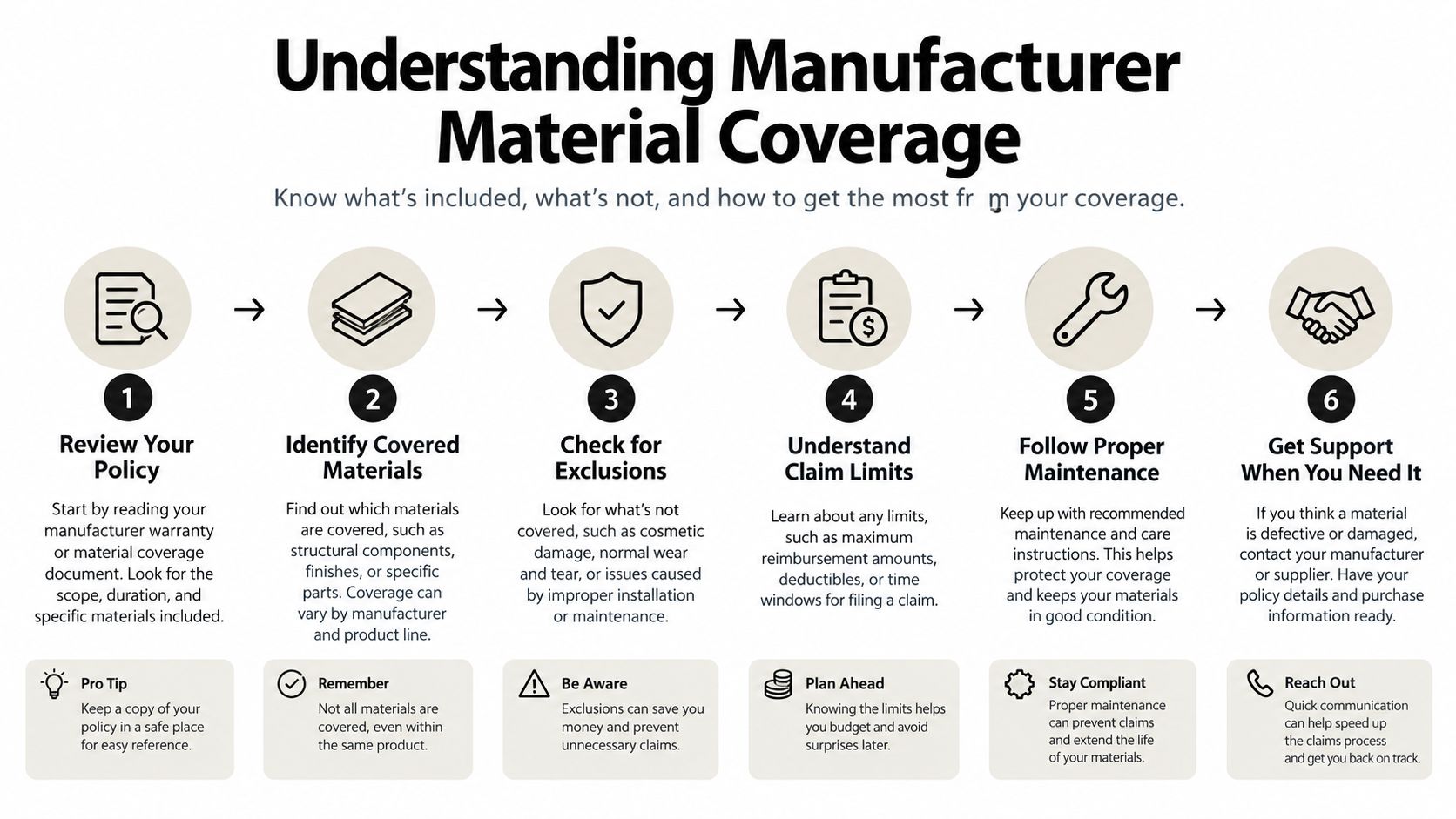
Understanding Manufacturer Material Coverage
Manufacturer coverage starts with the roofing product itself. If shingles, panels, or membrane fail because of a manufacturing defect, the written warranty may provide replacement materials or another specified remedy. It does not promise that the roof will never leak, and it may leave significant correction costs with the homeowner.
Residential shingle warranties can range from roughly 5 or 10 years for basic products to 30 years or more for higher-tier products, as described in this residential shingle warranty reference. The longest advertised terms may apply only to certain products, approved installation methods, registered owners, or enhanced warranty programs. “Lifetime” has a defined contractual meaning. It is not an unlimited promise.
What material coverage may and may not pay
A standard product warranty may address defective roofing material while excluding the labor required to diagnose or replace it. Depending on the document, the remedy may involve:
- Replacement material: The manufacturer supplies qualifying shingles, panels, or membrane.
- Labor limitations: Tear-off, disposal, and installation may remain the homeowner's responsibility.
- Proration: The manufacturer's obligation may decrease as the roof ages.
- Covered components: Flashing, fasteners, underlayment, and accessories may be excluded unless specifically listed.
- Claim conditions: Registration, proof of purchase, prompt notice, and authorized procedures may apply.
A defective shingle still has to be removed and replaced. The work may require roof access, tear-off, disposal, related repairs, and installation of the new material. If the document covers only the product, those labor charges can remain outside the manufacturer's promise.
Commercial membrane warranties follow a different pattern because they often address a specified roof assembly instead of one visible product. Their coverage can depend on the system type, approved components, authorized application, inspections, and maintenance. Those conditions make the written scope more important than the headline term.
Compare the written remedy, not the brochure term
Two warranties can advertise the same duration while offering different practical protection. One may be prorated and material-only. Another may include a defined labor remedy during an initial non-prorated period. Check the exact start date, full-coverage period, prorated period, and party responsible for performing the work.
For a Kansas City homeowner, ask a direct question: if this product fails, what will the document pay, who will handle the claim, and which costs remain mine? The answer matters more than a large number printed on the brochure.
Why Workmanship Warranties Matter Most
A roof can leak even when every shingle or panel leaves the factory without a defect. One misplaced fastener, open flashing joint, poor transition, damaged underlayment, or incomplete seal can allow water into the assembly. The product warranty may provide no help because the installation, not the material, failed.
That distinction makes the workmanship warranty the protection homeowners use most often for installation-related leaks. It is the roofer's written promise to correct defects caused by the installation, subject to its stated terms. According to commercial and residential roof warranty guidance, workmanship warranties are generally shorter than manufacturer coverage and usually address installation defects rather than aging, severe weather, or neglected maintenance.
Read the workmanship section line by line
A large term on a proposal tells you little by itself. Check whether the warranty answers these questions:
- What counts as a workmanship defect? Does it cover leaks caused by installation, or does narrower wording limit the promise?
- What does the contractor provide? Does the remedy include labor, replacement materials, or only an inspection?
- Which components are included? Look for flashing, fasteners, vents, penetrations, underlayment, and edge details.
- How do you file a claim? Identify the required notice method, response process, and documentation.
- Who remains responsible after ownership changes? Transfer rules can affect the promise's practical value.
Industry references commonly describe contractor workmanship coverage as 2 to 5 years, while some contractors offer shorter or longer terms. The contractor warranty duration guidance emphasizes that there is no universal industry duration, and many contractors offer only one or two years. That short period can matter more than a manufacturer's headline term of 50 years if a leak results from installation and the roofer's responsibility has already expired.
A longer workmanship term helps only when the contractor clearly defines the coverage and has the resources to honor it.
Workmanship coverage normally excludes hail, wind, falling trees, and damage caused by another trade. Those events belong under property insurance or another responsible party. Neglected maintenance can create another exclusion, especially when blocked drainage, biological growth, or unrepaired damage lets a small problem spread.
For a clearer explanation, review what a workmanship warranty covers. Request the actual warranty document before work begins, rather than relying on a salesperson's verbal assurance.
Upgrading to a Full System Warranty
A “50-year” material warranty can leave a homeowner paying for a leak repair after a workmanship promise expires. A full-system or enhanced warranty narrows that gap by placing the roof assembly and, in some programs, installation performance under one manufacturer-backed agreement.
Instead of covering shingles alone, the program may address the approved combination of shingles, underlayment, flashing, ventilation, edge details, and labor. The commercial warranty guidance from CertainTeed shows how broader leak coverage can depend on the complete system and installation controls rather than on the membrane alone.
That protection comes with rules. The manufacturer may require specified products, approved accessories, documented installation, an authorized or certified contractor, inspections, registration, and continuing maintenance. If the roofer substitutes an unapproved component or skips a required inspection, the broader promise may not apply.
Standard coverage compared with system coverage
| Coverage question | Standard material warranty | Enhanced system warranty |
|---|---|---|
| Product defect | Often included | Included under stated system terms |
| Installation error | Usually separate | May be backed through the manufacturer program |
| Labor | May be excluded or limited | May be included for a defined period |
| Tear-off and disposal | Must be confirmed | May be included if expressly listed |
| Approved installer | May not be required | Often required |
| System components | Limited to listed products | May include a complete approved assembly |
The label alone proves little. One system program may pay labor for a defined period while excluding later repairs. Another may require inspection reports and maintenance records. A public-building specification described by CertainTeed calls for a 30-year no-dollar-limit warranty when an authorized applicator follows the stated requirements. The CertainTeed public-building specification illustrates the trade-off: broader coverage brings tighter installation controls.
The added cost can make sense when one clearly identified party must address a covered system failure. It may not justify the premium if the contractor will not provide the complete warranty document, cannot explain certification requirements, or uses the program name instead of showing the actual remedy.
Watch the explainer below for a visual overview of common warranty distinctions.
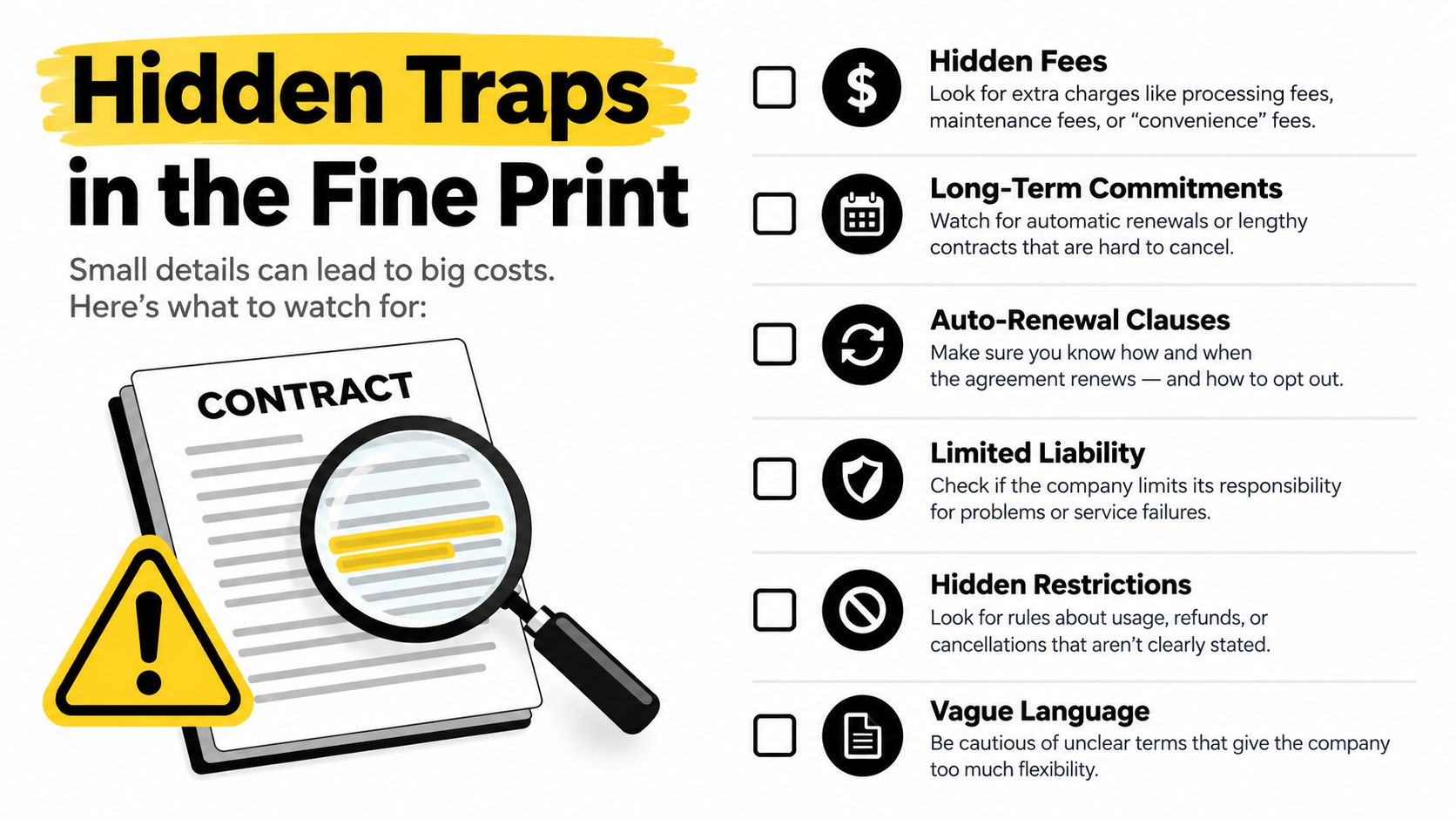
Hidden Traps in the Fine Print
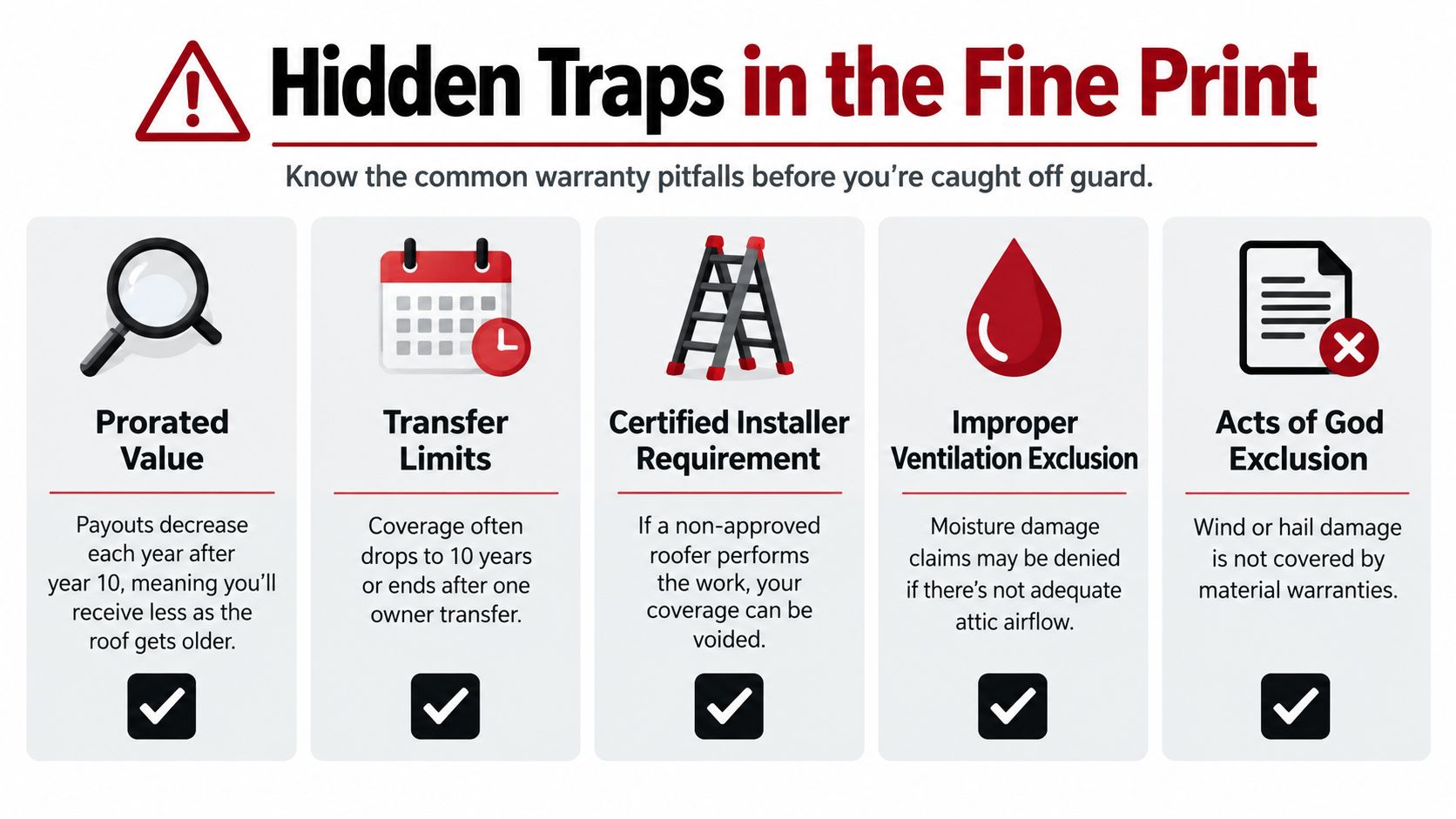
A warranty's exclusions often matter more than its front-page duration. The document may promise coverage for a long period but reduce the remedy through proration, limit transfer rights, require specific maintenance, or exclude the event that caused the damage.
Proration changes the value over time
A prorated warranty reduces the manufacturer's contribution as the roof ages. The contract may provide stronger protection during an initial period, then shift toward a smaller material allowance later. That's why a long term doesn't necessarily equal long-term payment for a full replacement.
The Federal Trade Commission's warranty guidance gives homeowners a useful rule: treat only items explicitly listed in the written warranty as covered. Don't assume that a broad label includes labor, accessories, leak repair, or a complete roof replacement.
Ownership and maintenance can affect eligibility
Transfer rules deserve attention if you may sell the home. Some warranties transfer only once, require notice within a stated period, or impose other conditions. Gather the certificate, contract, invoices, registration records, inspection reports, and maintenance documentation before a sale rather than trying to reconstruct the file afterward.
Maintenance language can be equally important. Commercial systems may require inspections, prompt leak reporting, approved repairs, and maintenance records. Residential documents may exclude damage caused by neglect, unauthorized alterations, incompatible repairs, or conditions outside the roofing product.
Keep a written maintenance file that includes:
- Inspection records: Note visible damage, drainage conditions, flashing, penetrations, and repairs.
- Repair invoices: Retain descriptions of materials and methods, not just payment receipts.
- Product records: Save the warranty certificate, product names, installation date, and contractor details.
- Change approvals: Ask before another trade installs equipment, cuts a penetration, or applies a coating.
Routine roof care doesn't guarantee a claim will succeed, but it gives you evidence that you followed the contract. Use appropriate cleaning methods too. Before arranging pressure washing for a shingle roof, confirm that the method won't damage the roofing material or conflict with the warranty's maintenance requirements.
Storm damage is a separate issue. Hail, wind, falling objects, and other weather events may be excluded from material warranties and handled through homeowners insurance. Don't ask the warranty to perform the job of an insurance policy.
How to Evaluate a Roofing Warranty Offer
The strongest offer isn't necessarily the one with the largest printed number. Compare the responsible party, the covered cause, the remedy, and the conditions attached to the promise.
Ask these questions before signing:
- Who covers materials? Get the manufacturer's name, product line, term, registration requirement, and actual warranty document.
- Who covers workmanship? Confirm the contractor's duration, covered defects, labor obligations, and exclusions.
- What happens after a leak? Ask who receives the first call, how quickly the contractor investigates, and what records you must provide.
- Is the roof system approved? Verify that the proposed underlayment, flashing, ventilation, accessories, and fasteners meet the manufacturer's requirements.
- What changes the coverage? Ask about proration, transfer, maintenance, unauthorized repairs, rooftop equipment, and storm damage.
- What does the remedy include? Confirm whether it covers labor, replacement materials, tear-off, disposal, flashing, and leak-repair work.
Request the warranty in writing before the project starts. Verify the contractor's certification directly with the manufacturer, and keep the contract, invoice, registration confirmation, installation photographs, permits, and maintenance records together. If a salesperson describes coverage that doesn't appear in the document, treat the written document as the controlling reference.
For a replacement project, review the contractor's roof replacement warranty information and compare it with the manufacturer's terms. Two States Exteriors LLC offers roof products and workmanship coverage with options reaching up to 50 years, according to its published company information, but the applicable protection still depends on the selected system and written warranty conditions.
Two States Exteriors LLC provides roof repair and replacement, storm and hail damage support, and written warranty guidance for Kansas City homeowners and property managers. Visit Two States Exteriors LLC to request an inspection and compare the actual material, workmanship, and system coverage before you sign.