
You're standing in the driveway after a Kansas City hailstorm, looking at bruised shingles, bent drip edge, maybe a downspout hanging loose, and you're trying to figure out whether this is a real insurance claim or just another headache. The short answer is that how do insurance claims work comes down to evidence, coverage language, and a back-and-forth with the carrier. The claim isn't a promise of payment, it's a file the insurer reviews, questions, and often pushes back on before money moves.
The part most homeowners miss is that the clock starts as soon as the loss is noticed, and the insurer's first job is to decide whether the damage fits the policy. That usually means a notice of loss, an inspection, a pile of photos and records, and then a settlement decision. On the ground, that process can feel slow, uneven, and a lot more formal than people expect.
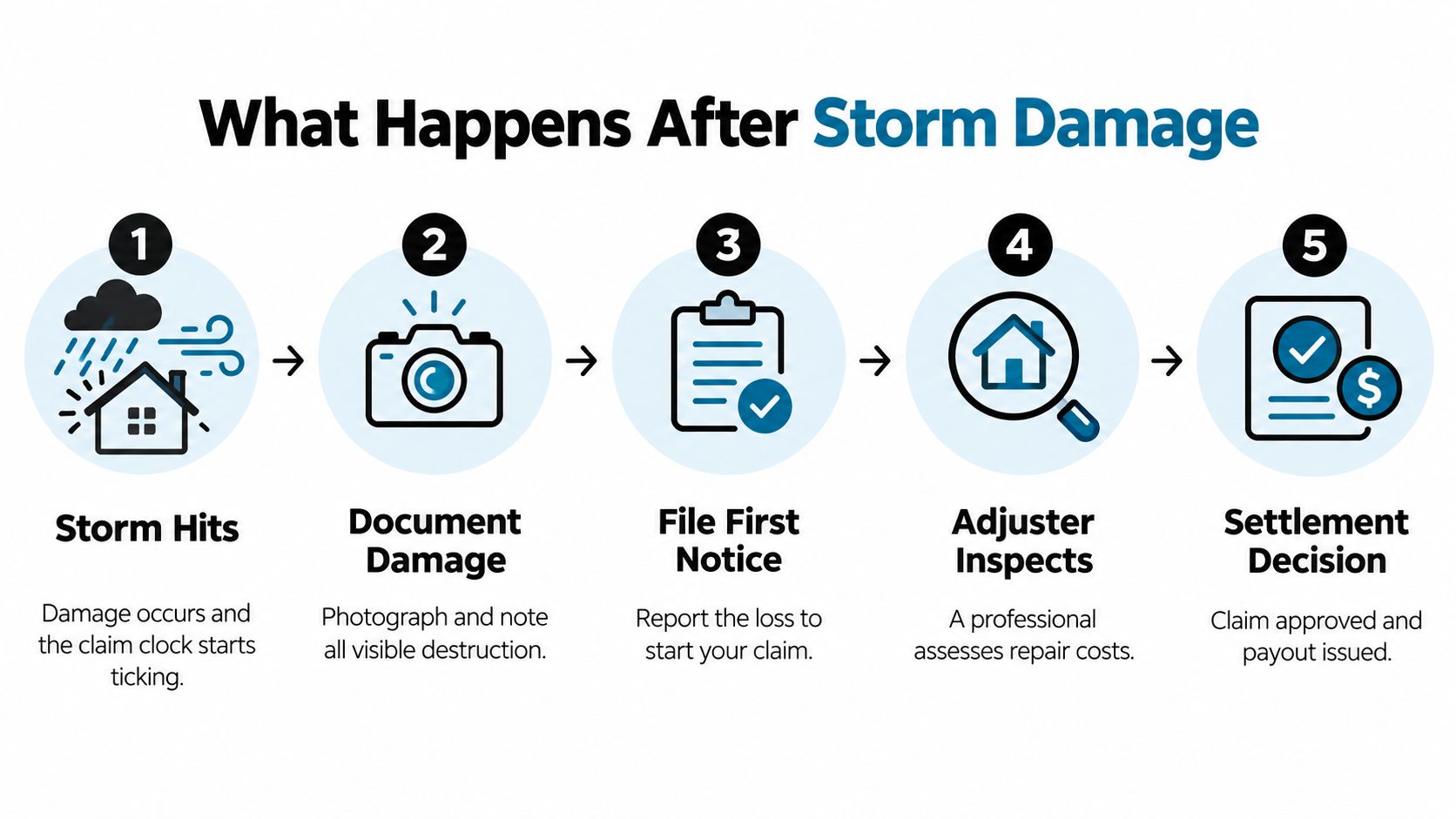
What Happens After Storm Damage
After a Kansas City hailstorm, the first morning can reveal loose shingles, dented flashing, damaged gutters, or water inside the attic. The claim process then moves through four practical stages: notice of loss, coverage review, investigation, and a settlement decision. Each stage depends on evidence the carrier can verify, and delays or gaps in that evidence can weaken the file.
What the insurer is checking
The carrier begins with the First Notice of Loss, confirms the policy's coverage, investigates the condition, requests supporting records, and decides whether the reported damage qualifies for payment. That review separates fresh storm damage from old wear, deferred maintenance, and exclusions in the policy language.
Wind and hail coverage may apply to roof and exterior damage, while flood damage often falls under a separate exclusion or policy. Water entering through a storm-damaged roof can raise different coverage questions than rising water from flooding. Read the policy wording carefully before assuming every form of storm water belongs in the same claim.
Practical rule: document what was damaged, when you noticed it, and how severe it appeared.
Photograph shingles, flashing, gutters, siding, window trim, attic staining, and any other changed condition. If the roof is leaking, arrange temporary protection promptly, but photograph the original damage first and keep invoices for the work.
The roof is only one part of the file. Exterior components can fail together, and overlooked damage may later complicate the investigation. Clear records give the adjuster something concrete to compare against the reported storm and help expose weak explanations for a denial.
Filing Your Initial Claim
The first call or online notice sounds routine, but it's where a lot of claims get weakened. The carrier wants the date of loss, a plain description of what happened, and enough detail to open the file correctly. If you're unsure about the exact cause, say what you observed and avoid guessing.

What to have ready before you call
A good first notice includes the basics and nothing sloppy. Keep these items in front of you:
- Exact date and time window: Use the storm date you can defend, not a fuzzy estimate.
- Loss description: Say what you saw, such as missing shingles, hail strikes, or water intrusion.
- Photos and videos: Capture wide shots and close-ups before anyone patches or replaces anything.
- Policy information: Have your declaration page, deductible, and coverage details nearby.
- Repair records: If you already had prior work done, keep those receipts and invoices together.
The reason this matters is simple, the file usually lives or dies on documentation. Insurers often ask for proof that the damage is fresh and related to the reported event, and the cleaner your initial package is, the less room there is for confusion later.
Keep the language factual. A homeowner who says “the storm ruined the roof” may sound confident, but a homeowner who says “I found new hail impacts and water staining after the storm on this date” sounds credible.
Later in the process, you may hear the term proof of loss. That's the evidence package backing up the claim, not just a formality. The better your photos, estimates, repair notes, and policy terms line up, the easier it is to keep the claim moving.
For a practical filing walkthrough, this property insurance claim guide from Two States Exteriors is a useful reference for Kansas City homeowners who want to understand the paperwork side before they get too deep into the process.
Working with the Adjuster
The adjuster's visit is where the claim record takes shape. This person examines the loss, measures the visible damage, and writes the estimate the carrier will use when deciding payment. A rushed inspection can leave out items that matter later, especially on roofs with multiple slopes, accessories, or hard-to-see elevations.
Walk the property like a contractor would
Stay with the adjuster when possible. Point out obvious wind or hail impacts first, then identify secondary signs such as granules in gutters, dented soft metals, bruising on shingles, and marks on HVAC components. These details help establish the storm's direction, intensity, and likely path across the property.
Keep your own notes during the inspection. The adjuster's scope may differ from what you observe, and memory gets unreliable once conversations become technical. Record which areas were examined, what was questioned, and any item the adjuster says requires more documentation.
If something is dismissed, ask what evidence would support reconsideration. Then gather that evidence separately instead of arguing in circles. A local contractor familiar with insurance terminology can assist with the inspection and documentation. Two States Exteriors LLC provides inspection support and claim coordination for homeowners in the Kansas City area.
What the adjuster examines
Adjusters generally assess causation, matching, repairability, and whether the damage fits the reported storm. They also look for older wear, repeated patching, and conditions that suggest long-term deterioration. Your responsibility is to identify the new damage clearly and explain when you first observed it.
Coverage language creates another point of friction in Midwest storm claims. Wind and hail damage may fall under one part of the policy, while flood, rising water, or long-term seepage can be excluded or handled differently. A roof leak after a storm does not by itself establish which peril caused the loss. The inspection record needs to connect the physical evidence with the reported event.
A few items commonly receive too little attention during a quick inspection:
- Peripheral damage: gutters, downspouts, vents, soffits, and flashing.
- Functional damage: conditions affecting water shedding or sealing, even when the surface looks minor.
- Access issues: steep slopes, detached elevations, and concealed roof areas that require a closer look.
Keep the discussion tied to observed damage and policy language. If the first inspection leaves gaps, request a reinspection or submit a supplement with supporting documentation. Homeowners preparing for that conversation can use a guide on negotiating with insurance adjusters to keep the exchange focused on evidence and specific questions.
Understanding Estimates and Payments
A homeowner can receive an insurance estimate that falls well below the contractor's scope, then assume the claim has been underpaid. The gap usually comes from policy language, depreciation rules, the deductible, or differences in what each party considers damaged and covered. The first estimate reflects those rules and assumptions, not necessarily the final payout amount.
ACV and replacement cost are different
Actual Cash Value, or ACV, pays for the damaged property after depreciation. Replacement Cost Value, or RCV, reflects the cost to replace the item with like kind and quality, subject to the policy terms. Many policies issue an initial payment based on ACV, then release recoverable depreciation after the work is completed and properly documented.
That payment structure catches homeowners off guard. The first check may not cover the full roof or siding project because the carrier has withheld depreciation, applied the deductible, or approved only part of the documented scope. Read the estimate line by line. Missing quantities, excluded accessories, and limited labor allowances can matter as much as the roof covering itself.
A roof that is several years old can also create a larger gap between the contractor's price and the initial payment. Review how the policy handles age and depreciation before committing to the repair contract. This roof replacement depreciation guide for insurance claims explains the calculation homeowners commonly find confusing.
Why denial and short payment happen
Claims often fail because the documented cause does not match the coverage being requested. Midwest policies may treat wind and hail differently from flood, rising water, or long-term seepage. A roof leak after a storm does not automatically establish that wind or hail caused the covered loss. The file needs a clear connection between the storm, the physical damage, and the policy's covered peril.
Denial rates reported across homeowner filings have been substantial, which makes a clean claim record more than paperwork. If the file blends wind, hail, flood, and preexisting wear, the carrier has more room to restrict or deny payment. Keep the cause of loss specific, and challenge unsupported exclusions with photographs, measurements, repair notes, and a written scope.
| Stage | Description | Typical Timeline |
|---|---|---|
| First payment | Carrier issues an initial check based on the approved scope and policy terms | After the estimate is approved |
| Depreciation holdback | Unpaid depreciation remains until repair completion is documented | After work is finished and verified |
| Final payment | Remaining funds are released once the claim file is closed out properly | After the insurer accepts the final proof |
Choosing a Contractor for Repairs
Once the claim is approved, the repair decision matters just as much as the payout. A cheap bid can look good on paper and still leave you with leaks, code issues, or a roof that doesn't hold up through the next Midwest storm. A contractor should be judged on scope, materials, licensing, and whether they understand storm restoration.
Lowest price versus managed restoration
The lowest bid often leaves out critical items. It may skip flashing, code upgrades, ventilation fixes, or the small metal components that make the whole system work. That's where homeowners get stuck paying out of pocket after thinking the claim was finished.
A contractor-managed claim usually brings more structure. The contractor can document damage, build a repair scope that matches the actual loss, and push back when the carrier underwrites the work too narrowly. That doesn't guarantee a bigger check, but it does reduce the odds that something important gets missed.
Why local experience matters
Midwest storm damage isn't a generic roofing problem. Hail, wind, and fast temperature swings create patterns that out-of-town crews often misread. A contractor who works these storms every year knows what adjusters are likely to question and what repair details matter on the back end.
Here's the practical trade-off:
- DIY claim management: lower upfront coordination, but higher risk of missed scope and weaker documentation.
- Contractor-managed claim support: more organized evidence, but you need someone who is careful with the facts and not just trying to force every claim.
- One-bid shopping: fast and simple, but it can hide weak materials or incomplete repairs.
- Detailed local proposal: more work up front, but better for matching what the insurer is paying for.
A certified, licensed, and insured contractor can help reduce mistakes, especially when a claim involves multiple exterior systems. That matters more when weather, code requirements, and material availability all hit at once.
Navigating High-Severity Claims
The claims environment is tighter than a lot of homeowners realize. Verisk reported homeowners' claims volume fell 19% year over year to 5.27 million in 2025, while LexisNexis said U.S. all-peril claim severity hit an all-time high in 2025, up 25.9% from 2024 and 93.2% from 2019. That combination means fewer claims are being filed, but the ones that do get filed are often bigger, more complex, and more disputed.

Why bigger losses get more friction
When severity rises, insurers pay closer attention to file quality. The more expensive the claim, the more likely the carrier is to test causation, scope, and documentation before paying. That's especially true when the damage is spread across the roof, gutters, siding, and interior signs of water intrusion.
High-severity claims also get slowed by requests for extra records. The insurer may ask for receipts, prior repair history, weather timing, or additional photos before moving forward. If you already know the file is likely to get pulled apart, you can prepare for that instead of reacting to it.
A claim may be getting unduly contested if the carrier keeps asking for the same records, delays inspection without explanation, or changes its position without giving you a clear reason. That's the moment to tighten your documentation and get professional help involved before the file drifts.
Direct advice: when the damage is serious, treat the claim like a record-keeping project, not a phone call.
Essential Tips for a Smooth Process
The cleanest claims files usually have the same habits behind them. The homeowner stays organized, answers requests quickly, and keeps the repair conversation tied to the policy instead of emotion. That approach won't eliminate carrier pushback, but it does make the file harder to brush aside.
Keep the claim file tight
Use one folder, digital or paper, for everything connected to the loss. Put inspection photos, emails, estimates, contractor notes, policy pages, and payment records in the same place. If the adjuster asks for something later, you won't waste time digging through old messages.
A few habits make a real difference:
- Save every email: Keep the exact wording of claim decisions and follow-up requests.
- Track every call: Write down dates, names, and what was said.
- Separate old damage from new damage: That distinction matters when the carrier evaluates causation.
- Read exclusions early: Flood, seepage, wear, and maintenance issues can change the whole file.
- Answer quickly: Delayed responses slow the claim and can create avoidable friction.
Don't let confusion become a denial
Some denials come from poor proof, some from policy exclusions, and some from the way the loss was described on day one. That's why Kansas City homeowners should be careful about calling everything “storm damage” without confirming what failed. Wind and hail can be covered, but flood or long-term water entry can fall into a different bucket entirely.
Frequent, clear communication also matters. The claims process moves better when the insurer sees consistent documentation and steady follow-up, not gaps and guesswork. On the homeowner side, the best protection is a file that tells one coherent story from the storm date to the final invoice.
If you want a local team that can inspect the damage, help organize the insurance file, and handle storm and hail restoration in Kansas City, Two States Exteriors LLC works in that lane every day. Visit Two States Exteriors LLC if you want a practical next step from people who know how these claims move.