
When you see pictures of hail-damaged roofs, you might expect to see huge, obvious cracks and dents. But the truth is, the most common sign is way more subtle—it looks like little dark, bruised spots on your asphalt shingles. While they might not look like much, these spots are actually critical signs of damage. They expose the shingle's core to the sun, which speeds up its breakdown. Learning to spot these details is the first step to protecting your home after a storm.
What Hail Damage Actually Looks Like On Your Roof
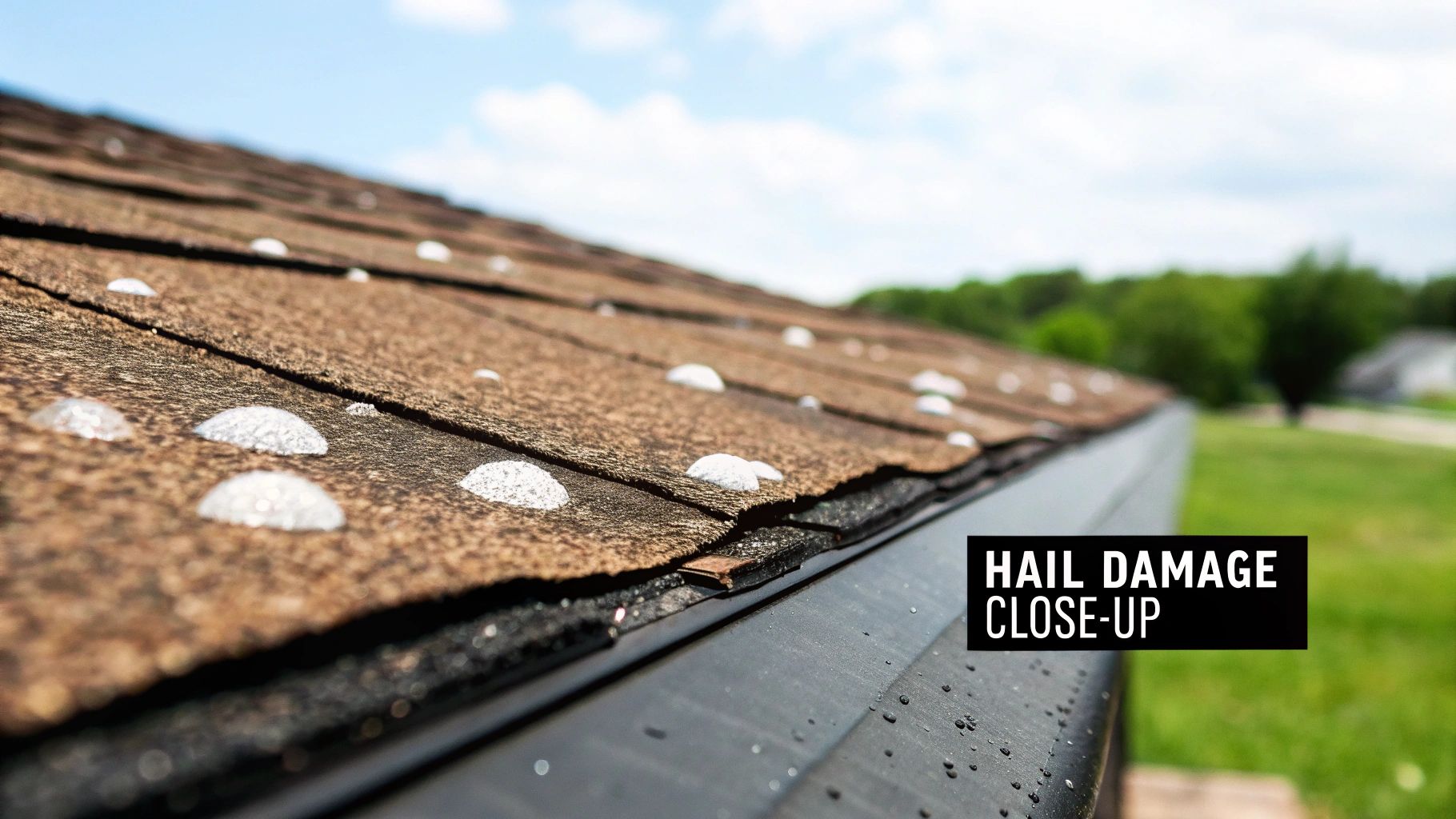
After a hailstorm blows through, it's natural to peek outside and assume everything's fine if you don't see missing shingles or gaping holes. Unfortunately, the most destructive kind of hail damage is often sneaky and nearly impossible to spot from your driveway. It doesn’t just punch holes; it attacks the very integrity of your entire roofing system.
Think of an asphalt shingle as a piece of bread with a protective layer of butter. Hail is like a thumb pressing down hard—it doesn't just dent the surface, it pushes the butter (the shingle granules) aside and bruises the bread (the asphalt mat) underneath. That "bruise" is where the real trouble starts.
Identifying the Telltale Signs
The key is knowing exactly what to look for. Hail impacts leave a specific footprint that a trained eye can easily tell apart from normal aging, like sun blistering or general wear and tear. The evidence isn't always dramatic, but it's always significant.
Here are the main things we look for on asphalt shingles:
- Granule Loss: This is the big one. You'll see random, circular dark spots where the hail knocked off the protective granules, exposing the black asphalt matting.
- Bruising or Soft Spots: If you could safely touch a hail-struck shingle, it would feel soft and spongy, kind of like a bruised apple. That's because the impact fractures the fiberglass mat inside, killing its strength.
- Dents and Divots: This is where the damage becomes more obvious. Check out your metal vents, flashing, and gutters. You’ll probably see clear dings and dents, which give us solid proof of the hail's size and force.
So many homeowners dismiss those little dark spots on their shingles as just normal weathering. But in reality, those are impact points where the protective granules have been stripped away, starting a countdown to premature roof failure.
To help you get a better picture, we've put together a quick reference table. It breaks down what to look for on different parts of your roof.
Quick Guide to Identifying Hail Damage
| Roof Component | What to Look For (Visual Cues) | Why It's a Problem |
|---|---|---|
| Asphalt Shingles | Dark, circular "bruises"; missing granules; cracked or broken shingle edges. | Exposes the underlying mat to UV rays, leading to rapid deterioration and leaks. |
| Metal Flashing & Vents | Dents, dings, and pockmarks of varying sizes. | Can compromise the seal around vents and chimneys, creating a direct path for water. |
| Gutters & Downspouts | Visible dents and dings on the horizontal surfaces and bottom of the trough. | Provides clear evidence of the hail's size and impact energy for an insurance claim. |
| Siding (Vinyl/Aluminum) | Cracks, chips, or circular holes, especially on the side of the house that faced the storm. | Breaks the home's protective envelope, allowing moisture to seep into wall cavities. |
This table is a great starting point, but remember that a professional inspection is the only way to know for sure.
Why These Signs Matter
Every single one of those little impact points creates a weak spot. Those granules are your roof's sunscreen and raincoat all in one. Once they’re gone, UV radiation from the sun starts to break down the asphalt, making it brittle and easy to crack. This process dramatically shortens your roof's lifespan, turning a 15 or 20-year roof into one that might fail in just a few years.
Understanding these subtle clues is everything. If you want to dive deeper into the whole process, from spotting the damage to getting it fixed, our complete guide on navigating hail damage claims has all the details. Catching the problem early is the best way to stop a small issue from becoming a massive, expensive leak down the road.
Why Small Hail Is Your Roof's Hidden Enemy
It’s easy to think that only those huge, baseball-sized hailstones can really wreck a roof. Most people breathe a sigh of relief when a storm passes and all they saw was pea-sized hail. But that’s a dangerous mistake. While a single tiny hailstone won’t do much, a storm that pelts your roof with thousands of them is a completely different beast.
Imagine taking a piece of sandpaper to a brand-new wooden deck. One quick swipe won’t do anything noticeable. But keep rubbing it over and over, and you’ll methodically strip away that protective finish, leaving the raw wood exposed to the elements. That’s exactly what small hail does to your roof.
Every single tiny impact acts like a miniature sandblaster, knocking loose the layer of protective granules that shield your shingles from the sun and rain. Storm after storm, these seemingly minor impacts wear down your roof's primary line of defense.
The Slow Death of a Thousand Cuts
The main job of those sand-like granules on your shingles is to block harmful UV radiation. When small hail repeatedly smacks the same areas, it creates "bald" spots, exposing the black asphalt mat underneath. This exposed asphalt soaks up the sun's intense heat and UV rays, which makes it brittle and leads to premature cracking.
This slow, creeping erosion is the real hidden enemy of your roof's lifespan. Research confirms this cumulative damage is a massive risk. Don't let the size fool you—it's the smaller, sub-severe hailstones from frequent storms that pose the biggest long-term threat to asphalt shingle roofs. This process speeds up aging and can make your roof nearly ten times more vulnerable to future storm damage. You can discover more about these findings on hail damage risk and how it adds up.
The most dangerous damage isn't from one catastrophic event, but from the slow, steady death by a thousand cuts. A roof weakened by several small storms is primed for failure the next time a truly severe one hits.
Why This Damage Flies Under the Radar
Here's the tricky part: this kind of wear and tear is almost impossible to spot from your driveway. You won't see missing shingles or big, obvious dents. All you might notice is that your roof looks a little older, with some subtle changes in texture that are easy to write off as normal aging.
This is exactly why looking at hail damaged roof pictures that show this specific type of granule loss is so valuable for a homeowner. It helps train your eye to see the subtle signs that a serious problem is brewing up there.
This gradual weakening makes your roof critically vulnerable. It might look perfectly fine after a small hailstorm, but its integrity has been secretly compromised. Now, it's far less prepared to handle the force of the next big storm, making a massive leak or widespread failure much more likely. It’s why getting a professional inspection after any hail event—big or small—is so important.
A Visual Gallery Of Real Hail Damage Examples
They say seeing is believing, and that’s especially true when you’re trying to spot something as subtle as hail damage on a roof. To really get a feel for what hail does to different materials, you need to see it for yourself. We've put together this gallery of hail-damaged roof pictures to be your guide—a tool to help you compare what you're seeing on your own roof with real-world examples from past storms.
Think of this as your field guide. We’ve gathered a bunch of high-resolution photos that show the classic, tell-tale signs of hail damage on the most common types of roofs and their components. Instead of just trying to describe what granule loss or a dented vent looks like, we’ll show you. Each picture zeros in on a specific type of damage, helping you build a mental library of what to look for when you're sizing up your own situation.
Asphalt Shingle Damage Up Close
Asphalt shingles are on more homes than any other material, and they show hail damage in a very specific way. The key is looking for those distinct impact marks. They'll usually be scattered in a random pattern but will all be about the same size, matching the hail that came down. These aren't just little scuffs; they're fractures that weaken the shingle and its ability to protect your home.
Here's what you'll see in the photos:
- Granule Loss: Look for the dark, circular spots. That's where a hailstone has literally blasted away the shingle's protective top layer of granules, exposing the raw asphalt mat underneath to the sun's damaging UV rays.
- Bruising and Cracks: A solid hail strike actually fractures the fiberglass mat inside the shingle. From the outside, it often looks like a soft, "bruised" spot. You might even see tiny cracks forming around the point of impact.
Homeowners often mistake these spots for normal wear and tear. But here’s the difference: aging happens uniformly across the roof, while hail damage shows up as distinct, randomly placed impact points that often feel soft or spongy to the touch.
Dented Metal Roofing and Components
Metal is tough, but it’s not hail-proof. Hailstones leave their mark on metal roofs, flashing, vents, and gutters by denting them. These dents aren't just a cosmetic issue; they're clear evidence of the storm's intensity and crucial proof when you file an insurance claim.
When you're looking at pictures of dented metal, notice a few things:
- The size and depth of the dents, which are a great clue for figuring out how big the hailstones were.
- The pattern of the impacts, which can tell you about the storm's direction and force.
- Damage to softer metals like aluminum gutters and vents. These are usually the first parts of your roof to show obvious signs of a hailstorm.
Cracked Tiles and Slate Damage
Materials like slate, clay, or concrete tiles don't really dent—they crack, chip, or completely shatter when hit by a big enough hailstone. This kind of damage is usually more serious and can create an immediate path for water to get into your home.
Look for sharp, clean breaks or crescent-shaped cracks in the photos. Those are the classic signs of a direct hit. Since these materials are so brittle, even one cracked tile can compromise a whole section of your roof, which is why a professional inspection is so important.
By studying these real examples, you’ll be much better prepared to spot potential problems on your own roof. You can see more examples of how our teams identify and repair this type of damage by looking through our completed storm restoration projects. Catching these signs early is the absolute best way to keep a small problem from snowballing into a major, expensive repair down the road.
How To Document Damage For A Stronger Insurance Claim
After a big storm rolls through, the photos you take are probably the single most powerful tool you have in your back pocket. They’re the undeniable proof for your insurance claim, turning what could be a subjective "he said, she said" situation into cold, hard evidence. When you document everything methodically, you’re essentially telling a crystal-clear story to the adjuster, which can make the approval process a whole lot smoother and help you get the fair settlement you deserve.
Think of yourself as a detective building a case. Your job isn't just to snap a few random pictures of dings on your shingles. You need to present the complete picture of how that storm hammered your entire property. Every photo adds another layer of validation, proving the hail was severe enough to cause widespread, systemic damage that absolutely warrants a full replacement.
This simple process shows you exactly how to approach it, moving from the big-picture view down to the nitty-gritty details.
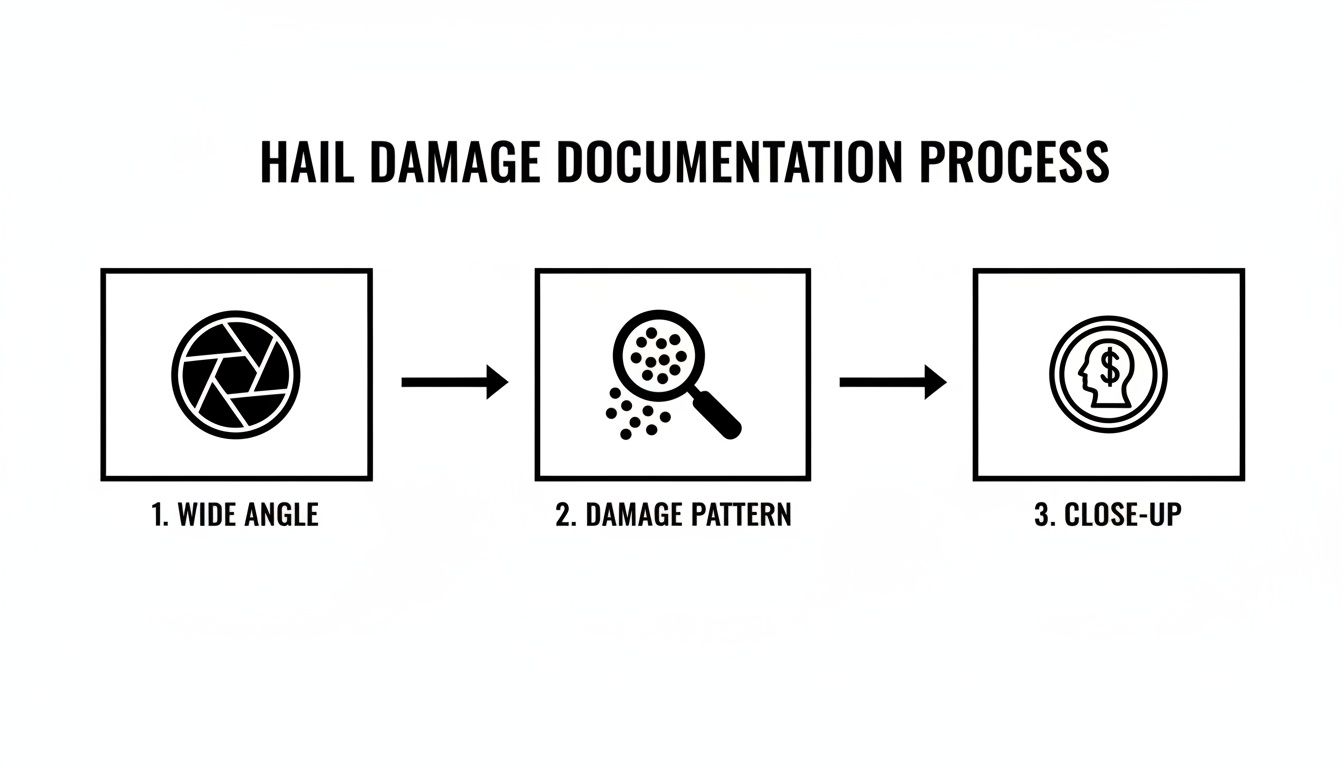
Following this three-step method helps ensure your evidence is organized, compelling, and leaves no room for an adjuster to second-guess the extent of the damage.
A Three-Tiered Photo Strategy
The absolute best way to document hail damage is to work from the outside in—from a macro view to a micro view. This approach helps the insurance adjuster immediately grasp the full context of the situation before you zoom in on the specific impacts.
First, start by taking wide-angle shots of each slope of your roof. You can do this safely from the ground. These photos essentially establish the "scene of the crime," showing the overall layout and condition of your roof right after the storm.
Next, get a little closer and take medium shots that capture the patterns of damage across a specific area. A single photo showing 10-15 hail impacts within a small 10×10 foot square is way more powerful than a picture of just one lonely dent. This shows that the damage isn't just a fluke; it's a widespread problem across the entire roofing system.
Finally, get detailed close-ups of individual impacts. This is where a simple household item becomes your best friend.
For your close-ups, place a coin like a quarter or a dime right next to a few of the clearest hail impacts before you take the picture. This simple trick provides an undisputed measurement of the hail's size, directly connecting it to the severity of the damage you've shown in your other photos.
To help you keep track of everything, here's a quick checklist of the photos you'll want to capture.
Essential Photos for Your Hail Damage Insurance Claim
This checklist covers the key photographs you need to take to build a comprehensive and effective insurance claim.
| Photo Type | Purpose | Pro Tip |
|---|---|---|
| Wide-Angle Shots | Shows the overall condition of each roof slope and the entire property. Establishes context. | Stand back from your house to get each full slope in one frame. Do this for the front, back, and sides. |
| Damage Pattern Shots | Documents the density of hail hits in a concentrated area (e.g., a 10'x10' square). | Find an area with multiple visible impacts. This proves the damage is widespread, not isolated. |
| Close-Up Shots (with scale) | Shows the size and severity of individual impacts. Provides clear, measurable evidence. | Use a quarter next to the dent. This gives the adjuster an undeniable sense of the hail's size. |
| Collateral Damage | Proves the storm was severe enough to damage other materials on your property. | Photograph dents on gutters, A/C units, window screens, siding, and even your mailbox. |
| Interior Damage (if any) | Documents any leaks or water stains that resulted from the roof damage. | Check your attic and ceilings. Photos of active leaks are critical and show urgency. |
Taking a few minutes to gather these shots can make a world of difference in how smoothly your claim process goes.
Don't Forget to Document Collateral Damage
Your roof isn't the only thing that takes a beating during a hailstorm. Documenting damage to other parts of your property is a crucial step in building a rock-solid claim. We call this collateral damage, and it’s what proves the storm’s true intensity.
Take a walk around your property and snap photos of any signs of impact on these items:
- Gutters and Downspouts: Dents on metal gutters are some of the clearest and most convincing proof of hail.
- Air Conditioning Unit: The soft aluminum fins on an A/C unit are easily damaged and provide fantastic evidence.
- Window Screens and Siding: Torn screens or chipped vinyl siding help tell the story of the storm's direction and force.
- Deck or Mailbox: Even dents on your grill lid, patio furniture, or metal mailbox can help support your claim.
When you put together this collection of photos—from the roof to the collateral damage—you create a narrative that's impossible to ignore. It proves the storm was severe enough to damage multiple types of surfaces, which massively strengthens the case that your roof needs a full replacement, not just a few minor repairs.
Understanding Your Home's Financial Risk From Hail
We’ve all heard that unmistakable sound of hail pounding on the roof. It's more than just a noisy interruption to your day; it’s the sound of a very real financial threat to your home. Here in the Midwest, severe weather is one of the biggest reasons for insured property loss, racking up billions in damages that hit homeowners right in the wallet. When you look at pictures of a hail-damaged roof, you're not just seeing a few dings and dents—you're seeing the start of a problem that can get expensive, fast.
This isn't some far-off threat you see on the news. It's a hyper-local risk that puts homes just like yours in the line of fire every storm season. The numbers are pretty staggering, actually. Nationwide, over 12.6 million properties are considered high-risk for hail, which adds up to a mind-boggling $189.5 billion in potential replacement costs. Right here in Missouri, that number is $9.5 billion.
It's this context that makes being proactive so incredibly important. A little bit of "minor" damage today can easily snowball into a massive headache down the road.
Bringing the National Data Down to Your Street
Those big, national statistics have a direct impact on your neighborhood, your street, and your roof. Every single hailstorm that rolls through the Kansas City metro adds another layer of wear and tear, slowly weakening shingles and making your home more vulnerable to leaks and bigger structural problems. Your property is swimming in that at-risk pool, which is why it's better to think in terms of "when" damage will happen, not "if."
The financial risk isn't just about the immediate repair bill. It's about preserving your home's value and avoiding the catastrophic costs of water damage that can result from a compromised roof.
This is exactly why having a local, storm-savvy contractor in your corner is a game-changer. An expert who knows our regional weather patterns can spot the subtle signs of damage that a less-experienced eye would miss completely, giving you the solid proof you need for a successful insurance claim.
Getting timely and professional roof repair assessments is your best defense. It's how you stand up to the financial risks of Midwest hail, protecting both your home and your peace of mind.
Special Considerations For Roofs With Solar Panels
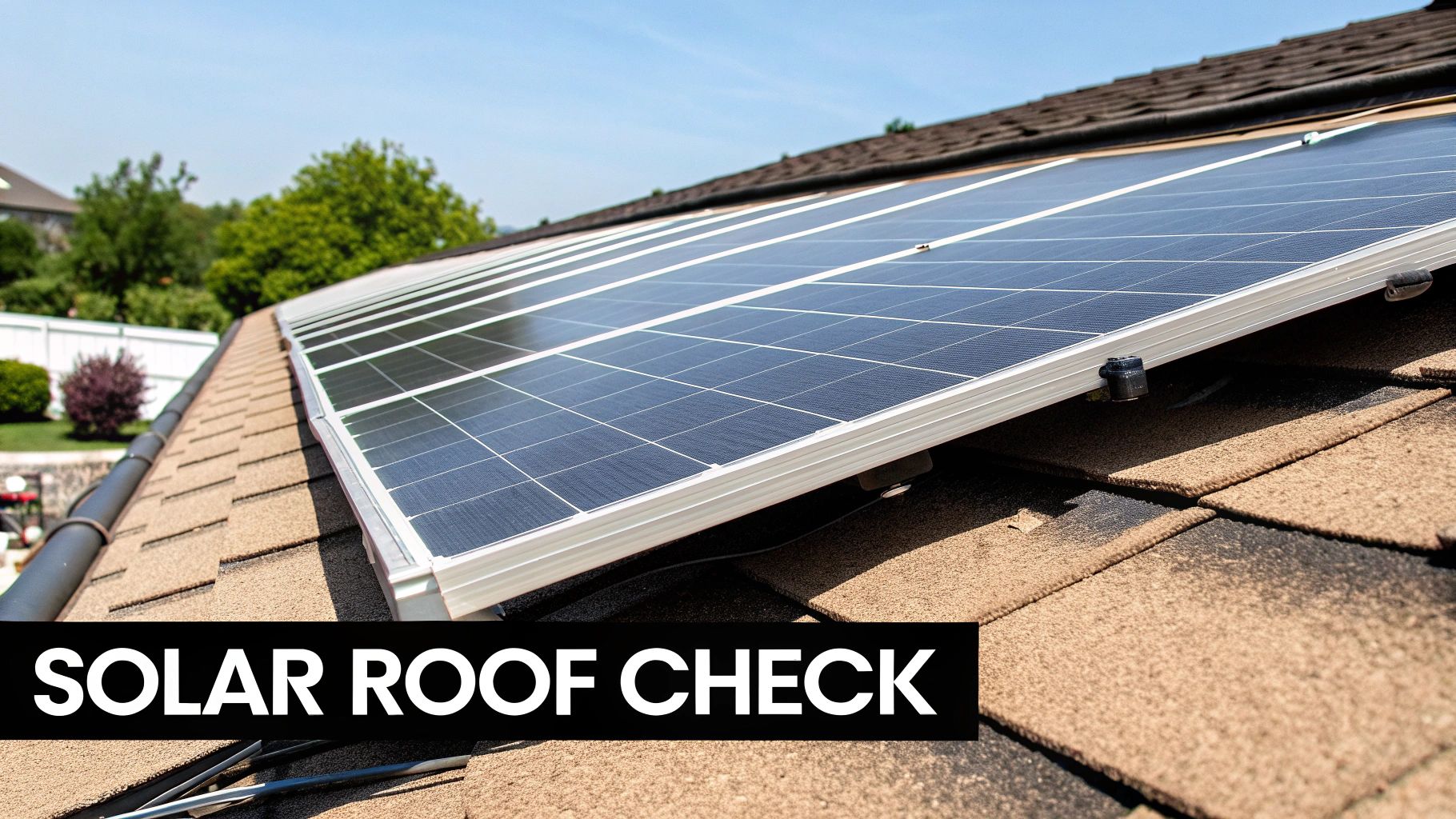
Adding solar panels to your roof is a fantastic investment, but it definitely throws a wrench in the works when a hailstorm rolls through. While today’s panels are built tough, they aren't invincible. A bad storm can cause sneaky damage that goes way beyond a few cracks, making both the inspection and the insurance claim a whole lot more complicated.
The most common problem we see isn’t a panel that’s completely shattered. It's the subtle formation of micro-cracks inside the solar cells themselves. You can't see these with the naked eye, but they can slowly bleed your system's efficiency, reducing its power output over time. This is exactly why you need a professional to take a look.
More Than Just Panel Damage
The panels are only half the story. What about the roof underneath them? Hail can absolutely hammer the shingles surrounding and below the solar array, creating weak points that are hidden from view. The mounting hardware, where the panels are bolted to your roof, becomes a prime spot for water to find its way in.
Trying to inspect these areas is a job for an expert. You’re really dealing with two separate but connected systems: the solar array that generates your power and the roof that keeps your home dry.
The real risk with solar panels isn't just a drop in power generation; it's the potential for hidden roof leaks to develop around the panel mounts, which can go unnoticed until significant water damage has already occurred inside your home.
This two-for-one complexity also makes insurance claims tricky. Hail doesn't discriminate, and it can do a number on these high-tech systems. In fact, while hail only accounts for 1.4% of all solar project insurance claims, it's responsible for a staggering 54% of the total financial losses. That number really shows you how costly this specific type of damage can be. You can learn more about the impact of hail on solar projects and see the data for yourself.
To get your claim handled right, you need a contractor who understands both roofing and solar. It's the only way to make sure all the damage—to the panels and the roof itself—is properly documented and fully repaired.
Your Top Questions About Hail Damaged Roofs
After a big hailstorm rolls through, your head is probably swimming with questions. It's a confusing, stressful situation, but getting clear answers is the first step toward taking control and making sure your home is protected. We've been through this with countless homeowners, and we’ve gathered the most common questions that come up.
A lot of people ask how long they have to act. Most insurance policies give you one year from the date of the storm to file a claim, but honestly, waiting is a terrible idea. The longer you put it off, the harder it becomes to prove the damage came from that specific storm, which can really weaken your claim.
What if the Damage Looks Minor? Should I Still File a Claim?
This is one of the biggest mistakes we see homeowners make. It's so tempting to look up, see a few scuff marks or a dented vent, and decide it's not worth the hassle.
But what looks like a few "minor" dings from the ground is often a sign of widespread damage that has seriously compromised your entire roofing system. Think of it like a small cavity in a tooth—ignoring it doesn't make it go away. It just grows into a much bigger, more expensive problem down the road. Those small impacts can shorten your roof's lifespan by years and lead to leaks you won't discover until it's too late. An expert inspection is the only way to know for sure what's going on up there.
Why Can't I Just Trust the Insurance Adjuster's Report?
Look, the insurance adjuster is a necessary part of the claim process, but it’s critical to remember who they work for. Their job is to assess the damage and close the claim efficiently for the insurance company.
A reputable, local roofing contractor works for you. Our job is to be your advocate and make sure every single detail is documented correctly and no damage is overlooked.
Having your own expert means you have a professional on your side from the very beginning. We can meet the adjuster at your property, point out specific impacts they might miss, and provide the clear evidence needed to justify a full and fair settlement. It's about leveling the playing field and ensuring your home is restored completely, not just patched up.
Don't try to navigate the confusing post-storm process by yourself. The experts at Two States Exteriors provide free, no-obligation inspections to give you a clear picture of your damage and help you understand your options. Schedule your free inspection today.