A dark brown siding house can feel warm, grounded, and more substantial than a pale exterior. But if you're choosing a new color, it's easy to treat brown as a standalone decision and overlook the details that make it work: siding profile, trim, roof, stone, landscaping, and how much sun each wall gets. The result can look coordinated and architectural, or heavy and flat.
The best combinations start with the home itself. A Craftsman bungalow may call for lap siding and a textured gable, while a modern farmhouse can carry vertical panels with lighter trim. Material matters, too. Fiber cement, vinyl, engineered wood, faux cedar shakes, and metal all have different installation and maintenance needs, especially through Kansas City's changing weather. These seven ideas connect the color to the choices that help it look right and perform well.
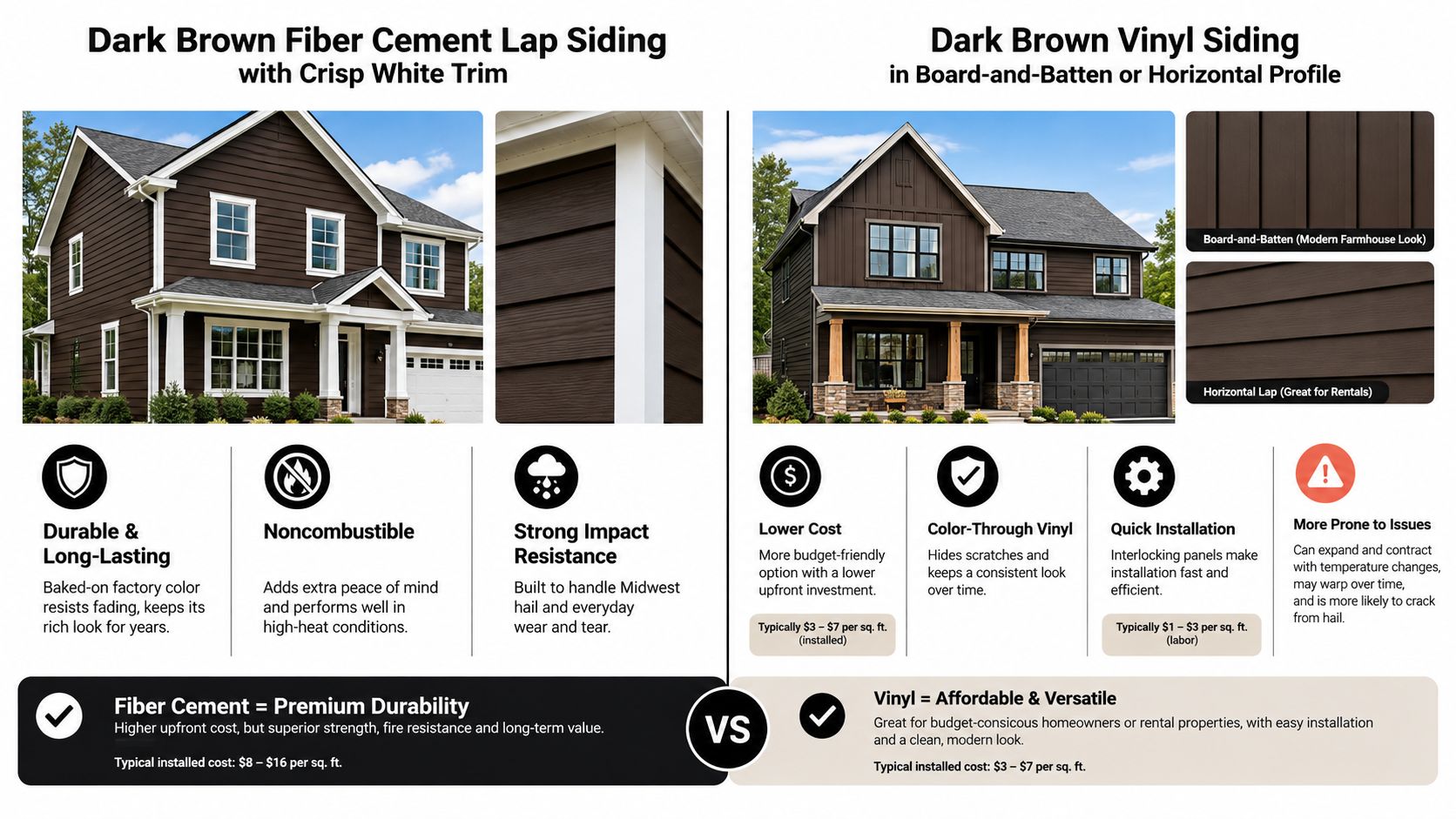
1. Dark Brown Fiber Cement Lap Siding with Crisp White Trim
Horizontal fiber cement lap siding in espresso or chocolate brown gives a home a traditional, composed look. Bright white window casings, corner boards, and soffits sharpen the contrast, while the lap lines keep the dark color from reading as one uninterrupted surface. This combination suits two-story Colonials in Johnson County and Jackson County, as well as Craftsman-inspired homes with a brick or stone water table.
Fiber cement can be a practical option where homeowners want a painted-wood appearance without choosing natural wood. Its performance still depends on the product, the installation, and the wall assembly, so don't assume the material alone makes the exterior weatherproof.
Before choosing a very dark color: Ask the manufacturer for its solar-reflectance guidance and approved color range, especially for exposed walls.
Make the installation part of the design
Use fasteners and installation details specified for the product, including the required nailing pattern and gaps. Keep siding clear of soil and decking according to the manufacturer's instructions, and make sure flashing directs water away from transitions. These details are easy to overlook when attention is fixed on the color, but they help protect the finish and the wall behind it.
Order matching stock during installation and record the product color and lot information. Pre-finished materials can vary between production runs, making a later replacement panel stand out. For help comparing exterior palettes, see siding color combinations for Kansas City homes.
2. Dark Brown Vinyl Siding in Board-and-Batten or Horizontal Profile
Vinyl offers a way to get a dark brown exterior without the same material and labor commitment as some other siding systems. The profile changes the effect: vertical board-and-batten feels more custom and farmhouse-inspired, while horizontal panels suit simpler ranches, starter homes, duplexes, and rental properties. In Olathe, Lee's Summit, or Overland Park, either profile can look intentional when the trim and roof are chosen to balance the brown.
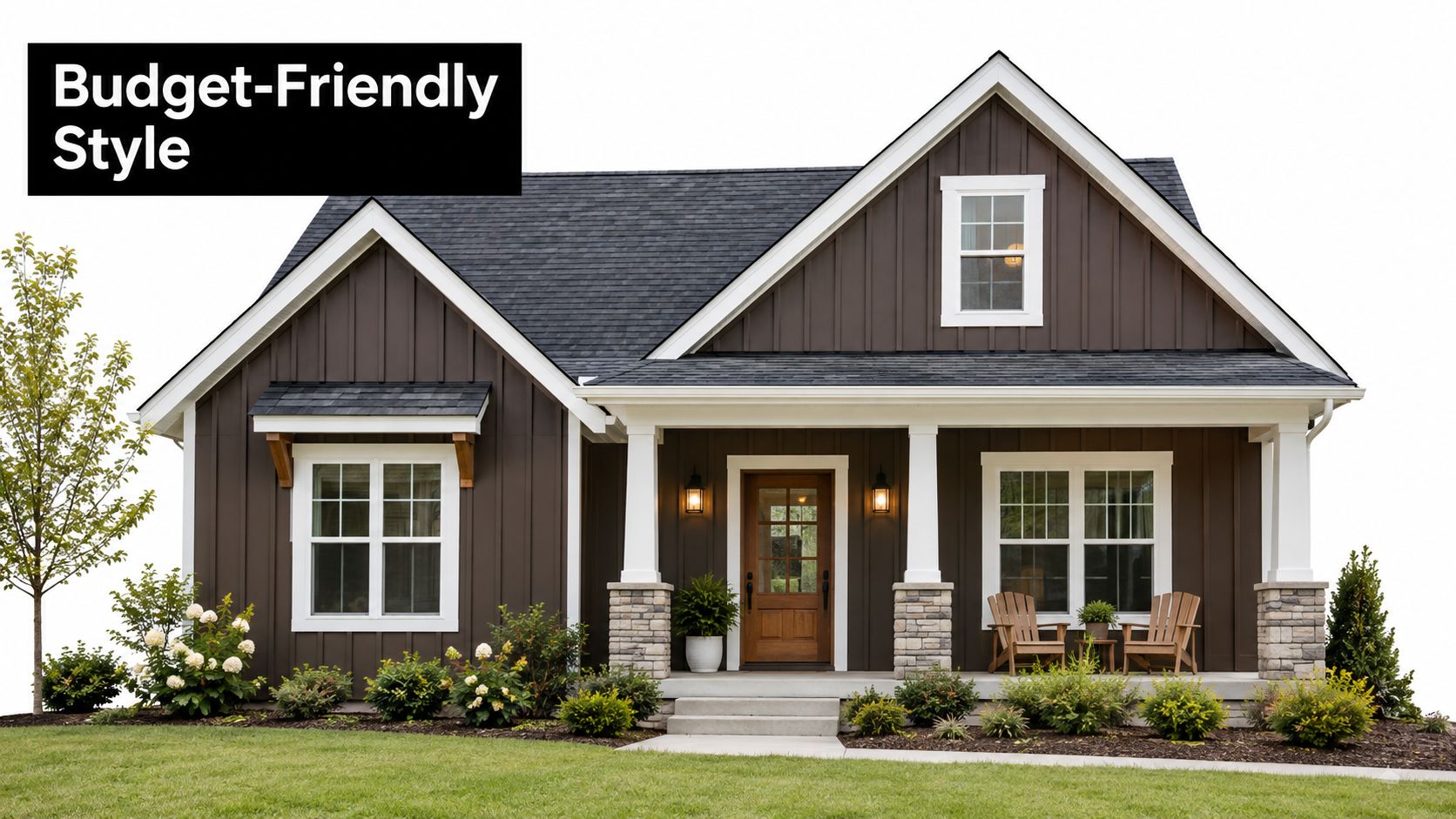
Dark vinyl needs careful product selection. Check that the siding is rated for the chosen color and review the manufacturer's warranty terms for heat exposure. On a west-facing wall with little shade, strong afternoon sun can create a more demanding environment than a shaded elevation.
Allow room for movement
Vinyl expands and contracts as temperatures change. The installer should follow the product's specified clearances at corners, trim, and openings rather than fastening panels tightly in place. An appropriate underlayment or rigid foam layer may also support the wall assembly, but it must be compatible with the siding system and local requirements.
A dark brown color can suit a budget-conscious renovation, but it shouldn't be selected on color alone. Look at the roof, windows, and nearby masonry together, then check the sample in outdoor light. For a broader way to compare those choices, use this guide to choosing a siding color for your home.
3. Dark Brown Engineered Wood Siding with Stained Finish
Stained dark brown engineered wood can bring a Craftsman bungalow or cabin-inspired home closer to the look of cedar or redwood. Unlike a solid-color surface, a stain can leave some grain visible, giving the facade more texture and variation. It also works well in a smaller dose, such as a front gable or dormer above lighter siding.
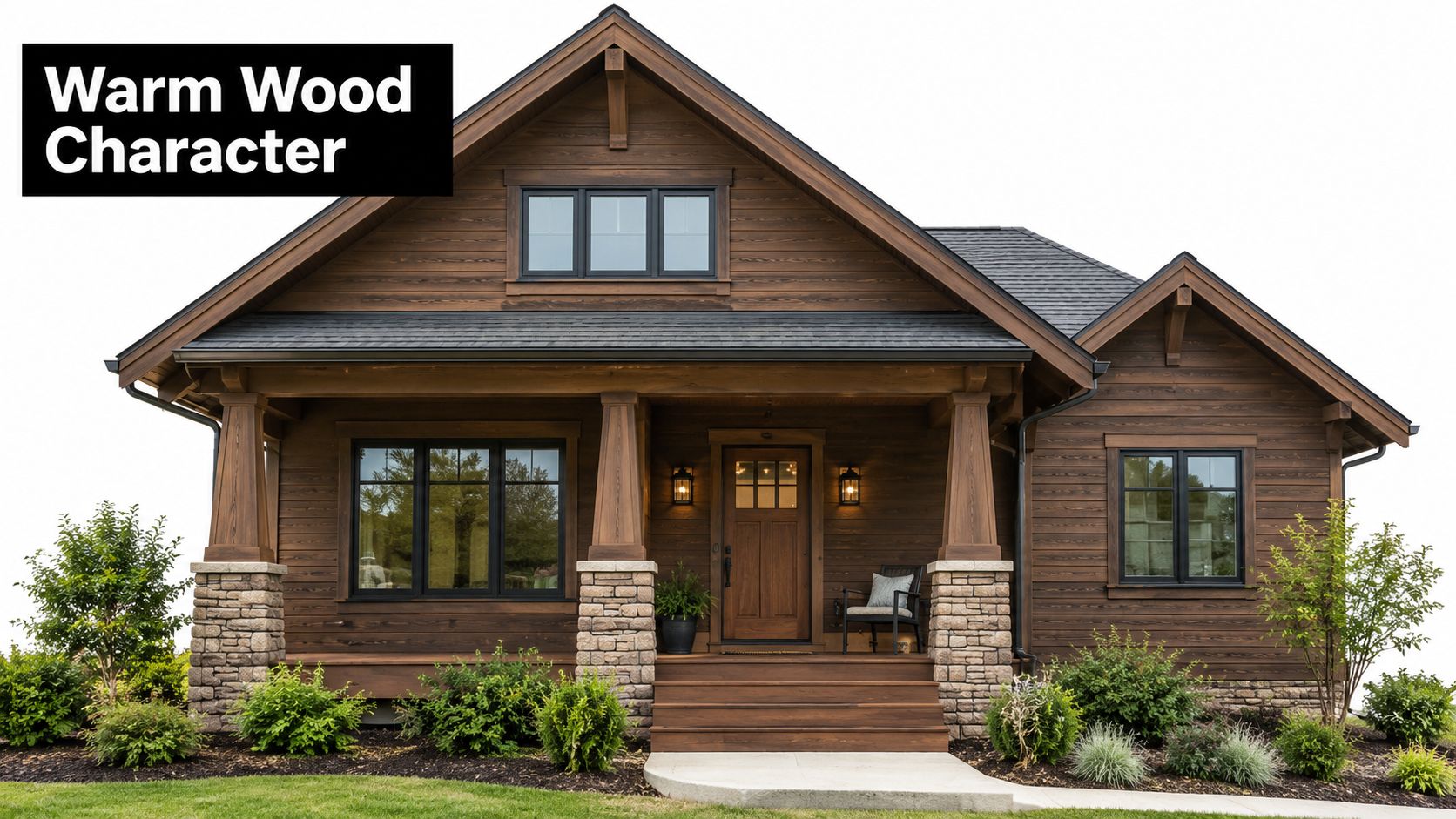
The warm wood-like finish pairs naturally with stone, brick, and dark window frames. On an older Kansas City home, for example, dark brown siding on the upper story can relate to a stone porch without making every wall compete for attention. On a lighter exterior, using it only on the gables creates depth while keeping the overall palette more restrained.
Protect edges and exposed areas
Water management is the main practical concern. Follow the siding manufacturer's requirements for sealing cut ends and edges, and use its recommended coating or stain system. Check caulking and flashing during routine maintenance, and keep plants and sprinkler spray from continually wetting the wall.
Engineered wood isn't a no-maintenance substitute for careful installation. If the finish is exposed to persistent moisture, or if water gets into unprotected cuts, the attractive grain won't make up for the repair risk. Choose it when you're comfortable with periodic inspection and finish upkeep, not because you expect the siding to need no attention.
4. Dark Brown Board-and-Batten Fiber Cement for a Modern Farmhouse Look
Vertical dark brown fiber cement gives a modern farmhouse a softer alternative to black. The upright lines can emphasize a tall entry or make a low ranch feel more vertical, while white or light neutral trim prevents the exterior from becoming visually dense. A stone accent near the porch can add another texture without forcing the whole house into a single material.
The look is especially effective when the panel layout is planned around the architecture. On a suburban ranch, aligning battens with windows and the entry can make the facade feel designed rather than covered. A new farmhouse can pair the brown with white trim and black gutters, but the roof and window frames still need to fit the same palette.
Plan the panel and batten layout before installation. A small shift at a window can disrupt the vertical rhythm across the whole front elevation.
Coordinate the layout and joints
Use fasteners compatible with the siding and batten system, and follow the manufacturer's directions for joints, caulking, and sealing. Don't rely on caulk to correct an uneven layout or a poorly flashed opening. The siding should shed water as intended, with transitions and penetrations handled as part of the installation plan.
Dark brown's warmth is an advantage when pure black feels too stark, but the color still needs contrast. A lighter trim, pale stone, or natural wood entry detail can break up the surface and bring attention to the home's proportions. Explore fiber cement siding color options before settling on a sample.
5. Dark Brown Faux Cedar Shake or Shingle Siding
Faux cedar shakes add texture where flat siding needs more character. Dark brown versions work particularly well on gables, dormers, and upper-story accents on cottage, Tudor-revival, or Craftsman homes. The shingle edges cast small shadows that give a facade dimension, while lighter lap siding below keeps the overall composition from feeling too dark.
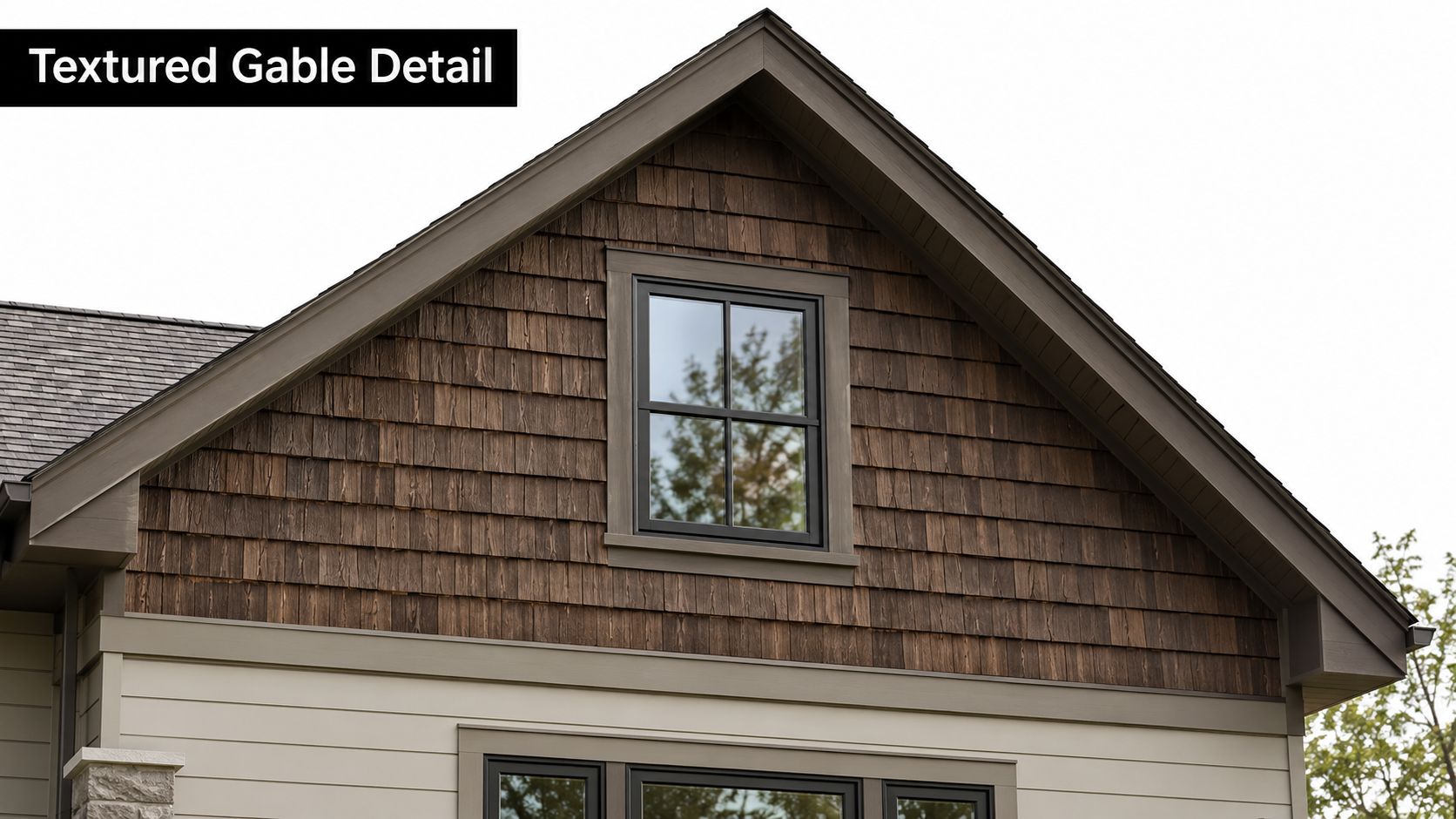
A full elevation of shakes can work when the architecture supports it, such as a bungalow with an established shingle profile. On many homes, however, using them as an accent is easier to balance and maintain. Before choosing a product, confirm its fire rating and check applicable local code and design requirements.
Keep water out of the transitions
Roof-to-wall intersections need careful flashing so water doesn't collect at the edges of the shakes. Inspect those areas along with other joints, and clean the siding gently to remove dirt and organic growth from its shadow lines. Use the cleaning method recommended for the product; aggressive pressure washing can damage finishes or force water where it shouldn't go.
The practical trade-off is texture and visual richness in exchange for more joints and edges to detail. If the house already has busy masonry, ornate trim, and several rooflines, adding shakes everywhere can make the exterior feel crowded. A single gable or dormer treatment often delivers enough contrast.
6. Dark Brown Siding with a Stone or Brick Base
Stone or brick at the base gives dark brown siding a grounded, layered look. Brown siding above a limestone or fieldstone wainscot works on two-story homes, while brick entry columns can help a ranch or split-level connect to its existing masonry. In Kansas City, where many homes combine masonry and siding, the key is to choose materials whose undertones relate rather than compete.
Dark brown can sit comfortably beside warm stone, but the sample should be checked against the actual brick or veneer. Brown siding with a red or orange cast may clash with cooler gray stone; a more muted brown may be easier to coordinate. The roof, front door, and window frames are part of the same composition, so review them together.
Treat the material change as a water detail
A siding-to-stone transition needs more than a neat visual line. Use the flashing and drainage details appropriate to the wall assembly, including a drip edge or kick-out flashing where specified, to move water away from vulnerable areas. Stone veneer also needs the required weather barrier and installation layers for the product and code.
When one crew handles the siding and another handles the stone, make sure the scope clearly assigns responsibility for the transition and flashing. Gaps between trades can become leaks that are difficult to trace later. A coordinated palette matters, but sound detailing matters more.
7. Dark Brown Metal Siding for a Contemporary or Industrial Exterior
Dark brown metal siding brings a crisp, modern finish to contemporary homes, accessory buildings, and small commercial properties. Corrugated and ribbed panels emphasize shadow and line, while flat panels offer a quieter surface that works with large windows, concrete, and natural wood. A Kansas City infill home might use metal on a side volume or entry feature rather than covering every elevation.
The finish can look refined in a matte tone, but residential approval isn't automatic. Check HOA rules and municipal design requirements before ordering. Also ask the manufacturer about color suitability, heat-related warranty terms, and how the finish is maintained.
Detail fasteners, seams, and sound
Metal panels move with temperature changes, so installers need to use manufacturer-approved fasteners and allow for movement at seams. The wall behind the panels also matters: an appropriate underlayment or insulation layer can help with sound and thermal performance, but the complete assembly should be specified for the project rather than improvised.
Practical rule: Pick the panel system and its installation details before you finalize the color. A beautiful finish won't compensate for poor seam, fastener, or flashing work.
For homeowners who want a bold look without an all-metal facade, using it on an accessory structure or a defined section can keep the design cohesive. Pair the brown with wood accents or lighter masonry, then check how the panel finish reads beside the main house.
7 Dark Brown Siding Styles Compared
| Example | Material & Style | 🔄 Complexity & Resources | ⭐ Key Advantages | 📊 Expected Outcome | 💡 Ideal Use |
|---|---|---|---|---|---|
| Dark Brown Fiber Cement Lap Siding with Crisp White Trim | Horizontal fiber cement lap siding with white trim | Higher material and labor needs; heavy panels require careful cutting and dust control | Durable, noncombustible, hail- and rot-resistant; stable through temperature changes | Long-lasting, high-contrast exterior with strong curb appeal | Homeowners prioritizing durability and lower maintenance in harsh weather |
| Dark Brown Vinyl Siding in Board-and-Batten or Horizontal Profile | Dark brown vinyl in vertical or horizontal profiles | Lowest cost; quick, relatively simple installation | Low upkeep, color-through panels, broad profile selection | Budget-conscious dark exterior; may be more vulnerable to heat, warping, and hail | Rentals, investment properties, and budget-focused renovations |
| Dark Brown Engineered Wood Siding with Stained Finish | Engineered wood with a dark stained, wood-grain appearance | Moderate installation needs; regular inspection and recoating required | Natural wood character, relatively easy to install, can be refinished | Warm, textured appearance that needs ongoing finish maintenance | Craftsman or rustic designs where owners accept periodic upkeep |
| Dark Brown Board-and-Batten Fiber Cement for a Modern Farmhouse Look | Vertical fiber cement panels with battens | Higher labor and material needs; precise layout and joint detailing required | Durable material with strong vertical lines and architectural character | Makes a home appear taller; creates a farmhouse or transitional look | Ranch or two-story homes seeking a distinctive vertical style |
| Dark Brown Faux Cedar Shake or Shingle Siding | Textured fiber cement or engineered shake-style siding | Labor-intensive, especially for custom patterns; multiple edges need maintenance | Adds texture and traditional character; fiber cement versions resist weather better than natural cedar | Strong visual detail, especially on gables and dormers | Cottage, Craftsman, or traditional homes needing accent texture |
| Dark Brown Siding with Stone or Brick Base (Mixed-Material Exterior) | Dark brown siding combined with stone veneer or brick | Higher cost and coordination needs; transitions, flashing, and support require careful detailing | Layered appearance; masonry base helps protect lower walls from impacts and splash | Premium, grounded look with added curb appeal | Homeowners seeking mixed materials and a more substantial facade |
| Dark Brown Metal Siding for a Contemporary or Industrial Exterior | Steel or aluminum panels in corrugated, ribbed, or flat profiles | Moderate to high detailing needs; fasteners must accommodate thermal movement | Durable, noncombustible, rot- and insect-resistant; low maintenance | Clean contemporary appearance with long service life when properly installed | Modern homes, accessory buildings, and light commercial properties |
Build a Dark Brown Exterior That Stays Strong
A successful dark brown siding house isn't the darkest one on the block. The right result comes from matching the profile to the home's architecture, balancing the brown with trim and other materials, and choosing a product that fits the wall's exposure and the homeowner's maintenance plans.
Start with the fixed elements: roof, windows, brick, stone, and grade. Test siding samples outdoors against those surfaces and look at them in changing natural light. A Victorian-inspired home may benefit from a clear hierarchy between the main wall and trim, while a contemporary design may suit a quieter, more coordinated palette. Historic guidance for Victorian exteriors also supports using deep colors alongside contrasting trim, rather than treating every surface as one color (Town of Ipswich preservation guidance).
Next, match material to exposure and upkeep. Review manufacturer specifications for color retention, installation, and warranty terms. Pay particular attention to unshaded south- and west-facing walls, and consider how insulation, air sealing, windows, and shade affect the home's comfort. Siding color alone isn't an energy upgrade. Plan flashing, drainage, and transitions before the crew starts, not after the new panels are in place.
Before signing, ask for physical samples, a written scope, product and color information, and a clear explanation of who handles flashing and related trim work. Compare estimates by checking that each includes the same material, preparation, and installation details. Confirm contractor credentials and insurance, and ask how the crew will protect landscaping and clean up the site. Two States Exteriors LLC offers siding installation, free on-site inspections, detailed project plans, and a No Money Upfront policy for homeowners considering an exterior refresh.
For a dark brown siding project in the Kansas City area, Two States Exteriors LLC offers siding installation, on-site inspections, and detailed project plans. Request an inspection to review your home's exposure, existing materials, and installation details before choosing a color.