
You're standing at the curb in Overland Park or Lee's Summit, looking at a tired tan exterior and wondering which color will work on your house. Dark gray siding with white trim is appealing because it gives windows, doors, corners, and rooflines a sharp outline. But the right version depends on more than a paint chip. Siding material, sun exposure, hail, mulch, brick, roofing, and the amount of cleaning you're willing to do all affect the result. The seven designs below frame the decision around a specific trim choice, from crisp bright white to softer cream, black accents, and a roofline that matches the trim. You'll also find practical guidance on testing paint codes, choosing storm-ready materials, and keeping white details clean through Kansas and Missouri weather.
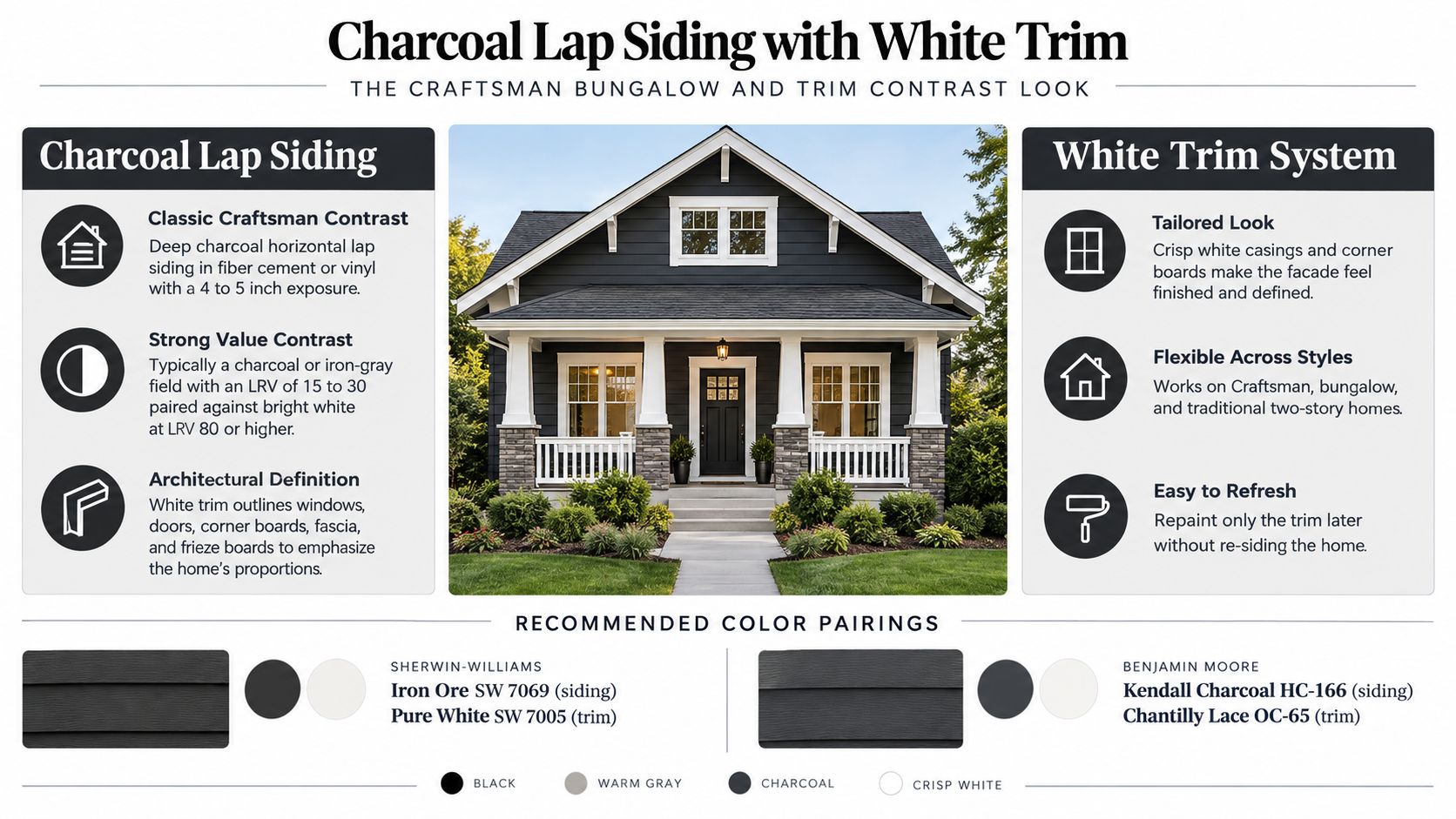
1. Charcoal Lap Siding with Bright White Trim
Deep charcoal horizontal lap siding gives a Craftsman or bungalow a strong architectural outline. Bright white window casings, corner boards, fascia, and door trim make the facade look intentional rather than flat. The same palette also works on a two-story colonial in a Johnson or Jackson County subdivision, especially when the roof and masonry stay visually quiet.
The trim decision here is crisp white with a neutral undertone. Sherwin-Williams Pure White and Benjamin Moore Chantilly Lace are useful samples to test, but don't choose from a fan deck alone. Exterior light can make white look much brighter than expected, and nearby brick or stone can push it warmer or cooler.
Practical rule: Bright trim works best when it repeats a real feature, such as white windows, a light garage door, or pale masonry. If nothing else on the house supports it, the contrast can look pasted on.
Fiber cement or an engineered wood product rated for dark finishes gives this design a stronger starting point than an unapproved dark coating. Confirm the manufacturer's fade coverage and dark-color warranty before ordering. Dark exterior surfaces also absorb more solar energy than light ones, so south- and west-facing elevations deserve extra attention.
Keep shrubs and mulch at least 6 inches from the siding base to reduce splashback, staining, and trapped moisture. For more color-planning context, compare this palette with Kansas City siding color ideas.
2. Dark Gray Board-and-Batten with White Trim
Board-and-batten changes the proportions of a home before you add any color. The vertical lines draw the eye upward, which helps a low ranch or broad farmhouse feel taller. White corner boards, window trim, and gable framing then add the familiar farmhouse contrast without making every surface compete for attention.
This look suits modern farmhouse remodels in Overland Park, Lee's Summit, and Olathe, along with new construction in growing suburbs. It's also a good choice when the house has a prominent front-facing gable. The vertical siding gives that gable a clear role instead of leaving it as a large, empty triangle.
Use fiber cement panels where hail exposure and temperature swings are concerns. Ask the installer to keep the batten layout consistent across windows, doors, and corners. Uneven spacing is easy to notice on a dark facade, especially when white trim creates a bright frame around it.
Keep the white trim washable
A satin or semi-gloss finish on painted trim sheds dirt more easily than a flat finish. That matters around entry doors, porch columns, and lower gable edges where rain carries soil and mulch onto the white surface. White trim can look excellent, but it makes maintenance visible.
Your contractor should also explain nail spacing, flashing, and transitions at window heads. Board-and-batten needs careful water management where vertical panels meet horizontal trim. Wind-driven rain will find weak details long before the color itself becomes a problem.
For product and color comparisons, review fiber cement siding colors before you settle on a board-and-batten profile.
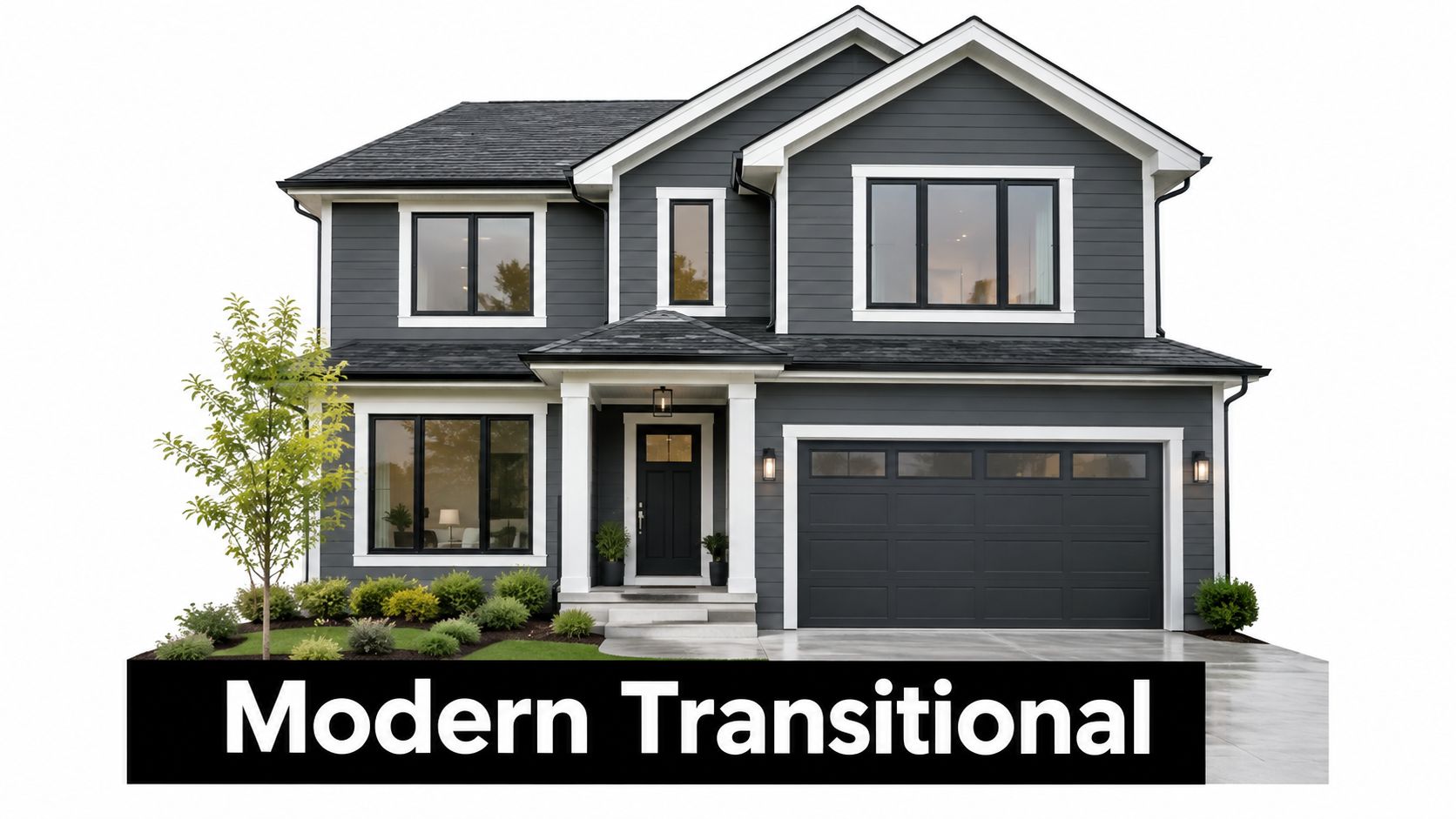
3. Dark Gray Siding with White Trim and Black Windows
Black windows turn a simple gray-and-white exterior into a three-color composition. The white trim frames the openings, while the black frames add a sharper architectural line inside each opening. Black gutters or downspouts can repeat that accent, but they should be used deliberately rather than scattered across the facade.
This combination fits remodeled ranches and split-levels that need a cleaner update. It also works on infill homes and new builds designed around large black window packages. The palette feels more modern than traditional, so overly ornate shutters or decorative brackets may fight the design.
Treat the windows as a heat decision
Black window frames and dark siding both deserve a sun-exposure review. Ask for low-E glass and a window package designed to manage heat gain. The window choice won't eliminate solar loading on the siding, but it can help keep the opening itself from becoming a weak point in the summer.
Match gutters either to the white trim for a quieter finish or to the black windows for a stronger accent. Don't match them to the siding unless you specifically want the drainage system to disappear. A charcoal or weathered-wood shingle can complete the palette without introducing another competing color.
Order sample boards, not just paint cards. Set them beside the actual roof, brick, windows, and foundation, then view them on both sunny and shaded sides of the house. A gray that looks neutral in the store may read blue beside cool glass or brown beside warm brick.
4. Dark Gray Siding with Warm White or Cream Trim
A warm white or cream trim softens the contrast without losing the outline around the house. It's a strong option for brick-front homes, stone accents, and established neighborhoods with mature trees. The result feels less graphic than bright white and usually connects more easily with brown roofs, tan masonry, bronze lighting, and natural landscaping.
Use this approach when crisp white feels too stark against the existing finishes. A brick-front home with gray siding on the upper levels can benefit from cream trim because the trim helps connect the siding to the brick rather than creating a hard break between them.
Test the undertone outdoors
Put the siding and trim samples together in direct daylight, open shade, and the darker light under a porch. A cream that looks balanced at noon can become yellow beside a warm roof. A gray with a blue undertone can make the same cream look even warmer.
Warm white should look intentional, not yellow. If the sample starts to resemble butter beside the brick or roof, move toward a more neutral off-white.
Save the paint code, product name, sheen, and manufacturer information. Touch-ups are easier when you can identify the original finish, especially after a storm repair or a future trim replacement. Bronze or dark gray gutters usually support this softer palette better than bright white gutters, unless the home already has white windows or a white garage door.
The market is moving toward warmer grays, taupes, greiges, and nature-based neutrals rather than only cool gray. That doesn't make a warm-white combination automatically timeless, but it gives the scheme more flexibility if you later update the front door, landscaping, or roof.
5. Dark Gray Siding with White Soffit, Fascia, and Gutters
This design makes the roofline and drainage system part of one trim decision. Dark gray walls stop below a white band of soffit, fascia, and gutters, creating a clean cap around the house. It works especially well when siding, roofing, fascia, and gutters are being replaced together.
The most practical example is a Kansas City Metro home undergoing a full exterior restoration. Coordinating the trades at the same time reduces the chance of slightly different whites appearing at the fascia, window trim, and downspouts. It also lets the installer position downspouts around the siding layout instead of forcing the siding crew to work around poorly placed drainage.
Coordinate the roofline before installation
Confirm the gutter size, downspout locations, fascia condition, and roof edge details before the siding order is finalized. White gutters can make the roofline look crisp, but they also show leaf staining and dirt more readily than darker metal. White soffit can collect cobwebs and dust under shaded eaves, so plan for occasional cleaning.
Ask about hail-resistant gutter and fascia options where storms are a recurring concern. Hail can dent gutters, damage exposed trim, and leave marks that stand out against a carefully coordinated palette. Textured siding profiles can also make storm damage harder to see from the ground, so include close inspection in the project scope.
For preparation and repainting details, use this guide to paint exterior house trim before choosing a final sheen.
6. Dark Gray Shake or Shingle Siding with White Trim
Shake or shingle siding adds texture where lap siding alone may look too uniform. Use it on a gable end, dormer, or upper story rather than covering every elevation. White trim then outlines the irregular profile and gives the accent a deliberate shape.
This approach suits Craftsman cottages, Shingle-style homes, and colonial remodels with dormers. It can also update an older Kansas City home without forcing the entire facade into a highly modern palette. The key is transition detailing. Shingle exposure lines should align with window and door heads, and the trim should finish the edge cleanly.
Plan for hail and repair visibility
Textured profiles create more shadows, which can disguise minor surface variation from a distance. They can also make damaged pieces, broken edges, and mismatched replacement sections more noticeable up close. Choose a shake or shingle product with an impact-resistance rating appropriate for your area, and ask how replacement pieces will match after the original siding weathers.
Document the existing exterior with clear photos before a storm. That record helps separate pre-existing wear from new damage when an insurance inspection occurs. Store product information and spare material after installation, because a future repair may require the exact profile and color.
Use satin or semi-gloss white trim around textured sections so dirt can be cleaned more easily. Keep mulch away from the base, and pay attention to splashback below gables and dormers. White edges look sharp against dark gray, but they also reveal mud lines quickly after heavy rain.
7. Dark Gray Vinyl Siding with White Trim
Dark gray vinyl is one of the most practical ways to refresh an older ranch, split-level, or tri-level home. It replaces dated tan or brown siding with a stronger modern palette while keeping the installation familiar to many Kansas City contractors. White trim around windows, doors, corners, and fascia gives the simpler floor plans more definition.
The material decision matters more here than the color decision. Dark vinyl can run hotter than light vinyl, and excessive heat can contribute to distortion when sunlight or reflected light concentrates on the wall. Technical guidance documents siding temperatures of about 125°F under direct exposure and up to 166°F where reflected irradiance is present. Review the vinyl siding distortion bulletin with your installer before selecting a dark product.
Verify the product, substrate, and exposure
Choose vinyl specifically approved for dark colors or hot-climate exposure. Confirm the manufacturer's warranty, fastening requirements, profile limitations, and compatibility with the existing wall. White trim won't reduce the heat absorbed by the dark siding, so south- and west-facing elevations need their own review.
A proper inspection should look for rot, wet sheathing, failed flashing, and moisture damage before new siding covers the wall. Installing over hidden problems only makes future repairs harder. Ask for a color-matched white trim system as well, because slightly different whites around windows can make the finished exterior look pieced together.
Use photos and an inspection report to document storm damage before filing a claim. That record is particularly useful when hail has affected siding, gutters, fascia, or roofing at the same time.
7-Style Comparison: Dark Gray Siding with White Trim
| Style | Implementation Complexity 🔄 | Resource & Cost ⚡ | Expected Outcome ⭐ / Impact 📊 | Ideal Use Cases 📊 | Key Advantages ⭐ | Tips 💡 |
|---|---|---|---|---|---|---|
| Charcoal Lap Siding with Bright White Trim (Classic Craftsman Contrast) | Medium 🔄🔄, standard horizontal lap and trim work | Moderate ⚡⚡, fiber cement or quality vinyl; paint/trim | High ⭐⭐⭐⭐, strong architectural definition and curb appeal 📊 | Craftsman, bungalows, traditional two‑story homes | Clean, defined silhouette; emphasizes proportions; easy trim refresh | Choose neutral bright white; confirm dark‑color warranty; keep mulch away 💡 |
| Dark Gray Board‑and‑Batten with White Trim (Modern Farmhouse) | High 🔄🔄🔄, vertical panels + battens and precise detailing | High ⚡⚡⚡, extra materials and labor for battens/trim | Very high ⭐⭐⭐⭐⭐, tall, memorable modern/farmhouse aesthetic 📊 | New builds, remodels with steep gables, modern farmhouses | Vertical rhythm; hides seams; pairs well with stone accents | Use fiber cement panels; keep batten spacing consistent; check flashing 💡 |
| Dark Gray Siding with White Trim and Black Windows (Modern Transitional) | Medium‑High 🔄🔄🔄, coordinating three finishes and window installs | High ⚡⚡⚡, premium black window packages + finish coordination | High ⭐⭐⭐⭐, sleek, architectural three‑tone look 📊 | Remodeled ranches, infill, contemporary suburban homes | Cohesive modern palette; strong architectural edge; easy to coordinate with roofing | Select heat‑resistant black windows; review sample boards in situ 💡 |
| Dark Gray Siding with Warm White or Cream Trim (Soft Contrast) | Low‑Medium 🔄🔄, similar to standard trim work with color selection | Moderate ⚡⚡, standard materials, attention to undertone | Moderate‑High ⭐⭐⭐, softer, more inviting curb appeal 📊 | Brick‑front, transitional homes, tree‑lined lots | Softer blend with natural materials; hides dirt better than stark white | Compare trim under daylight and shade; avoid yellow undertones 💡 |
| Dark Gray Siding with White Soffit, Fascia, and Gutters (Seamless Trim System) | Medium 🔄🔄, requires coordination of roofline components | Moderate‑High ⚡⚡⚡, seamless gutters, fascia/soffit materials | High ⭐⭐⭐⭐, clean, finished roofline; functional drainage benefits 📊 | Homes replacing roofs/gutters, storm restoration projects | Unified roofline; reduced leaks with seamless gutters; coordinated installs save labor | Schedule roofing/gutters/siding together; confirm gutter sizing and downspout placement 💡 |
| Dark Gray Shake or Shingle Siding with White Trim (Cottage and Coastal Accent) | High 🔄🔄🔄, textured profiles need careful installation | High ⚡⚡⚡, more labor and specialty materials for shakes | High ⭐⭐⭐⭐, added texture and architectural interest 📊 | Gable accents, dormers, cottage/Shingle‑style and coastal homes | Adds depth without full remodel; traditional character; controlled accent use | Choose impact‑rated shingles; document pre‑storm condition; plan trim transitions 💡 |
| Dark Gray Vinyl Siding with White Trim (Midwest Ranch and Split‑Level Refresh) | Low 🔄, common vinyl installation practices | Low‑Moderate ⚡⚡, budget‑friendly materials and labor | Moderate ⭐⭐⭐, cost‑effective modernization with decent curb appeal 📊 | Ranches, split‑levels, insurance‑driven replacements in Midwest suburbs | Affordable; low maintenance; widely available color options | Use heat‑resistant/dark‑rated vinyl; inspect wall condition before covering 💡 |
Choosing the Right Dark Gray and White Trim Look for Your Home
Start with the house, not the trend. A Craftsman or bungalow usually supports charcoal lap siding with bright white trim. A farmhouse or front-facing gable often benefits from board-and-batten. Brick, stone, mature trees, and warm roofing usually look more comfortable with cream or warm white. Black windows call for a more architectural palette, while a coordinated white soffit, fascia, and gutter system makes the roofline look finished.
Then test the actual colors. Useful starting combinations include Sherwin-Williams Iron Ore with Pure White, or Benjamin Moore Kendall Charcoal with Chantilly Lace. These are sample points, not guarantees. Paint large boards and place them beside the roof, foundation, brick, windows, and garage door. Check them on sunny and shaded elevations, after wetting the sample, and from the sidewalk. Gray can appear bluer, warmer, darker, or flatter depending on the surrounding materials and changing light.
Material choice comes next. Ask whether the siding is approved for dark colors and whether its warranty covers fading, distortion, and replacement matching. Fiber cement, engineered wood, textured shake, and vinyl each handle heat, hail, cleaning, and repairs differently. A dark finish needs a product and installation system that can handle Kansas and Missouri exposure, not just a color that looks good in a rendering.
Keep maintenance in the plan. White trim shows mulch staining, pollen, dirt, and splashback quickly, so keep shrubs and mulch back from the siding base. Inspect south and west elevations, trim joints, gutters, and storm-exposed surfaces during annual cleaning. The California Energy Commission exposure research also illustrates why color retention depends on soiling, weather exposure, and the product itself, not just the original color.
If you're unsure how to coordinate siding, trim, gutters, roofing, and storm repairs, request a free on-site inspection from a local contractor such as Two States Exteriors LLC before ordering materials.
Two States Exteriors LLC provides siding installation and replacement, roofing, gutters, exterior painting, and storm and hail damage support across the Kansas City Metro. Visit Two States Exteriors LLC to request an on-site inspection and review dark gray siding, white trim, roofing, and drainage options for your home.