You're standing in the driveway after another Kansas City storm, looking at cracked panels, loose trim, or a faded wall that no longer matches the rest of the house. The contractor's estimate gives you two familiar choices: affordable vinyl siding or a heavier, more substantial concrete-style fiber cement product.
The question isn't just which material looks better. It's concrete siding cost vs vinyl over the life of a Midwest home, including repainting, hail repairs, color matching, installation quality, and the inconvenience of dealing with another storm claim. Vinyl usually wins the initial price comparison. Fiber cement can make more sense when durability, architectural detail, and long-term ownership carry more weight.
Choosing the Right Exterior for Midwest Homes
A Kansas City homeowner named Mark recently faced the decision many local property owners know well. His vinyl siding had taken years of summer sun, winter freeze-thaw cycles, and a spring hailstorm. Some panels were cracked, but much of the exterior still looked serviceable. Replacing only the damaged sections would cost less immediately, yet the color match would be difficult because the existing siding had weathered unevenly.
Mark's other option was a complete replacement with fiber cement. That proposal required more upfront investment, and the installation process involved heavier boards, more cutting, and more detailed trim work. He wasn't only choosing a product. He was choosing between a simpler repair model and a more substantial exterior system.
What Kansas and Missouri weather demands
Midwest siding has to handle more than ordinary rain. Homes face rapid temperature changes, driving precipitation, strong winds, and hail impacts. The siding itself matters, but so do the wall layers behind it. Housewrap, flashing, fasteners, drainage paths, and clearances around roofs and windows determine whether water stays outside the wall assembly.
Vinyl is lightweight and generally easier to remove and replace. That makes it practical when a storm damages a limited area or when a homeowner wants to improve curb appeal without committing to a larger renovation budget. Its weakness is impact behavior. A hard strike can crack or puncture a panel, particularly when the material is cold and less flexible.
Fiber cement brings a more rigid, substantial cladding option. Market comparisons commonly describe it as having stronger weather, fire, and impact resistance, but that doesn't make it immune to damage or eliminate maintenance. A damaged plank may need careful removal, skilled replacement, caulking, and finish work.
Practical rule: Choose the material that fits your repair tolerance, ownership plans, and budget, not just the material that wins a showroom comparison.
The right decision also depends on the home's architecture. A simple ranch may look clean and balanced with modern vinyl. A house with pronounced trim, historic character, or detailed gables may benefit from fiber cement's deeper profiles and painted-wood appearance. Neither product can compensate for poor water management or careless fastening.
Breaking Down the Initial Installation Costs
A Kansas City homeowner may receive two siding bids that look close at first glance, then discover a wide gap after tear-off, wall repairs, and storm-related details are included. The material price matters, but the scope behind the number often determines the final cost.
Vinyl is usually the entry-price winner. Installed vinyl commonly runs about $3 to $12 per square foot, compared with roughly $5 to $14 per square foot for fiber cement, according to Angi's comparison of fiber cement and vinyl siding costs. The ranges overlap, but straightforward homes are more likely to reach vinyl's lower end.
Fiber cement generally costs more because crews handle heavier boards and spend more time on cutting, layout, fastening, trim, and finish work. Labor can increase further on a multistory home with complex gables, dormers, numerous windows, or damaged sheathing beneath the old siding. In hail-prone parts of Kansas and Missouri, the estimate should also make clear how replacement work will match existing courses if a future storm damages only one elevation.
A low material price does not show whether the proposal includes tear-off, disposal, flashing, housewrap, trim, or substrate repairs. Those omissions can turn an apparently cheaper installation into a larger bill after work begins.
Average installed siding costs
The whole-home figures below provide a useful comparison, not a guaranteed local bid. One market guide reports an average vinyl replacement cost of about $12,205, compared with about $14,870 for fiber cement, a difference of roughly $2,665 per project. That places fiber cement at a premium of approximately 20% to 25% in these mainstream estimates.
| Material Type | Cost Per Square Foot | Average Whole-Home Cost |
|---|---|---|
| Vinyl siding | About $3 to $12 installed | About $12,205 |
| Fiber cement siding | About $5 to $14 installed | About $14,870 |
A separate comparison for 2026 lists vinyl at $4 to $7 per square foot and fiber cement at $5 to $9 per square foot. For a 2,500-square-foot home, it estimates fiber cement installation at about $13,700 to $25,000, compared with approximately $13,325 to $24,300 for vinyl, according to the 2026 vinyl and fiber cement cost comparison.
What a Kansas City estimate should show
Ask every contractor to separate these items:
- Tear-off and disposal: Confirm that removal and hauling are included.
- Wall preparation: Check how the bid handles soft sheathing, staining, or concealed moisture damage.
- Water management: Look for housewrap, window flashing, roof-to-wall flashing, and kick-out flashing.
- Trim and accessories: Corners, soffits, fascia, window surrounds, vents, and utility penetrations affect the finished cost.
- Installation method: Fiber cement requires product-appropriate cutting and fastening.
- Future repair access: Ask how a small hail-damaged area would be replaced and color-matched later.
For a local budgeting reference, compare the listed scope with this Hardie siding installation cost guide. The lowest proposal may just leave out work another contractor has already priced.
Comparing Curb Appeal and Daily Performance
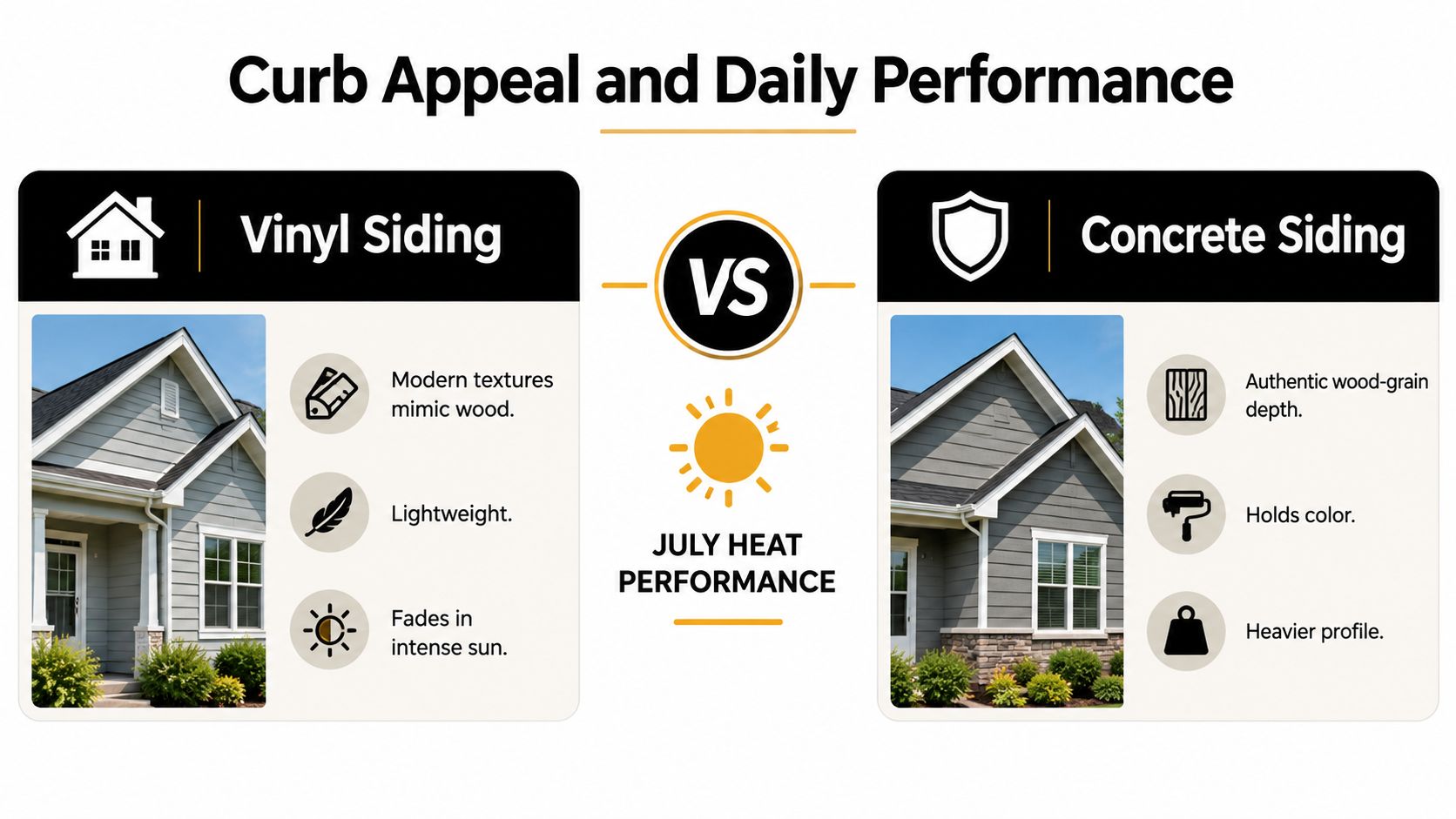
A modern vinyl panel can look far better than the shiny, flat siding installed on many older homes. Deeper profiles, improved textures, stronger trim packages, and insulated backing give homeowners more design options. Vinyl still tends to read as a manufactured panel at close range, especially when the layout, corners, or accessories are poorly coordinated.
Fiber cement usually delivers a more convincing painted-wood appearance. Its rigid boards create sharper shadow lines, and the surface can reproduce the visual depth of clapboard, shakes, or board-and-batten styles. That difference matters on older Kansas City homes, neighborhoods with architectural expectations, and properties where trim proportions are central to the design.
Insulation is a separate decision
Neither standard vinyl nor uninsulated fiber cement provides meaningful thermal resistance on its own. Both materials have R-values well below 1.0, while insulated vinyl with foam backing can raise the siding layer into approximately the 2.0 to 3.5 range, according to the comparison of Hardie board and vinyl siding performance.
That distinction is easy to miss. Fiber cement doesn't make a wall energy efficient just because it feels solid. Vinyl doesn't solve drafts merely because it includes a siding panel. Air sealing, wall cavity insulation, attic insulation, and proper flashing still control much of the home's comfort.
Daily durability and visual upkeep
Vinyl is forgiving for homeowners who want a simple cleaning routine. It can be washed and individual panels can be replaced when localized damage occurs. However, replacement pieces may not blend perfectly after years of ultraviolet exposure, and a new panel can look noticeably brighter than the surrounding wall.
Fiber cement offers a more substantial profile and better tolerance for many ordinary exterior conditions, but it asks for closer attention to caulk joints, penetrations, and finish condition. Factory-finished products can delay repainting, while field-painted boards require a future coating plan. Review available profiles and color systems in this guide to fiber cement siding colors before choosing a finish that will be difficult to reproduce later.
Maintenance Cycles: What Vinyl and Fiber Cement Ask of You Over 20 Years
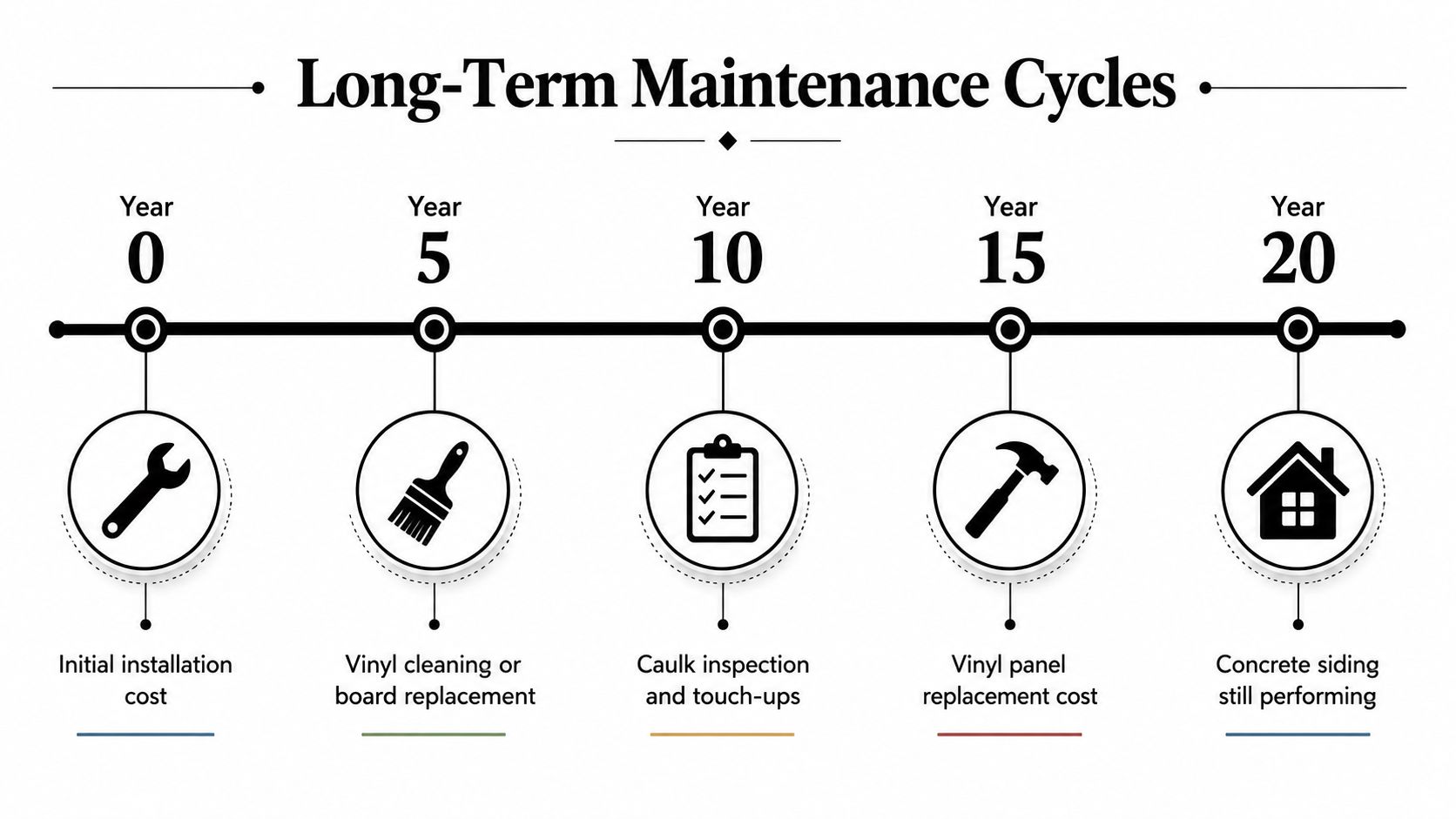
A lower installation price does not automatically make vinyl the least expensive exterior over the life of a Kansas City home. Vinyl generally avoids routine repainting, but hail, wind, and other Midwest weather can create panel replacement work. Washing the surface is simple. Matching a replacement panel to an older, sun-faded wall can be much harder, especially when the original profile or color has been discontinued.
Fiber cement follows a different ownership pattern. The boards can provide a durable exterior for many years, but the finish and joints require planned attention. Owners should inspect caulk, exposed edges, penetrations, and painted or factory-applied surfaces instead of treating installation as the end of maintenance.
For planning purposes, some lifecycle-cost discussions use repainting and caulk touch-up intervals of every 10 to 15 years, with the actual timing affected by exposure, finish, preparation, and upkeep. This vinyl versus fiber cement lifecycle cost discussion provides one reference point, but a homeowner should also review the finish manufacturer's care instructions and warranty requirements before setting a maintenance budget.
What the first decade can hide
The initial price gap is easiest to see during the first few years. A vinyl owner may spend time washing the siding and replacing isolated panels after impact. A fiber cement owner may spend more time inspecting joints, exposed edges, and the condition of the paint or factory finish.
The better choice depends on the work you are prepared to manage:
- Vinyl favors predictable routine care: Washing and localized panel replacement are usually simpler than repainting a full exterior.
- Fiber cement favors planned preservation: Caulk and finish maintenance need a place in the household budget, particularly on elevations exposed to strong sun and driving rain.
- Storm damage changes both calculations: A small vinyl repair may stand out against weathered siding, while fiber cement repair can require skilled cutting, fastening, caulking, and finish coordination.
- Labor rates influence the gap: Repainting, caulking, and specialized repairs matter more when qualified exterior crews are difficult to schedule.
Ownership insight: Low maintenance does not mean maintenance-free. Vinyl reduces painting work, while fiber cement calls for a deliberate schedule for finish and joint care.
Assessing a longer hold
Homeowners planning to stay through several maintenance cycles should compare the installation price with future repair, caulk, repainting, and finish-matching work. For a short renovation window or an upcoming sale, lower upfront spending and avoiding a near-term repaint may carry greater weight.
A manufacturer's durability statement is not a personal cost forecast. Your total depends on wall exposure, installation quality, storm frequency, finish selection, and how quickly defects are repaired. A written maintenance plan gives you a more useful budget than a general promise that either material will last forever.
Midwest Storm Resilience and Repair Realities
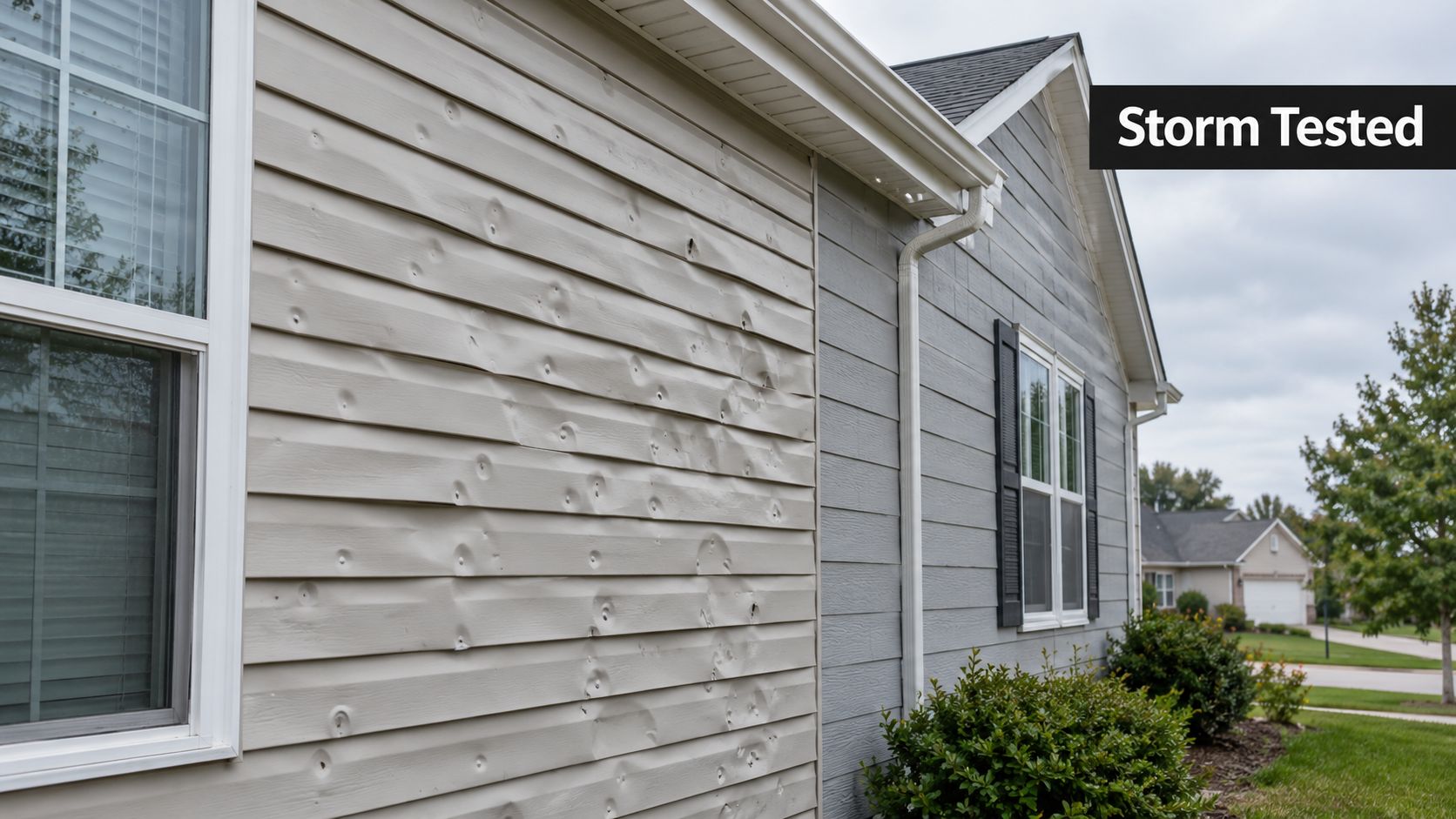
Hail damage exposes the difference between surviving a storm and repairing the exterior afterward. Vinyl panels may crack, puncture, or detach, but a qualified crew can often remove and replace the affected pieces without dismantling an entire wall. Fiber cement is more rigid and durable, yet a damaged plank can demand careful cutting, removal, fastening, caulking, and finish work.
The repair decision after hail
For vinyl, the key question is often whether replacement panels can match the existing profile and weathered color. A contractor may be able to replace a damaged section quickly, but older siding can be discontinued or visibly faded. Replacing an entire elevation may produce a better visual result than installing bright new panels beside older ones.
Fiber cement creates a different challenge. Impact may chip or crack a board, and the replacement may need to be painted or blended into the existing finish. Factory-finished products can reduce some maintenance work, but an exact match years later isn't guaranteed. Skilled labor becomes more important because careless cuts, incorrect fasteners, or poor caulking can create new water-entry points.
The practical storm trade-off is clear:
- Vinyl is easier to isolate: Localized panel removal can limit the scope of a repair.
- Fiber cement is more involved: Board replacement and finish matching may require more labor coordination.
- Both depend on installation: Wind resistance relies on correct fastening, alignment, and secure attachment to the wall.
- Claims require documentation: Photos, damaged-area measurements, product information, and a clear repair scope help define what the contractor is restoring.
A useful guide to siding damage from hail can help homeowners recognize why a visual inspection matters. Hail damage isn't always limited to obvious holes. Cracks, loose panels, chipped coatings, bent trim, and related roof or gutter damage may form one connected claim.
After a major storm, homeowners also need to think about downtime. Vinyl may offer a simpler material replacement, but color and product availability can delay a visually consistent repair. Fiber cement may provide a stronger long-term exterior, but the repair process can involve more specialized labor and finish work.
The following video provides another practical visual reference for assessing siding and exterior storm damage:
Making the Right Choice for Your Property
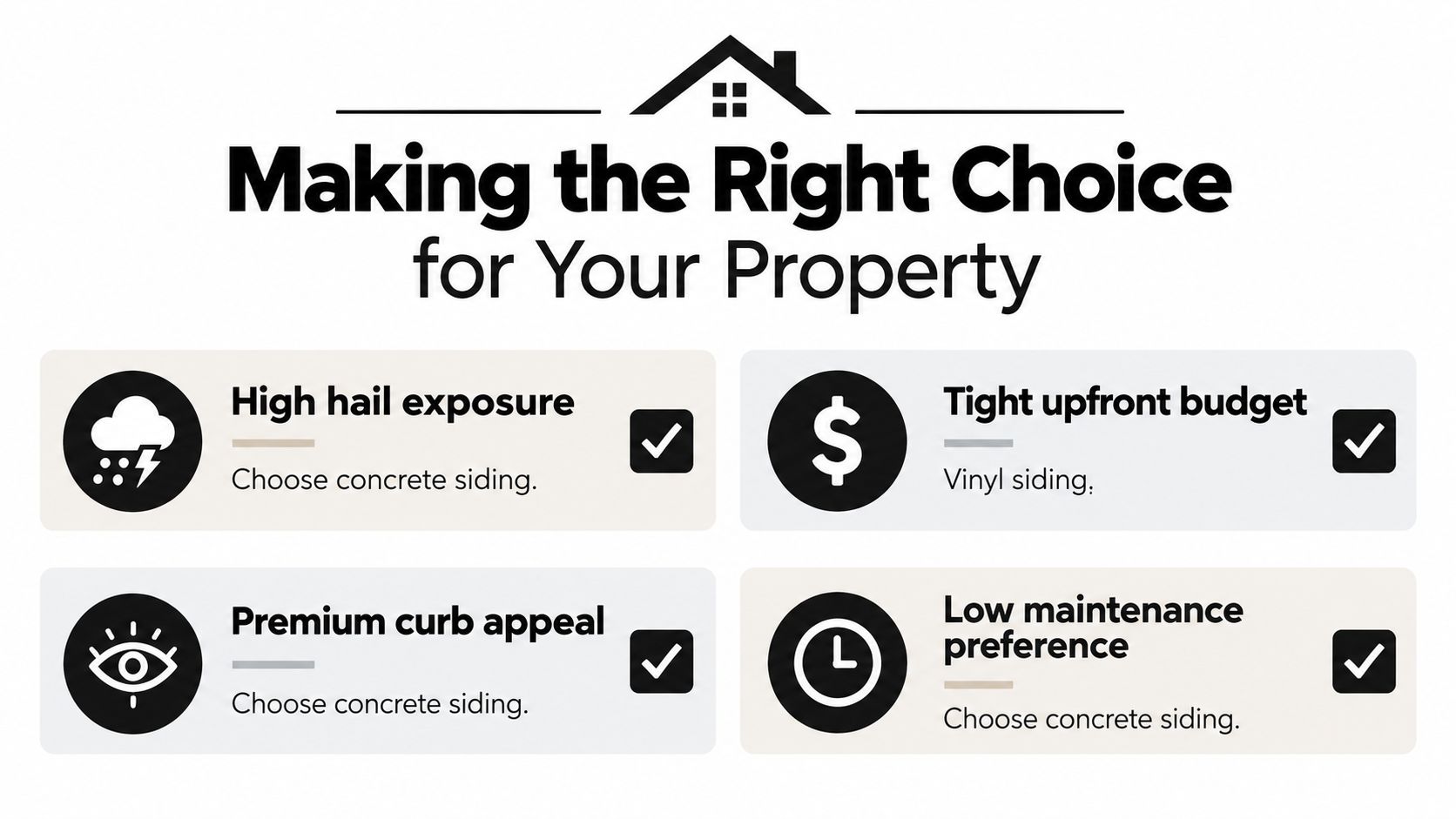
Start with the ownership question, not the product brochure. A homeowner renovating a rental, preparing a property for sale, or working within a strict cash limit may reasonably prioritize vinyl's lower entry cost and straightforward repair process. A homeowner settling into a long-term residence may place more value on fiber cement's rigid profile, architectural finish, and durability characteristics.
Match the material to the property
Choose vinyl when the budget has little room for expansion. The lower initial cost leaves more money available for roof repairs, gutters, insulation, trim, or concealed sheathing work. That matters because a siding project that ignores water management or damaged wall material can create a false sense of completion.
Consider fiber cement when appearance carries real weight. The material can provide the sharper lines and painted-wood character that make a detailed home look finished rather than just covered. It also suits owners who accept periodic finish maintenance in exchange for a more substantial exterior.
Review the neighborhood before committing. Historic districts, older streets, and architecturally distinctive properties may look better with fiber cement profiles and carefully proportioned trim. In a newer subdivision, well-selected vinyl can provide a clean result without overspending on details the home's design won't showcase.
Treat storm exposure as a repair-planning issue. If hail is a recurring concern, ask how each contractor would document damage, source replacement material, handle color matching, and coordinate with your insurer. The best material on paper can become frustrating if the local repair process is poorly organized.
Use a quote comparison checklist
Before signing, place competing proposals side by side and ask:
- Does each quote include removal, disposal, trim, and cleanup?
- Does the scope identify housewrap and flashing work?
- Does it explain how the crew will address rotten or damaged sheathing?
- Does it specify the siding profile, color, finish, and manufacturer?
- Does it explain what happens if hail or wind damages the exterior later?
- Does the contractor provide licensing, bonding, insurance, and warranty information?
The right answer may be vinyl, fiber cement, or a better-specified version of either material. The material should follow the property's needs, not substitute for a complete project plan.
Protecting Your Investment with Professional Installation
Siding is a cladding layer, not a waterproof wall by itself. The wall behind it depends on continuous water-resistive barriers, correctly integrated flashing, sealed penetrations, and drainage paths that move water away from the structure. A premium board installed over neglected moisture details can fail sooner than a modest product installed with disciplined preparation.
Details that deserve written scope
A professional proposal should explain how the crew will handle roof-to-wall intersections, windows, doors, corners, utility penetrations, and transitions between siding materials. Kick-out flashing deserves special attention where a roof edge directs water toward a wall. Without a proper diverter, concentrated runoff can reach the siding and wall assembly.
Fastening also varies by product. Vinyl needs room to move with temperature changes, and fasteners shouldn't lock panels so tightly that they buckle. Fiber cement requires accurate layout, appropriate fasteners, proper clearances, and cutting practices that control dust and protect the board edges. The crew should follow the manufacturer's installation requirements rather than treating every siding product as interchangeable.
Ask for these items in writing:
- Removal and inspection: Clarify whether the crew will inspect exposed sheathing after tear-off.
- Moisture protection: Identify the housewrap, flashing, and water-management steps included.
- Product installation: Specify fastening, clearances, trim, and joint treatment.
- Finish responsibility: State who handles painting, touch-ups, caulk, and cleanup.
- Warranty conditions: Ask what installation errors could void manufacturer coverage.
- Storm support: Confirm whether the contractor documents damage and assists with the insurance process.
Why local storm experience matters
A Kansas City contractor should understand that a siding job may later become part of a larger hail claim involving roofing, gutters, fascia, windows, or exterior paint. Coordinating those components can reduce mismatched repairs and prevent one crew from damaging another crew's completed work.
Two States Exteriors LLC provides siding installation, storm and hail assessments, detailed project planning, and end-to-end insurance-claim support across the Kansas City Metro Area. The company also offers free on-site inspections and a No Money Upfront policy, giving homeowners a defined process before work begins.
A sound contractor won't promise that any siding will avoid every storm problem. The contractor should explain how the chosen material will be installed, how the wall will be protected, what maintenance it needs, and how repairs will be handled when severe weather arrives. That transparency is part of the value of professional installation.
If you're comparing concrete-style fiber cement siding cost vs vinyl for a Kansas or Missouri home, Two States Exteriors LLC can provide a free on-site inspection, detailed siding recommendations, and storm-damage guidance. Visit the team to discuss your property, compare installation scopes, and plan an exterior that fits both your budget and Midwest weather exposure.