
A storm rolls through Kansas City, and by morning you're standing in the driveway looking at lifted shingles, dented gutters, and siding that wasn't damaged yesterday. The roof may still look intact from the ground, but water is already showing on a ceiling inside. You call the insurance company, get a claim number, and then discover that filing the claim is only the beginning.
Knowing how to get help with insurance means building a clear path from the first notice of loss to a documented inspection, an agreed repair scope, and payment. The carrier handles coverage and claim decisions. A qualified contractor helps identify and price physical damage. A regulator or consumer advocacy program can help when the process stalls. The right sequence reduces avoidable back-and-forth, protects your records, and gives you a better chance of controlling out-of-pocket costs.
What Getting Help With Insurance Really Means After Storm Damage
The morning after a Kansas City storm, a homeowner may have a claim number, a leaking ceiling, and no clear idea who should handle the next problem. The insurer manages coverage and claim decisions. A storm-experienced contractor examines the roof and exterior, documents conditions, and builds a repair scope. A regulator can help create an escalation path when communication breaks down.
How to get help with insurance means coordinating those roles from the first notice of loss through inspection, scope review, and payment. Filing is only one part of the work. Organized records, digital claim tracking, and timely escalation can reduce repeated explanations, prevent overlooked damage, and limit avoidable out-of-pocket costs.
Confusion affects insurance customers across different types of coverage. KFF's consumer-assistance research found that about 18% of consumers seeking coverage or renewing it, roughly 7 million people, received help from someone outside their family or friends. Another 12%, nearly 5 million people, looked for help but did not receive it. The study concerns health insurance, not storm claims, but it illustrates why policy language, assigned responsibilities, and required procedures often need to be managed with a clear written process.
The three roles that keep a property claim moving
The insurer determines what the policy covers and how the claim is evaluated. The adjuster may inspect the property, review photographs and invoices, and develop or approve pricing. The homeowner must report the loss accurately, protect evidence, answer requests, and record important calls, emails, inspection dates, and claim decisions in one digital folder.
The contractor supplies a separate view of the physical damage. A reputable exterior contractor should identify storm-related conditions, distinguish temporary protection from permanent repairs, and explain what each recommended repair addresses. That scope gives the homeowner something concrete to compare with the adjuster's findings. It should never promise approval or exaggerate damage.
Practical rule: Get help with the process, not a promise of payment. Clear evidence, consistent records, and prompt communication move a claim farther than pressure or guesswork.
Escalation belongs in the plan when ordinary calls stop producing answers. Kansas reported that its Department of Insurance closed 3,661 complaints in 2024 and recovered $12,491,218.32 for consumers, according to the Kansas consumer assistance results summarized by the U.S. Department of Health and Human Services. For a storm claimant, a formal complaint can create a documented channel and prompt a response when the file remains stalled.
Documenting Storm and Hail Damage So Your Claim Holds Up
A roof leak can turn a manageable claim into a dispute if the first photos show only a wet ceiling and no view of the exterior damage. Document the property before removing shingles, replacing siding, or discarding damaged materials. If water is entering, use safe temporary protection, keep every receipt, and photograph the condition before and after that work.
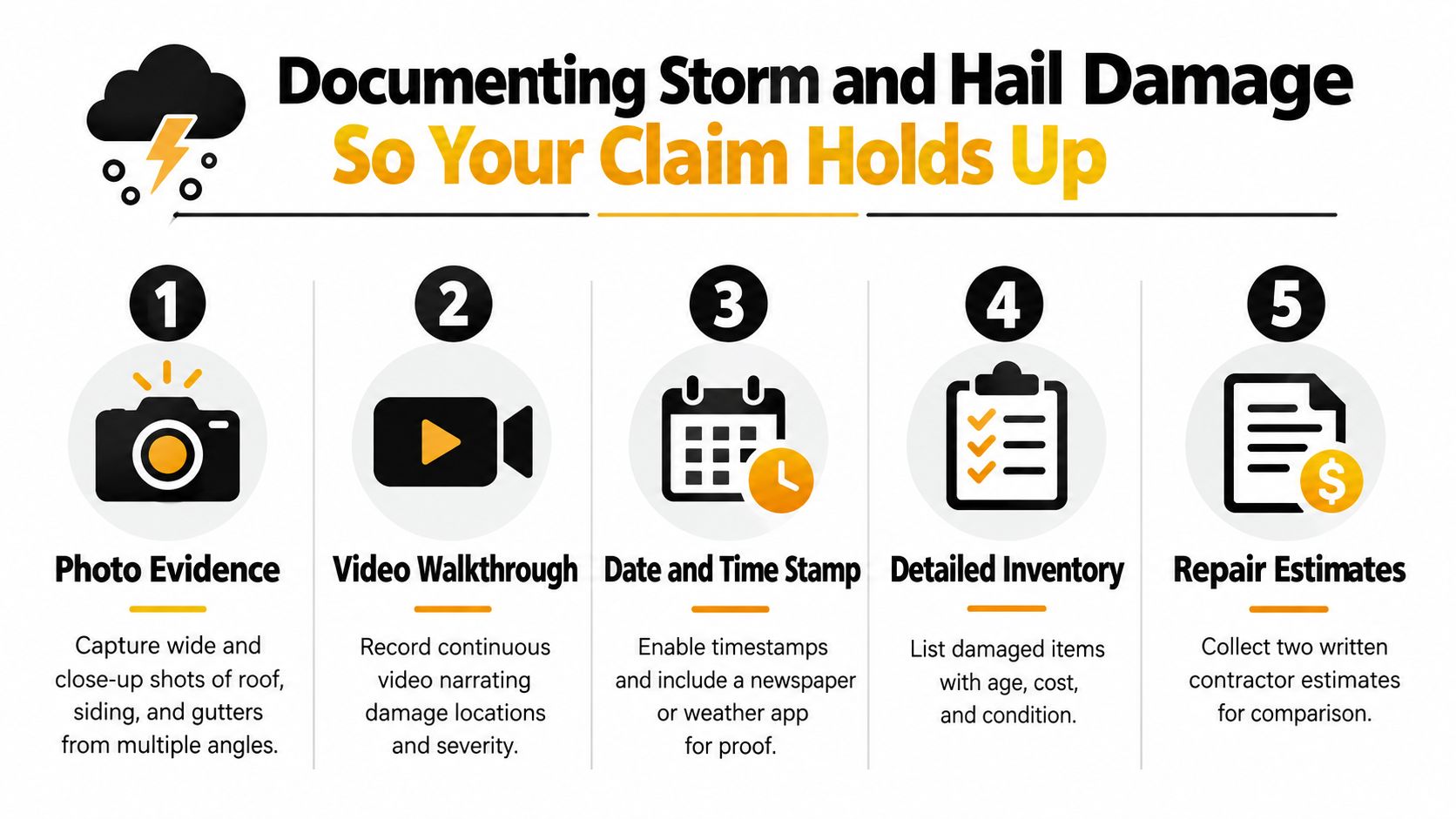
Build an evidence packet
Create one digital claim folder with filenames another person can understand. Roof_NorthSlope_Closeup and Kitchen_Ceiling_Leak identify the subject far better than a camera-generated filename. Keep the original files instead of relying only on compressed text-message copies.
- Establish the event: Record the storm date and approximate time, policy number, property address, and date you first noticed the damage.
- Photograph wide and close: Begin with each exterior elevation, then capture roof slopes, ridge lines, vents, flashing, gutters, downspouts, siding, windows, screens, and exterior fixtures. Use good light and several angles.
- Record a walkthrough: Narrate your location and observations. Include interior stains, safely visible wet insulation, damaged ceilings, walls, flooring, and personal property.
- Create an inventory: List each damaged belonging, its description, age, pre-storm condition, and verifiable replacement information. Add receipts, order records, or earlier photographs when available.
- Collect repair documents: Store written estimates, emergency invoices, tarping or water-mitigation receipts, and correspondence together. A second estimate can expose a scope gap, but it should not become a reason to exaggerate damage.
Keep the digital record organized as the claim develops. Date inspection notes, save emails as PDFs, and record what each attachment proves. That tracking makes follow-up faster when the carrier requests clarification or a contractor identifies damage missed during the first review.
Roof photos require caution. Do not climb onto a steep, wet, or unstable roof. Ground-level images, attic observations, and a professional inspection provide safer evidence. For a reference on the critical signs of hail damage on a roof, compare visible conditions before deciding what requires inspection.
Avoid evidence gaps that create delays
Incomplete forms, missing proof, and scattered files give the adjuster reasons to request clarification. Which's insurance claims research found that 48% of claimants experienced at least one problem, while 27% experienced three or more issues. The figures do not determine coverage, but they show why a clean submission matters.
Do not repair away evidence before documenting it. Replace a string of unrelated texts with one labeled email that identifies the damage, lists attachments, and states the requested action. Your records should connect the storm, the damaged component, and the proposed repair without forcing the carrier to rebuild the timeline.
Filing Your Claim and Working With the Adjuster
Once the property is reasonably protected and the damage is documented, notify the insurer or agent promptly. Ask for the claim number, adjuster's name and contact details, required forms, submission method, and any policy deadline. A contractor's inspection does not open the claim. The carrier must receive formal notice.
Before authorizing repairs, confirm the policy questions that affect the work. Ask about the deductible, applicable limits, covered causes of loss, temporary protection, matching provisions, and documentation required before approval. Coverage depends on the policy and the circumstances, so request a written explanation for disputed items instead of relying on general advice.
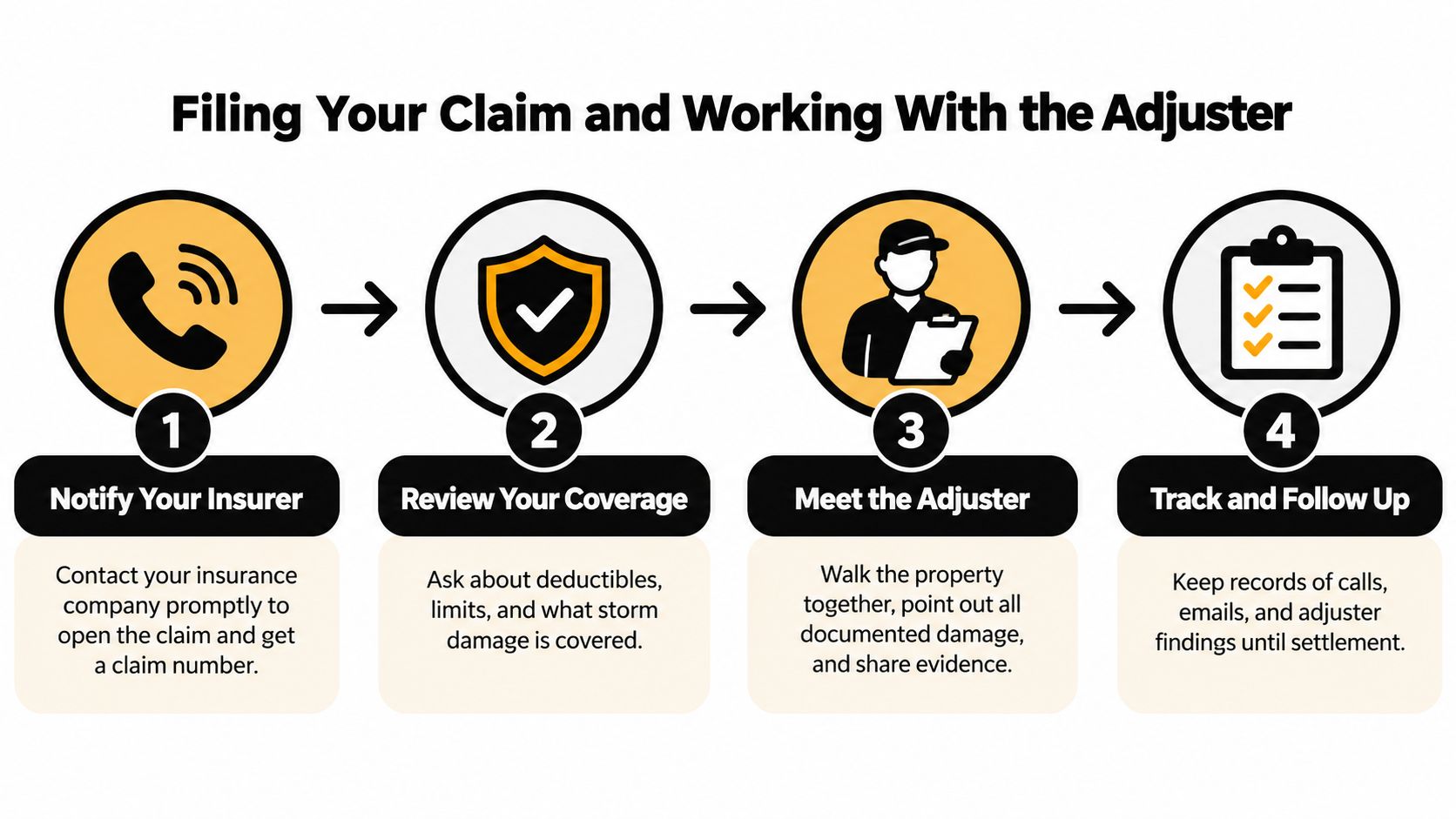
Make the inspection productive
Prepare an evidence packet before the adjuster arrives. Include labeled photos, relevant records, and a simple property sketch or room list showing where damage appears. Be present if possible. Walk the property calmly and explain what changed after the storm, including damage to the roof, gutters, siding, windows, interior areas, detached structures, and contents.
A contractor can provide a separate technical assessment that identifies observed damage and the work needed to restore the property. The assessment should document conditions rather than encourage unsupported statements. If the adjuster's estimate differs from the contractor's scope, compare them line by line. Check for omitted components, different quantities, access assumptions, code-related requirements, and temporary repairs left out of the estimate.
Use this storm damage insurance claim process guide to keep responsibilities and handoffs clear. After important calls, send a written recap stating the date, person spoken to, documents discussed, and next action. Carrier portals and mobile apps can support uploads, messages, and status checks. Save submitted files and screenshots of meaningful updates so the digital record remains under your control.
Respond to requests without losing control
Answer each adjuster request directly and label every attachment. If a document is unavailable, say so and provide the closest available record. Keep a calendar of promised callbacks, inspection dates, and submission deadlines.
A claim may stall even when both sides are acting in good faith. Written follow-up shows what was provided, identifies what remains outstanding, and gives you a clear record if contractor involvement or a complaint to the insurer becomes necessary.
Choosing the Right Help for Your Situation
A hail claim can stall for different reasons, so choose help based on the problem in front of you. A roofing or exterior contractor can inspect the property, document visible conditions, protect exposed areas, prepare a repair scope, and complete approved work. A public adjuster may suit a complicated valuation dispute or extensive loss, but fees and contract terms require careful review. If the insurer stops responding or does not explain its position, a state insurance regulator or consumer advocacy office can provide an escalation path.
| Scenario | Best Help Option | What They Do For You |
|---|---|---|
| Possible roof, gutter, siding, or interior storm damage | Qualified exterior contractor | Inspects the property, records conditions, and prepares a repair plan |
| Complicated valuation or broad property loss | Public adjuster | Represents your interests when evaluating and presenting the claim, subject to the agreement and fees |
| Claim stalled, mishandled, or difficult to resolve directly | State insurance regulator or consumer advocacy program | Reviews the complaint process and may contact the insurer or identify available assistance |
| Emergency protection needed before permanent repairs | Contractor or emergency mitigation provider | Performs temporary measures and supplies records and receipts |
Match the resource to the timing
Bring in a contractor early enough to record damage before repairs conceal it. Ask whether the inspection is free, whether you will receive a written scope, and whether payment is required upfront. A No Money Upfront policy can reduce immediate financial pressure, but read the agreement closely. Confirm when payment becomes due and what happens if the insurer changes or denies part of the scope.
Public adjusters can manage claim details and present supporting information, which may help when the loss is difficult to value. Their services can involve fees or contractual commitments. Before signing, ask how compensation is calculated, which tasks are included, and whether cancellation is allowed. Keep reading the policy and maintaining your own claim file even when another professional is helping.
Kansas and Missouri homeowners can benefit from a local contractor who understands Midwest storm patterns, roof systems, siding, gutters, and repair sequencing. Use this guide to choosing a roofing contractor to check licensing, insurance, credentials, written estimates, and communication practices. Two States Exteriors LLC provides free on-site inspections, detailed project plans, and insurance-claim assistance alongside roofing and exterior services.
Know when escalation is justified
Escalate after reporting the claim, supplying requested evidence, and allowing the carrier a reasonable opportunity to respond. State the claim number, unresolved question, dates of prior contact, documents submitted, and outcome requested. Avoid threats and unsupported accusations.
A dated record helps a regulator or advocate identify the breakdown. Save emails, portal messages, inspection notes, estimates, receipts, and call summaries. That documentation can also help a contractor explain differences between the insurer's estimate and the work required, reducing delays and limiting out-of-pocket costs.
How to Speed Up Payment and Avoid Costly Delays
A claim can be filed correctly and still sit unresolved. Recent property-claims research reported an average of 32.4 days from filing to finished repairs and more than 44 days from first notice of loss to final payment, according to the 2025 J.D. Power U.S. Claims Digital Experience Study. A faster outcome depends on the full process: organized evidence, trackable communication, scope review, and timely escalation.
Use the carrier's digital tools as part of that process. Upload readable photos, estimates, inventories, and receipts through the portal. Save confirmation receipts, note upload dates, and check messages regularly. The study found that digital-only claims journeys ranked highest in satisfaction and included 5,958 home and auto claim evaluations. A portal cannot correct an incomplete estimate, but it creates a record of what was submitted and when.
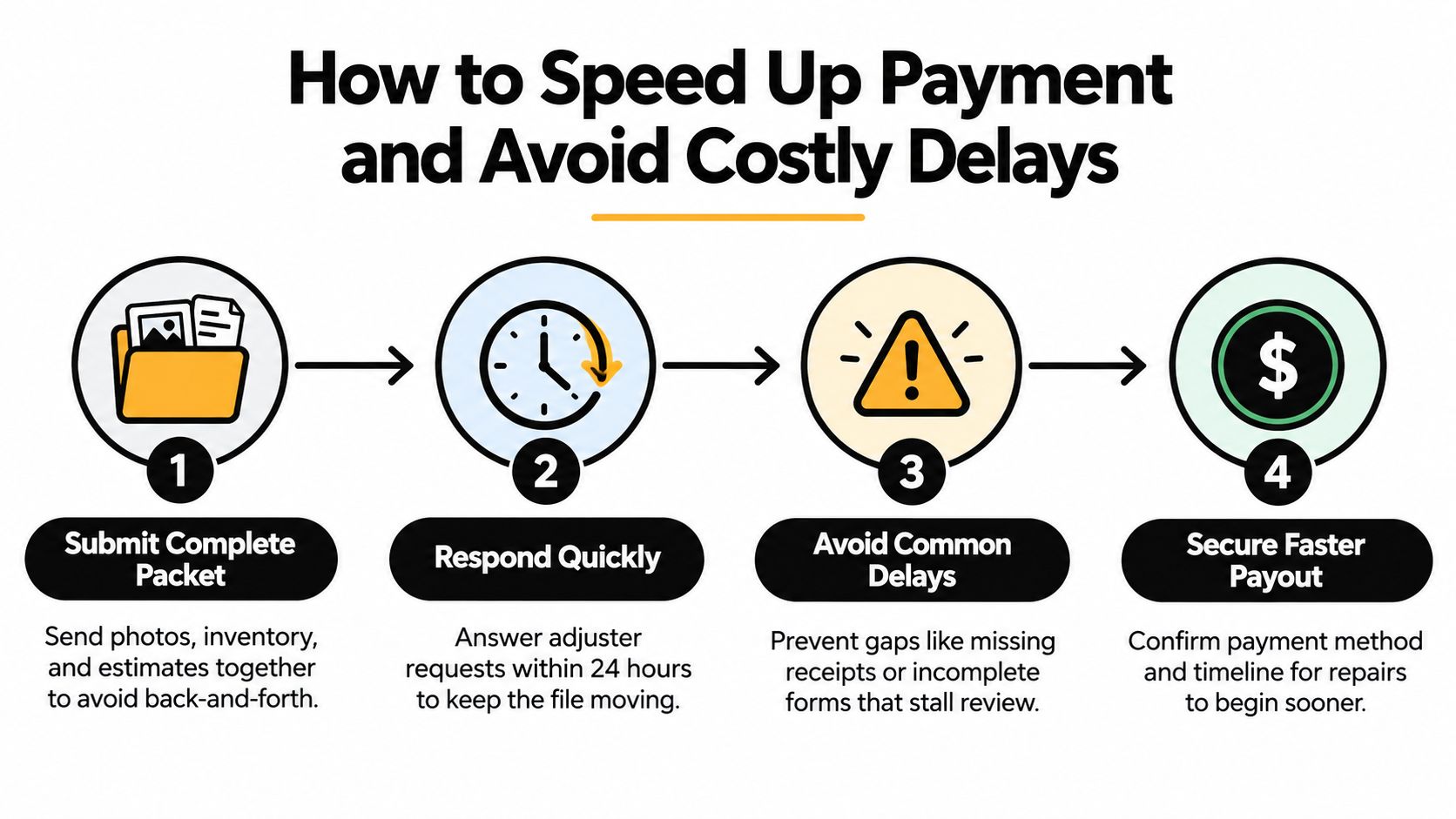
Use a delay-reduction routine
Send photos, an itemized inventory, estimates, and relevant receipts in one organized packet when possible. Give each file a clear name and add a short summary describing the loss and attached evidence. After every submission, ask the carrier to confirm what it received and identify any remaining requirement.
If communication stops, request a specific action instead of sending an emotional message. Write: “Please confirm the current claim status, identify any missing documents, and provide the next review step.” Ask for the assigned contact and expected follow-up date. Record the response and whether the promised action occurred.
Protect cash while the claim is pending
Do not authorize permanent work solely because a salesperson says approval is guaranteed. Compare the proposed scope with the adjuster's estimate and identify your likely share, including the deductible and excluded work. Emergency protection may be necessary before permanent replacement, but document both stages with photos, invoices, and receipts.
Scope mismatches often stall payment. The contractor and adjuster should be reviewing the same roof sections, exterior elevations, quantities, and repair assumptions. If one estimate includes damaged siding or gutters that the other omits, ask for a line-by-line comparison before work expands.
Frustration also keeps some homeowners from filing. Consumer findings summarized by Business Wire reported that 22% of consumers avoided filing a claim for that reason. Base the decision on the policy, documented damage, deductible, and qualified advice. A complete record gives the carrier, contractor, or regulator something concrete to evaluate when payment slows.
Your Next Steps to Restore Your Property With Confidence
A storm claim can stall before repairs begin if the record is scattered. During the first 48 hours, photograph the property before repairs, protect openings from additional weather when it is safe, notify the carrier, and create one claim folder. Save the claim number, policy details, call notes, receipts, inspection reports, estimates, and portal confirmations there.
Professional help makes sense when you cannot safely inspect the roof, damage affects several exterior systems, interior leaks are spreading, or the adjuster's scope does not match the documented condition. A qualified contractor can separate emergency protection from permanent work, explain what can wait, and identify the photos, measurements, and estimates the carrier needs to review the claim.
Escalate when direct communication stops producing a clear status or review date. State insurance assistance offices can help consumers address unresolved complaints and identify the next administrative step, so regulators belong in a complete claim-acceleration plan when carrier communication breaks down.

For Kansas City homeowners, choose a contractor who can inspect the exterior, explain the repair scope, communicate clearly with the carrier, and complete the work cleanly. Check credentials, licensing, bonding, insurance, emergency availability, written plans, and payment terms before signing.
Two States Exteriors LLC provides free on-site storm inspections, detailed repair plans, insurance-claim support, and 24/7 emergency response for Kansas City Metro homeowners and property owners. Visit Two States Exteriors LLC to request an inspection and organize the claim before minor damage becomes a larger repair.